
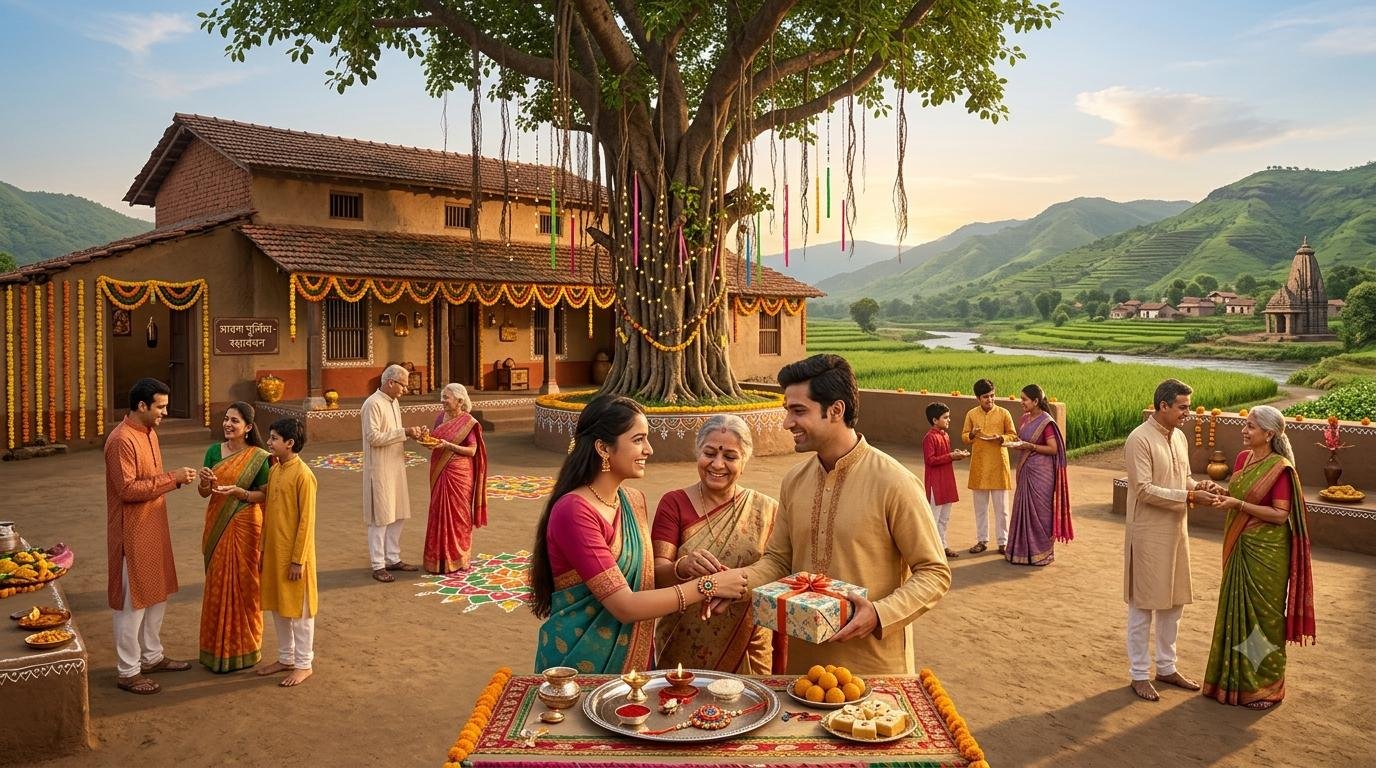
Raksha Bandhan is one of India’s most beautiful festivals celebrating the bond between brothers and sisters. The word Raksha Bandhan means “the bond of protection.” On this special day, sisters traditionally tie a rakhi around their brothers’ wrists, while brothers offer love, respect, and a promise of support.
But behind this colorful festival are several fascinating stories from Hindu tradition and Indian history. These stories show that Raksha Bandhan is not simply about a thread—it represents love, trust, responsibility, blessings, and an unbreakable family bond.
Note: Different regions and traditions tell different stories about the origins and meaning of Raksha Bandhan. The stories below come from traditional accounts and should be understood as religious or historical traditions rather than one universally established origin story.
The Story of Draupadi and Krishna
One of the most beloved stories associated with Raksha Bandhan involves Draupadi and Krishna.
According to a popular devotional tradition, Krishna once injured his finger and began bleeding. Seeing this, Draupadi immediately tore a piece of cloth from her garment and wrapped it around Krishna’s finger to stop the bleeding.
She did not expect anything in return. Her action came from affection and concern.
Krishna is traditionally believed to have remembered her loving gesture and later protected Draupadi during one of the most difficult moments of her life.
This story is often associated with the deeper spirit of Raksha Bandhan:
A small act of love can create a lifelong bond of protection.
The important message is not simply about a brother protecting a sister. It is about mutual care between two people who consider each other family.
Indra and Indrani: An Ancient Raksha Tradition
Another traditional story connects the idea of a protective thread with Indra, the king of the Devas.
According to accounts found in Hindu religious literature, during a conflict between the Devas and their opponents, Indra faced a difficult situation.
His wife, Indrani, is traditionally said to have tied a sacred protective thread to him while praying for his safety and victory.
The thread represented blessings, faith and divine protection.
This story is important because it shows that the idea of a sacred protective thread existed in Hindu tradition beyond the modern brother-sister form of Raksha Bandhan.
King Bali and Goddess Lakshmi
One of the most fascinating Raksha Bandhan stories involves Goddess Lakshmi and King Bali.
According to a popular traditional account, Lord Vishnu had promised to protect King Bali and stayed in his kingdom.
Lakshmi wanted Vishnu to return to Vaikuntha. She therefore visited Bali and tied a sacred thread around his wrist, accepting him as her brother.
Bali was deeply touched by her affection and asked her what she wanted.
Lakshmi revealed that she wanted her husband Vishnu to return with her.
Bali honored her request.
This story gives Raksha Bandhan another beautiful meaning: a rakhi can create a relationship of affection even between people who were not originally siblings.
Krishna and the Meaning of Protective Love
The relationship between Krishna and Draupadi is particularly important because it shows that the bond represented by Raksha Bandhan is not necessarily limited to biological siblings.
Draupadi’s simple gesture of compassion became symbolic of a much deeper relationship.
It teaches us that:
Protection begins with love.
Before someone promises to protect another person, there must first be care, respect and emotional connection.
What Does the Rakhi Actually Symbolize?
The rakhi is a small thread, but its cultural meaning is much larger.
It can represent:
Love
A reminder that family relationships should be valued.
Trust
A promise that family members can depend on each other.
Protection
A traditional promise to stand beside one another during difficult times.
Blessings
A prayer for happiness, health and prosperity.
Responsibility
A reminder that relationships come with responsibilities, not just emotions.
Raksha Bandhan Is More Than Brother Protecting Sister
Modern understanding of Raksha Bandhan has expanded beyond the traditional idea that “the brother protects the sister.”
Today, many families see it as a celebration of mutual protection and unconditional support.
A sister can stand beside her brother during difficult times, and a brother can support his sister’s dreams and independence.
The real promise can therefore be understood as:
> “Whenever you need me, I will stand beside you.”
That message makes Raksha Bandhan relevant even in modern society.
Spiritual Meaning of Raksha Bandhan
The festival also carries a spiritual message.
The rakhi is a reminder that human beings are connected through relationships and responsibilities.
It encourages people to move beyond selfishness and develop:
Compassion
Loyalty
Respect
Forgiveness
Responsibility
Gratitude
In this sense, Raksha Bandhan becomes more than a family celebration—it becomes a reminder to protect the relationships that give meaning to our lives.
Why Raksha Bandhan Is Considered Auspicious
Raksha Bandhan is traditionally celebrated on Shravan Purnima, the full-moon day of the Hindu month of Shravan.
The full moon itself has an important place in Hindu religious traditions, and the festival combines this sacred lunar occasion with the celebration of family bonds.
Families traditionally perform prayers, apply tilak, exchange sweets, tie rakhi, and seek blessings from elders.
The exact customs can vary by region and family tradition.
The Modern Message of Raksha Bandhan
Life today can be extremely busy. People may live in different cities or even different countries, making regular family interactions difficult.
Raksha Bandhan creates an opportunity to reconnect.
A rakhi sent through the post, a video call between siblings, or a simple message saying “I am always there for you” can carry the same emotional meaning.
The festival reminds us that distance does not necessarily weaken a relationship.
Conclusion
The stories associated with Raksha Bandhan reveal that the festival has a much deeper meaning than the tying of a thread.
From Draupadi and Krishna to the traditional stories of Indra and Indrani and Lakshmi and King Bali, the festival represents affection, trust, protection and responsibility.
The most beautiful lesson is perhaps this:
Relationships become sacred when we care for one another without expecting anything in return.
A rakhi may be only a thread, but behind that thread can live years of memories, childhood, love, arguments, laughter, forgiveness and an everlasting family connection.
May every Raksha Bandhan strengthen the bond of love, respect and protection between families.
Happy Raksha Bandhan!
Stay updated with the latest news and articles. Subscribe Now for more articles.
