For Gujaratis Navratri is not a festival. I know that Navratri is an emotion that ties to Maa Amba to music to bright Chaniya Cholis to Kediyus to Dandiya and to the unforgettable energy of Garba.
Traditionally the nine nights of Navratri are set aside for the worship of Shakti, the feminine energy. Families go to temples perform aarti and join Garba as a way to show devotion.
In recent years something interesting has occurred.
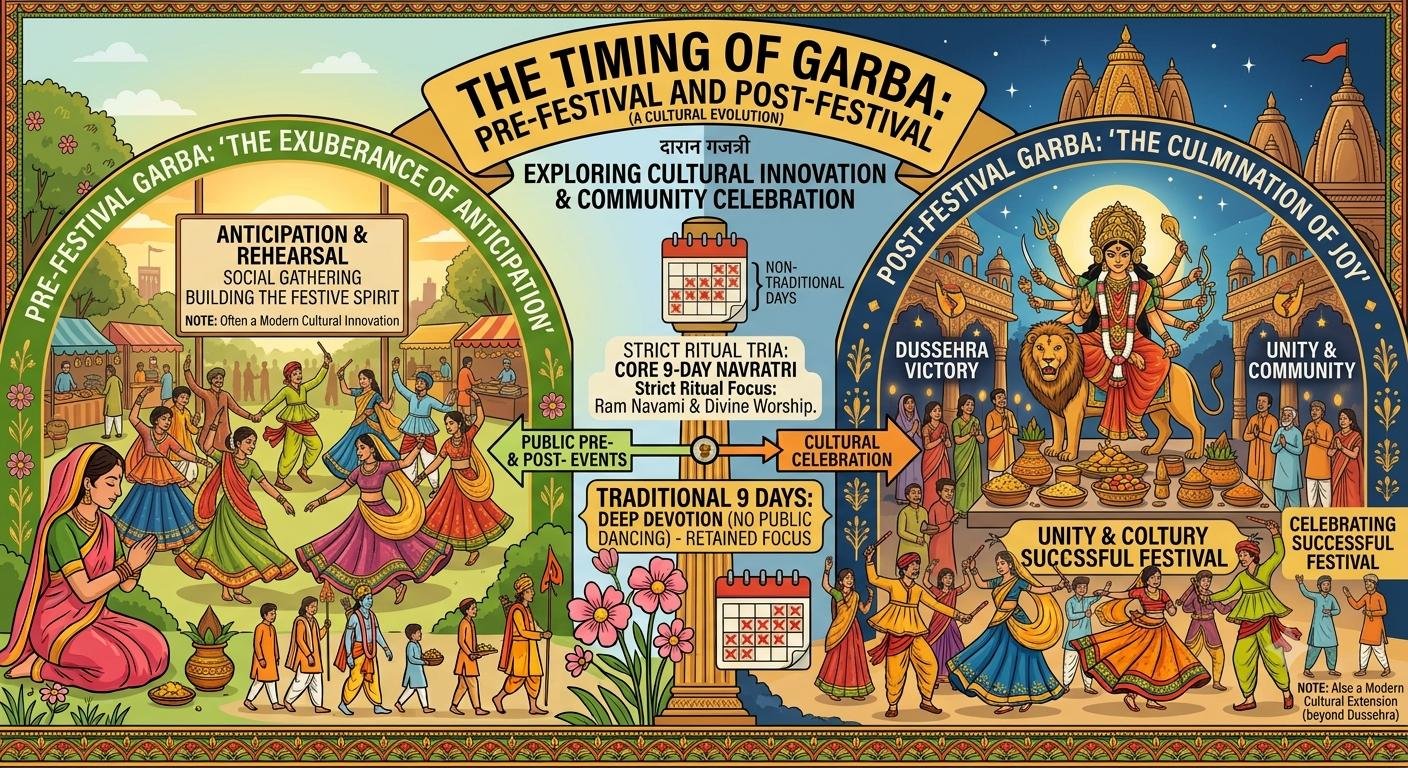
I have seen Garba celebrations go beyond the nine nights. Across Gujarat and in Gujarati communities around the world people are increasingly enjoying -Navratri Garba events, practice nights celebrity Garba shows, corporate celebrations and post-Navratri gatherings.
This brings up a question: Why has Garba grown beyond Navratri and how can people balance entertainment with devotion?
I believe the answer lies in the changing lifestyle of society in the growing popularity of Gujarati culture and in the evolving relationship between faith and celebration.
1. The Traditional Connection Between Garba and Navratri
Garba has cultural and devotional roots in Gujarat.
The dance is traditionally linked to the worship of Goddess Amba and Shakti. In traditional settings dancers circle around a lamp or a symbolic representation of the divine.
The circular movement is seen as a symbol of the cycles of life and the continuity of energy.
For devotees Garba is not just a performance. Garba is a way to show gratitude, faith and reverence toward the Goddess.
Traditional Garba songs often have references. The festival begins for families with prayers, aarti and other customary rituals.
Although Garba styles and music have changed over time this spiritual connection remains a part of Garba’s identity.
2. Why Does Pre-Navratri Garba Start Early?
I think one major reason for -Navratri Garba is the growing popularity of organized events.
Event organisers, music artists, clubs, housing societies and cultural groups often set up Garba nights before the festival officially begins.
These events may feature performances, celebrity appearances, DJ-led Garba, traditional folk music and dance competitions.
There are reasons behind this trend.
Opportunities to Celebrate
Navratri lasts nine nights yet many people want to attend multiple events with different friends, colleagues and family members.
Pre-Navratri events give chances to join before the main festival starts.
Garba Practice and Preparation
Beginners often want to learn the steps before the nights.
Dance classes, rehearsals and practice events help participants feel more comfortable with the rhythms and movements of Garba and Dandiya Raas.
Organisers Want to Build Excitement
For event organisers, pre-Navratri celebrations can introduce performers promote venues and build excitement for the festival.
For participants these events become opportunities to meet friends pick outfits and enjoy the atmosphere early.
However not every pre-Navratri event has the religious significance. Some focus on culture or entertainment.
3. Why Is Garba Becoming an Event?
I feel the popularity of Garba has built an event ecosystem.
Organisers may invest in venues, sound systems, lighting, security, stage design, artists, food stalls, fashion partnerships and ticketing.
Garba has therefore become a seasonal business for many people.
Its commercial growth also supports musicians, folk performers, dancers, costume designers, jewellery sellers, photographers, food vendors and event-management teams.
Celebrity appearances and high-production performances draw audiences who enjoy an entertainment experience.
For young people attending Garba is also a social occasion where fashion, music and friendship matter.
Commercialisation is not automatically harmful. It can create jobs. Help traditional music reach new audiences.
The challenge is to make sure that commercial success does not completely eclipse the devotional meaning of Garba.
4. Why Does Garba Continue After Navratri?
Post-Navratri Garba events have also become more visible in some communities.
There are possible reasons.
Celebrations: Some people cannot attend during the nine nights because of work, studies, travel or family responsibilities.
Community gatherings: Housing societies, clubs and cultural organisations may set up celebrations on dates that suit their members.
Artist schedules: Musicians and performers may take part in events, outside the Navratri period.
Gujarati diaspora: Communities outside India sometimes organise events based on weekends, venue availability and community calendars.
Year-round interest in folk culture: Garba is also performed at weddings, cultural festivals, community functions and other celebrations that occur outside Navratri.
It is important to distinguish these events from the religious calendar. A post-Navratri Garba programme is generally an social event unless it is specifically connected with a local religious observance.
The festival may end on the calendar but peoples enjoyment of the dance does not necessarily end with it.
5. Has Garba Changed From Devotion to Entertainment?
This is one of the discussed questions surrounding modern Garba.
The answer is not simply yes or no.
For some people Garba remains a devotional practice. Garba participants begin with aarti sing bhajans and dance as an offering to Maa Amba.
For others Garba is also an opportunity to socialise, enjoy music wear clothes and spend time with friends.
Many Garba participants experience both sides at once.
Garba participants may visit a temple participate in aarti and then enjoy a Garba night.
The problem is not necessarily the presence of entertainment. The important question is whether the traditions cultural roots are respected.
Modern music, professional stages and colourful lighting can coexist with devotion.. When the spiritual context disappears entirely Garba participants may lose sight of why the tradition became meaningful in the first place.
Garba can evolve without forgetting the Goddess at its centre.
6. Traditional. Modern Garba: What Has Changed?
Several changes can be seen in Garba celebrations.
Music
Traditional folk compositions and devotional songs now share space with arrangements, electronic beats and newly composed Garba tracks.
Fashion
Traditional Chaniya Cholis and Kediyus remain popular while contemporary designs, accessories and styling trends continue to evolve.
Venues
Garba once commonly took place in village courtyards, neighbourhood spaces and community grounds. Today large stadiums, commercial grounds, banquet venues and purpose‑built event spaces also host celebrations.
Scale
Small community gatherings continue,. Some events attract very large audiences and feature well‑known singers.
Participation
Garba has spread beyond Gujarat through migration, cultural exchanges, international festivals and social media.
These changes show how a living folk tradition adapts to generations. Preserving its identity does not require every event to look exactly as it did centuries ago.
7. Why Devotion Should Remain at the Heart of Garba
Garbas popularity is an opportunity to introduce people to Gujarati heritage.
The festivals religious roots deserve recognition.
Devotion can be expressed in ways:
- Begin the celebration with respect for Maa Amba and the traditions being observed.
- Include traditional Garba songs alongside contemporary music.
- Give folk artists and traditional musicians opportunities to perform.
- Teach younger participants about the significance of Navratri.
- Keep the event welcoming, safe and respectful.
- Avoid presenting every Garba event as a religious ritual.
These steps can help preserve the relationship between enjoyment and spiritual meaning.
Devotion does not have to mean rejecting entertainment. It means understanding and respecting the values behind the celebration.
8. Garba as a Cultural Identity Beyond Nine Nights
One reason Garba continues to grow is that it represents more than a festival.
For Gujarati communities it is also a way to maintain connections with their language, traditions and family heritage.
A Gujarati living in London, Toronto, Sydney or New Jersey may attend a Garba event to reconnect with music and cultural traditions.
Young people who have grown up outside Gujarat may learn steps discover folk songs and develop a stronger connection with their familys background.
In this way Garba can function as a bridge between generations.
Its growing popularity beyond Navratri can help keep the dance alive throughout the year provided its origins and traditions continue to be acknowledged.
9. How Can We Balance Modern Celebration With Values?
The future of Garba does not need to be a choice, between tradition and modernity.
Both can exist together.
Event organisers can offer entertainment while retaining devotional music and traditional elements.
Schools and cultural organisations can teach the history of Garba alongside dance steps.
Families can explain the meaning of Navratri to children of treating Navratri only as a fashion or entertainment season.
Participants can enjoy Garba events while remembering that Garba is rooted in the worship of Shakti.
Importantly communities can respect different ways of celebrating. Someone who attends a Garba and someone who attends a cultural event may have different intentions but both can contribute to keeping Gujarati folk traditions visible.
Garba Can Continue Beyond Navratri but Its Roots Matter
The growing popularity of -Navratri and post-Navratri Garba reflects changing lifestyles, commercial events, music trends and the worldwide reach of Gujarati culture.
These additional celebrations create opportunities for artists, businesses, families and younger generations to participate in a tradition.
Garbas deeper significance comes from its connection with Shakti, community and devotion.
The goal should not be to stop Garba from evolving. It should be to make sure that Garbas cultural and spiritual roots are not forgotten as Garba grows.
Navratri may last nine nights but Gujarati culture can celebrate Garba throughout the year. The key is to enjoy the music respect the tradition and remember the devotion that gave Garba its meaning.
Maa Ambas blessings, the rhythm of the dhol and the circle of Garba together create a tradition that continues to unite generations.
Jai Maa Ambe! Jai Garvi Gujarat!
Stay updated with the latest news and articles. Subscribe Now for more articles.
