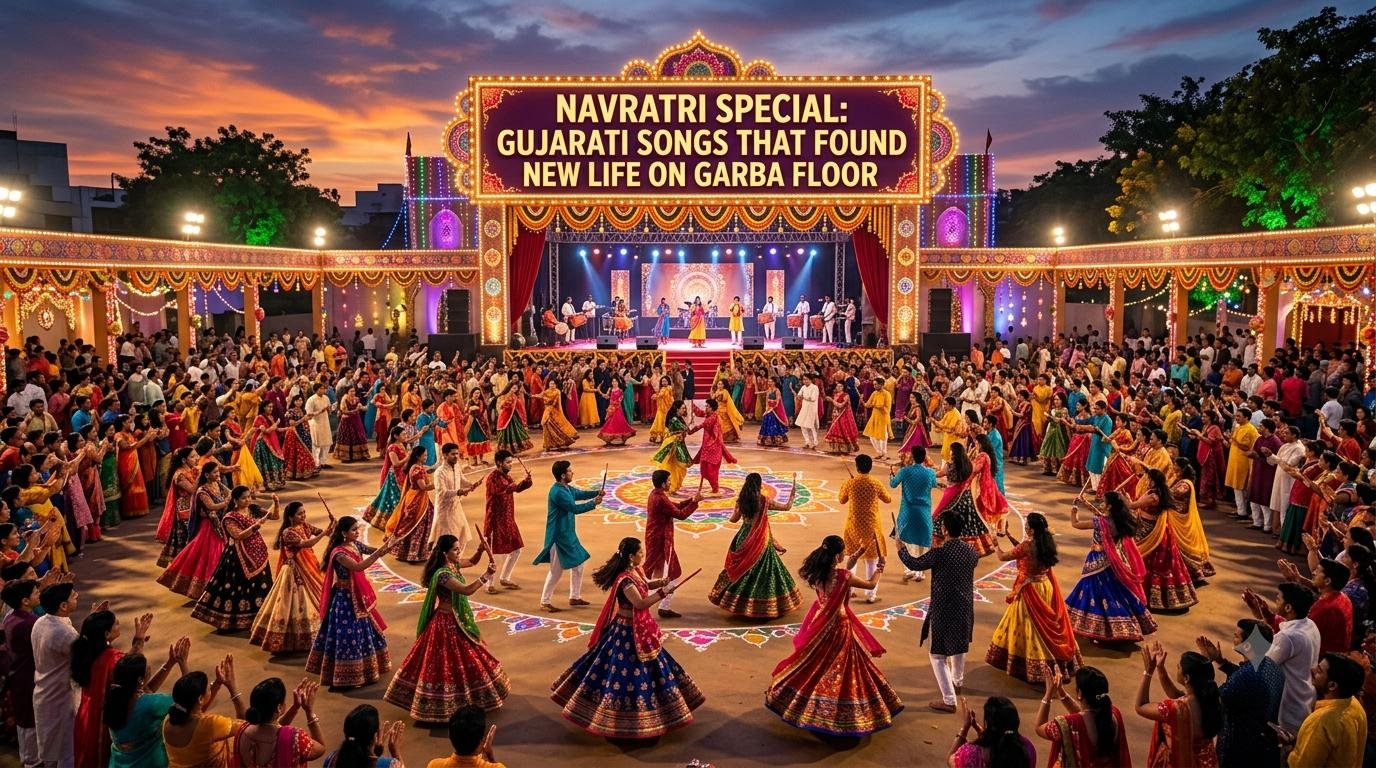
Navratri Special: In Gujarat, music is not simply something people listen to during Navratri—it is something they experience together. As the dhol beats begin and the Garba circle starts moving, familiar Gujarati songs often receive a completely new energy through live performances, folk arrangements, remixes and modern Garba rhythms.
Over the years, several Gujarati folk songs, devotional compositions and popular regional tracks have become favourites at Garba and Dandiya events. Some were already part of Gujarat’s traditional folk culture, while others gained a fresh identity after singers and musicians adapted them for modern Navratri celebrations.
This evolution has created a unique connection between Gujarati music and Garba culture, allowing traditional songs to reach younger generations while continuing to entertain audiences around the world.
Chogada Tara: From Folk Tradition to Modern Garba Favourite
Few songs have achieved the popularity of “Chogada Tara” in the modern Garba era.
The song’s catchy rhythm and repetitive musical structure make it naturally suited to group dancing. Its popularity received another major boost when a contemporary version appeared in the Bollywood film Loveyatri.
Today, different interpretations of the song can be heard at Navratri celebrations, Garba grounds and Dandiya events.
Its journey shows how a traditional Gujarati musical identity can be reintroduced to a new generation through contemporary arrangements.
Sanedo: The Evergreen Gujarati Celebration Song
“Sanedo” is one of Gujarat’s best-known festive folk songs.
Its lively rhythm and playful character have made it a regular part of community celebrations. Over time, musicians have created different arrangements and versions, allowing it to fit naturally into modern Garba programmes.
The word itself has become closely associated with Gujarati festive culture, and the song frequently creates an instant celebratory atmosphere when performed at Navratri events.
Modern Gujarati music and Bollywood have also borrowed from the Sanedo tradition, demonstrating its lasting influence.
Moti Veraana: A Folk Melody With Modern Energy
“Moti Veraana” represents another example of Gujarati folk music receiving a contemporary treatment.
The song’s melodic character allows singers to experiment with tempo, instrumentation and live arrangements. During Navratri, performers can transform such melodies into energetic numbers suitable for different stages of Garba.
Its continued presence in Gujarati music reflects the ability of folk compositions to evolve without completely losing their cultural identity.
Char Bangdi Vali Audi: When Popular Gujarati Music Enters the Garba Scene
Not every song played at a Garba event needs to originate as a traditional Garba composition.
“Char Bangdi Vali Audi” became a major Gujarati popular-music phenomenon and found a place in festive celebrations because of its catchy beat and strong audience recognition.
At modern Garba and Dandiya events, popular Gujarati songs like this can be rearranged or incorporated into DJ and live-band sets.
This represents a major change in Navratri music trends: today’s Garba playlist can include traditional folk music alongside contemporary Gujarati hits.
Vhalam Aavo Ne: The Romantic Side of Gujarati Music
Garba does not always have to be fast-paced.
“Vhalam Aavo Ne” represents the softer, melodic side of Gujarati music. Its emotional quality makes it suitable for slower dance sequences and cultural performances.
Contemporary interpretations have helped introduce such Gujarati melodies to audiences who may be more familiar with modern regional music than traditional folk recordings.
During Navratri, these songs can create a different mood between high-energy Garba rounds.
Pankhida Tu Udi Jaje: A Folk Favourite That Keeps Flying
“Pankhida Tu Udi Jaje” is deeply connected with Gujarati folk culture.
Its memorable melody has allowed generations of singers to create their own interpretations. During festive celebrations, modern arrangements can give the song a faster rhythm and bring it into the Garba environment.
Its popularity demonstrates why Gujarati folk songs remain such an important source for contemporary Navratri music.
Dholida Dhol Re Vagado: The Sound of the Dhol
The dhol is one of the defining sounds of Garba.
Songs such as “Dholida Dhol Re Vagado” capture that connection between rhythm, dance and celebration. The central musical idea is simple but powerful—the beat of the dhol brings people together.
Modern Garba bands frequently experiment with percussion, electronic instruments and larger live arrangements while retaining the traditional festive character.
This is one reason dhol-based Gujarati songs continue to dominate Navratri playlists.
He Ranglo Jamyo: A Classic Festive Mood
“He Ranglo Jamyo” represents the colourful side of Gujarati folk and Garba culture.
The song’s celebratory character makes it suitable for community Garba programmes, cultural events and traditional performances.
Different singers and musical groups have given Gujarati folk songs like this their own arrangements, allowing the same compositions to sound different from one generation to another.
Tara Vina Shyam: Devotion Meets Garba
Gujarati music has always had a close relationship with devotion.
Songs centred around Shyam, Krishna and other devotional themes can naturally become part of Navratri programmes because the festival itself has a strong spiritual dimension.
“Tara Vina Shyam” represents this devotional side of Gujarati music. Depending on the arrangement, such songs can be performed as devotional music, folk music or incorporated into slower Garba and Raas sequences.
Gujarati Music Is Changing the Sound of Modern Navratri
The biggest change in Gujarati Garba music is the blending of different musical generations.
A typical modern Navratri event may feature:
– Traditional Garba
– Gujarati folk songs
– Devotional music
– Contemporary Gujarati hits
– Bollywood Garba songs
– Dandiya music
– DJ remixes
– Live-band arrangements
– Fusion performances
This combination has made Navratri attractive to both older and younger audiences.
Older generations may connect with traditional folk melodies, while younger audiences may prefer contemporary beats and remixes. Live singers and musicians increasingly bring the two worlds together.
From Village Folk Music to Global Garba Nights
Gujarati folk music has travelled far beyond Gujarat.
Today, Navratri celebrations take place across India and in Gujarati communities around the world. This international growth has created new opportunities for Gujarati songs to be rearranged for large-scale Garba events.
The result is an interesting cultural cycle.
A traditional Gujarati song may be performed by a folk singer, adapted by a modern musician, remixed for a younger audience and then performed at a large Navratri event thousands of kilometres away from Gujarat.
Yet the basic identity of the song can remain intact.
Why Gujarati Songs Work So Well for Garba
There is a simple reason many Gujarati songs adapt naturally to Garba: rhythm and repetition.
Garba is a collective dance. Participants need a beat that allows an entire circle to move together.
Gujarati folk music often contains:
– Repetitive rhythmic patterns
– Strong percussion
– Easy-to-follow musical phrases
– Call-and-response elements
– Folk melodies
– Devotional themes
– Lyrics that can be sung collectively
These characteristics make many Gujarati compositions ideal for live Garba arrangements.
Tradition Meets the New Generation
The popularity of these songs proves that Gujarati folk music does not have to remain frozen in the past.
A traditional melody can receive a new arrangement without losing its cultural value. Young musicians can introduce new instruments, production techniques and performance styles while keeping the essence of Gujarati music alive.
That is why Gujarati Garba songs continue to evolve every Navratri.
From Chogada Tara and Sanedo to Pankhida Tu Udi Jaje, Dholida Dhol Re Vagado and He Ranglo Jamyo, these songs represent different chapters of Gujarat’s musical journey.
The Beat Continues
Navratri may last nine nights, but the musical tradition behind it has been developing for generations.
Every year, singers, musicians and Garba organisers introduce new versions of familiar songs. Some become temporary hits, while others become part of the long-term Navratri playlist.
The beauty of Gujarati music lies in this ability to change while retaining its roots.
When traditional Gujarati melodies meet the energy of a modern Garba ground, the result is more than just music—it becomes a celebration of Gujarat’s culture, community and identity.
Stay Updated With the Latest Articles
Stay updated with the latest news, insights, and articles.
Subscribe Now for more articles and updates.
