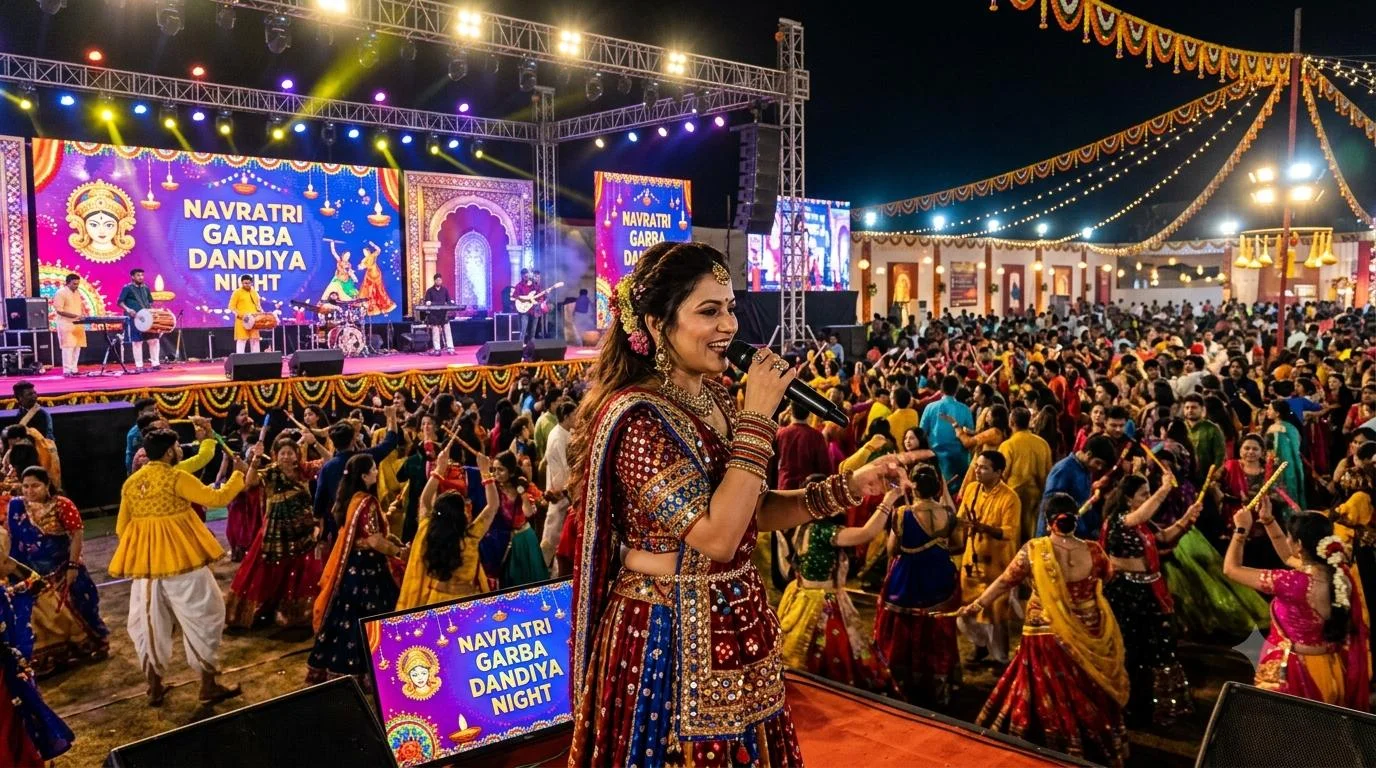
When the dhol begins to play, the lights brighten and thousands of people gather in colourful traditional outfits, one thing becomes clear: Navratri in India is more than a festival. It is a celebration of music, dance and community.
From traditional Gujarati Garba to contemporary Dandiya and Bollywood-inspired performances, music has become an important part of the Navratri experience.
Over the years, several Indian and Gujarati singers have developed strong connections with Navratri celebrations. Some are widely recognized for Bollywood playback singing, while others have built their careers around Gujarati folk, devotional and Garba music.
Their performances bring different musical styles to the same festive stage, helping Navratri continue to evolve while retaining its cultural roots.
Here are some of the singers whose voices and performances have become associated with the festive atmosphere of Navratri.
1. Falguni Pathak: A Familiar Voice of Navratri
When people talk about Navratri music, Falguni Pathak is one of the names that frequently comes to mind.
Known for her Gujarati folk-pop style and energetic live performances, Pathak has developed a strong association with Garba and Dandiya celebrations.
Her music has become part of the Navratri memories of many listeners, particularly those who grew up attending Garba events during the 1990s and 2000s.
Her performances bring together traditional Gujarati musical influences and a popular stage format, helping her music connect with audiences across generations.
For many Navratri enthusiasts, hearing familiar Falguni Pathak songs is closely connected with the feeling of a Garba night.
2. Aishwarya Majmudar: Gujarati Tradition Meets Contemporary Music
Aishwarya Majmudar is another familiar voice in Gujarati music and Navratri celebrations.
With a musical background that includes Gujarati traditions, classical training and playback singing, she has developed a career that extends across live performances and recorded music.
Her performances combine elements of traditional Gujarati music with a contemporary presentation.
That combination has helped her connect with both audiences who enjoy traditional Garba and younger listeners who experience the festival through modern musical arrangements.
Her performances have also reached audiences outside India, reflecting the growing international interest in Gujarati music and Navratri celebrations.
3. Bhoomi Trivedi: Connecting Playback Singing With Garba
Bhoomi Trivedi has built a strong connection between Bollywood playback singing and Gujarati musical culture.
She became widely known to Hindi-film audiences through songs such as “Ram Chahe Leela” from Goliyon Ki Raasleela Ram-Leela.
At the same time, her Gujarati musical background has kept her connected with audiences who enjoy Garba and traditional Gujarati music.
Her powerful voice works naturally in large live celebrations, where music needs to carry across large venues and energetic Garba circles.
Bhoomi Trivedi has also appeared at Navratri celebrations outside Gujarat, bringing Gujarati musical traditions to wider audiences.
4. Kinjal Dave: The Energy of Gujarati Folk Music
Kinjal Dave represents a younger generation of Gujarati folk performers who have become popular with modern audiences.
Her energetic performances and Gujarati songs have made her a familiar name during the festive season.
Her music combines elements of Gujarati folk traditions with a modern stage presentation, helping her connect particularly well with younger Garba audiences.
Her performances have also extended beyond Gujarat, reflecting the growing reach of Gujarati folk music among Indian communities in other parts of the world.
5. Geeta Rabari: Gujarati Folk Music With a Wider Reach
Geeta Rabari is another recognizable contemporary voice in Gujarati folk music.
Her powerful singing style and folk-oriented repertoire fit naturally into the atmosphere of Garba and Navratri celebrations.
She has performed at various cultural and festive events, including celebrations outside Gujarat.
Her performances demonstrate how Gujarati folk music can retain its traditional character while being presented in a large-scale concert environment.
The growing presence of artists such as Geeta Rabari at major cultural events also reflects the continued popularity of Gujarati folk music among younger listeners.
6. Parthiv Gohil: A Blend of Gujarati, Folk and Playback Music
Parthiv Gohil brings another dimension to the Navratri music scene.
Known for Gujarati music, playback singing and live performances, he has performed traditional Gujarati compositions as well as folk-oriented material.
Navratri music is not limited to fast-paced Dandiya tracks.
Devotional songs, folk compositions and slower melodic performances can also play an important role in creating the atmosphere of a festive evening.
Artists with a diverse musical repertoire can therefore contribute to different parts of a Navratri programme.
7. Arvind Barot: A Veteran Voice of Gujarati Music
Veteran Gujarati singer Arvind Barot represents an earlier generation of Gujarati folk and devotional music.
His contribution is important when looking at the musical traditions that influenced modern Garba celebrations.
Today’s large-scale Navratri events may feature sophisticated stages, modern sound systems and contemporary arrangements, but many of the musical traditions behind these celebrations have developed over decades.
Traditional folk and devotional artists helped preserve Gujarati musical forms that continue to influence contemporary performers.
8. Aditya Gadhvi: Bringing Folk Music to New Audiences
Aditya Gadhvi has become an important contemporary voice in Gujarati folk and modern Gujarati music.
His music demonstrates how traditional Gujarati sounds can be presented in ways that connect with younger audiences.
This combination of cultural roots and modern production has become increasingly visible in Gujarati music.
For Navratri audiences, it creates another way to experience folk traditions while remaining connected to contemporary musical tastes.
9. Jigardan Gadhavi: A Contemporary Gujarati Sound
Jigardan Gadhavi, popularly known as Jigrra, represents another contemporary direction in Gujarati music.
His music and performances reflect the changing sound of Gujarati popular culture.
Artists from this generation demonstrate that Gujarati music can explore contemporary arrangements and performance styles while retaining a clear regional identity.
This evolution is also visible during modern Garba and Dandiya events, where traditional compositions increasingly share space with newer Gujarati songs.
10. Akriti Kakar: Bollywood Playback Meets Garba
Akriti Kakar is another playback singer who has been associated with Garba performances.
Her experience in Bollywood playback gives her a different musical background from artists who primarily perform Gujarati folk music.
Her connection with Garba events illustrates how modern Navratri stages can bring together different musical traditions.
Bollywood playback singers can add familiar voices and popular songs to the festival, while dedicated Garba performers maintain the strong connection to Gujarati folk traditions.
Why Are Playback Singers Part of Navratri Celebrations?
Navratri music has changed considerably over the years.
Traditional Garba remains at the heart of the celebration, but large events today may combine several musical styles, including:
- Gujarati folk music
- Traditional Garba
- Devotional songs
- Dandiya music
- Bollywood songs
- Contemporary Gujarati music
- Live-band performances
Playback singers bring another layer to these celebrations because audiences may already recognize their voices from popular films and songs.
At the same time, dedicated Garba singers bring familiarity with Gujarati folk traditions and the musical rhythms associated with the festival.
The result is a diverse Navratri soundtrack that can move from devotional music to traditional Garba, energetic Dandiya and contemporary performances.
How Garba Music Has Changed Over the Years
The sound of Garba has continued to evolve.
Earlier celebrations were often centered around traditional folk instruments, community singing and devotional compositions.
Modern events may include large stages, professional sound systems, DJs, live bands, electronic arrangements and popular singers.
Despite these changes, the basic experience remains familiar: people gather together, form circles and celebrate through music and dance.
This balance between tradition and modern entertainment has helped Garba remain popular with younger generations.
From Gujarat to the World
One of the most noticeable developments in recent years has been the international reach of Garba.
Navratri celebrations are now held by Gujarati and Indian communities in countries including the United States, Canada, the United Kingdom and Australia.
International Garba events can feature artists from Gujarat alongside performers from the wider Indian music industry.
For people living thousands of kilometres away from Gujarat, music becomes an important way of maintaining a connection with language, culture and family traditions.
The growing popularity of Garba outside India also shows how regional Indian traditions can develop international audiences without losing their cultural identity.
Why Music Is So Important During Navratri
Music does more than provide entertainment during Garba and Dandiya celebrations.
It helps create a shared atmosphere.
The rhythm gives dancers a common beat. Familiar songs can bring back memories of previous celebrations. Traditional compositions connect people with cultural and religious traditions, while newer songs introduce the festival to younger audiences.
That is why the singer and the music are such an important part of a modern Navratri celebration.
The performance may change from one venue to another, but the central experience remains collective.
People come together, dance together and celebrate together.
The Next Generation of Navratri Music
The future of Navratri music is likely to continue combining traditional and contemporary sounds.
Young Gujarati artists are experimenting with folk instruments, modern production, fusion arrangements and digital platforms.
At the same time, traditional Garba continues to remain important for families and communities that want to preserve cultural practices.
This creates an interesting musical balance:
Traditional roots + contemporary sound + live performance + digital reach
As music platforms and social media make Gujarati songs accessible to audiences around the world, the cultural reach of Navratri music can continue to expand.
The Soundtrack of Navratri Keeps Evolving
From Falguni Pathak’s long-standing connection with Garba to Aishwarya Majmudar’s blend of traditional and contemporary music, Bhoomi Trivedi’s playback background, Kinjal Dave and Geeta Rabari’s Gujarati folk energy, and the newer generation of Gujarati artists, Navratri music continues to develop.
The artists may come from different musical backgrounds, but they share one important connection: music brings people together.
As the dhol beats become louder and the Garba circle grows, singers and musicians help create the soundtrack for one of India’s most vibrant cultural celebrations.
Navratri is therefore not just a festival of nine nights.
It is nine nights of music, devotion, dance, tradition, culture and community.
Frequently Asked Questions About Navratri Singers and Garba Music
Who is known for Navratri Garba music?
Falguni Pathak is one of the most widely recognized names associated with modern Garba and Dandiya celebrations. Many Gujarati folk and playback singers also regularly perform during Navratri.
Which Gujarati singers perform Garba?
Gujarati singers associated with Garba and Navratri performances include artists such as Falguni Pathak, Aishwarya Majmudar, Bhoomi Trivedi, Kinjal Dave, Geeta Rabari, Parthiv Gohil and other folk and contemporary performers.
Is Garba music only traditional Gujarati music?
No. Modern Garba events can include traditional Gujarati folk music, devotional songs, contemporary Gujarati music, Bollywood songs and fusion arrangements.
Why do Bollywood singers perform during Navratri?
Bollywood singers are often invited to Navratri events because audiences recognize their voices and popular songs. Their presence can add a broader entertainment dimension to large Garba and Dandiya celebrations.
Has Garba become popular outside Gujarat?
Yes. Garba and Navratri celebrations are held by Gujarati and Indian communities in many countries around the world, including the United States, Canada, the United Kingdom and Australia.
Why is music important to Navratri?
Music creates the rhythm for Garba and Dandiya, supports devotional traditions and brings large groups of people together. It is an important part of the cultural and social experience of Navratri.
Final Thoughts
Navratri music has travelled a long way from traditional community Garba gatherings to large-scale celebrations featuring professional singers, live bands and modern musical production.
Yet the heart of the celebration remains familiar.
People gather. Music begins. The Garba circle forms. And the celebration comes alive.
Whether the voice belongs to a veteran folk singer, a Gujarati artist, a Bollywood playback singer or a new-generation performer, music continues to play an important role in keeping the spirit of Navratri alive.
For nine nights, Garba becomes more than a dance.
It becomes a shared celebration of culture, devotion, music and community.
Stay updated with the latest news and articles. Subscribe Now for more articles.
