
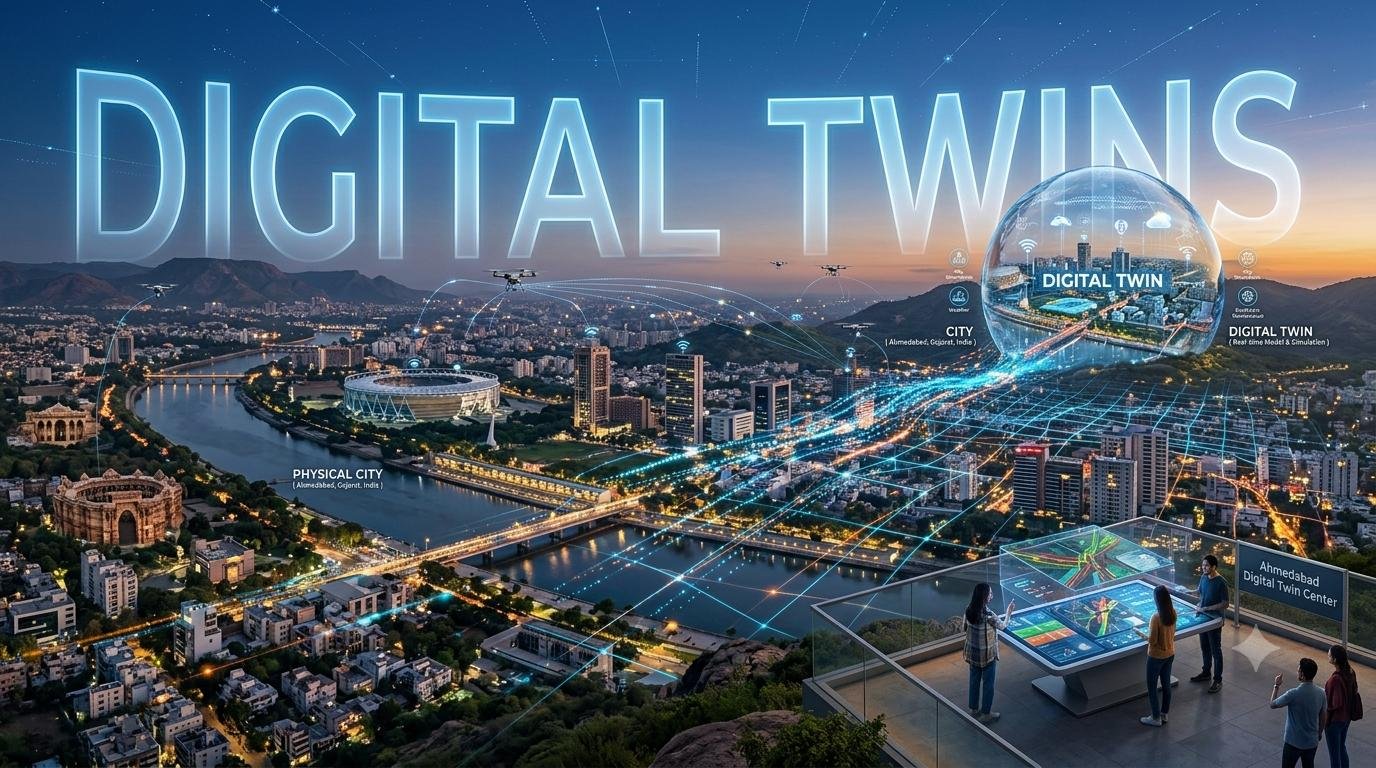
What if a factory, building, vehicle, city, or even a complex machine could have a digital copy that exists virtually and continuously reflects what is happening in the real world?
This is the idea behind Digital Twin Technology.
Digital twins are becoming an important part of modern digital transformation. By combining sensors, Internet of Things (IoT) devices, Artificial Intelligence (AI), cloud computing, and real-time data, digital twins can create dynamic virtual representations of physical objects and systems.
From smart factories and healthcare to construction, transportation, and smart cities, this technology is helping organizations understand how physical systems behave and make better decisions before making costly changes in the real world.
What Is a Digital Twin?
A Digital Twin is a virtual representation of a physical object, system, or environment that can use real-world data to reflect its condition and behavior.
A digital twin can represent:
A manufacturing machine
A building
A vehicle
A power plant
A production line
A city infrastructure system
The digital model can continuously receive information from sensors and other connected technologies.
This makes it more than a simple 3D model. A digital twin can become a dynamic digital representation that changes as the physical system changes.
How Digital Twin Technology Works
Digital twins typically combine several technologies.
Basic Process
1. Sensors collect information from a physical object.
2. IoT systems transmit the data.
3. Cloud or edge computing processes the information.
4. The digital twin reflects the physical system.
5. AI and analytics identify patterns and potential problems.
6. Organizations use the insights to make decisions.
This creates a continuous connection between the physical world and digital world.
Digital Twins in Manufacturing
Manufacturing is one of the most important applications of digital twin technology.
Factories can create digital representations of machines and production systems to monitor performance.
Potential Benefits
Predictive maintenance
Reduced equipment downtime
Production optimization
Improved quality control
Energy efficiency
Instead of waiting for a machine to fail, businesses can analyze performance data and identify warning signs earlier.
—
🚗 Digital Twins in Automotive Technology
The automotive industry can use digital twins throughout the vehicle lifecycle.
Engineers can simulate vehicle components and analyze how they perform under different conditions.
Applications
Vehicle design
Performance testing
Manufacturing optimization
Predictive maintenance
Fleet management
Digital simulation can reduce the need for some physical testing and help engineers identify potential problems earlier.
Digital Twins for Smart Cities
One of the most ambitious applications is the creation of Smart City Digital Twins.
A city-level digital twin could combine information about:
Roads
Buildings
Traffic
Energy consumption
Water systems
Public infrastructure
City planners could use simulations to evaluate potential changes before implementing them in the physical environment.
Digital Twins in Construction
The construction industry is increasingly adopting digital technologies.
Digital twins can support building design, construction planning, and facility management.
Possible Applications
Building performance monitoring
Construction progress tracking
Energy optimization
Maintenance planning
Infrastructure management
When combined with Building Information Modeling (BIM), digital twins can provide a more connected view of a building throughout its lifecycle.
Digital Twins in Healthcare
Healthcare is another emerging application for digital twin technology.
Researchers are exploring ways to create digital representations of biological systems and individual patient characteristics.
Potential Uses
Treatment planning
Medical research
Simulation
Personalized healthcare
Medical device development
However, healthcare digital twins involve complex scientific, privacy, and regulatory challenges and remain an active area of research.
Digital Twins in Aviation
Airlines and aerospace companies can use digital twins to monitor aircraft components and systems.
Benefits
Predictive maintenance
Performance analysis
Component monitoring
Improved operational efficiency
Identifying potential mechanical problems before they become serious can improve safety and reduce unexpected downtime.
Digital Twins and Energy Management
Energy companies can use digital twins to monitor complex infrastructure.
Applications
Power generation
Wind turbines
Solar installations
Electricity grids
Energy consumption
Digital twins can help identify inefficiencies and optimize operations.
Artificial Intelligence and Digital Twins
AI makes digital twins more powerful.
While a digital twin can represent real-world conditions, AI can analyze the information and identify patterns.
AI Can Help With:
Predictive maintenance
Anomaly detection
Performance forecasting
Automated optimization
Scenario analysis
This combination creates intelligent systems capable of supporting faster decision-making.
Digital Twins and Sustainability
Digital twins can also contribute to environmental goals.
Organizations can simulate different scenarios to understand how changes might affect energy consumption, emissions, and resource usage.
Sustainability Applications
Building energy optimization
Smart transportation
Industrial energy efficiency
Water management
Renewable energy planning
Better simulations can help reduce unnecessary resource consumption.
Cybersecurity and Privacy Challenges
Digital twins depend heavily on real-time data, which creates security concerns.
Major Risks
Unauthorized access
Data manipulation
Cyberattacks on connected devices
Exposure of sensitive operational information
Strong cybersecurity measures are essential, particularly when digital twins control or influence critical infrastructure.
Challenges of Digital Twin Technology
Despite its potential, digital twin adoption can be difficult.
Key Challenges
High implementation costs
Large volumes of data
Integration with existing systems
Sensor accuracy
Cybersecurity requirements
Need for specialized technical skills
Organizations must build reliable data infrastructure before digital twins can deliver their full potential.
Future of Digital Twins
Digital twins are expected to become increasingly connected with AI, IoT, robotics, cloud computing, and edge computing.
Future Possibilities
Autonomous factories
AI-powered smart cities
Intelligent transportation networks
Advanced healthcare simulations
Real-time infrastructure management
Digital replicas of entire industrial ecosystems
As computing power and sensor technology improve, digital twins could become a standard part of managing complex physical systems.
Conclusion
Digital Twin Technology is creating a powerful connection between the physical and digital worlds. By using real-time data, IoT sensors, AI, and advanced analytics, organizations can monitor systems, predict problems, test scenarios, and improve performance.
From factories and vehicles to buildings, energy systems, and cities, digital twins are opening new possibilities for smarter decision-making and more efficient operations.
The future could see digital replicas becoming an essential tool for designing, managing, and improving the physical world—making technology not just a way to observe reality, but a way to understand and optimize it.
Stay updated with the latest news and articles. Subscribe Now for more articles.
