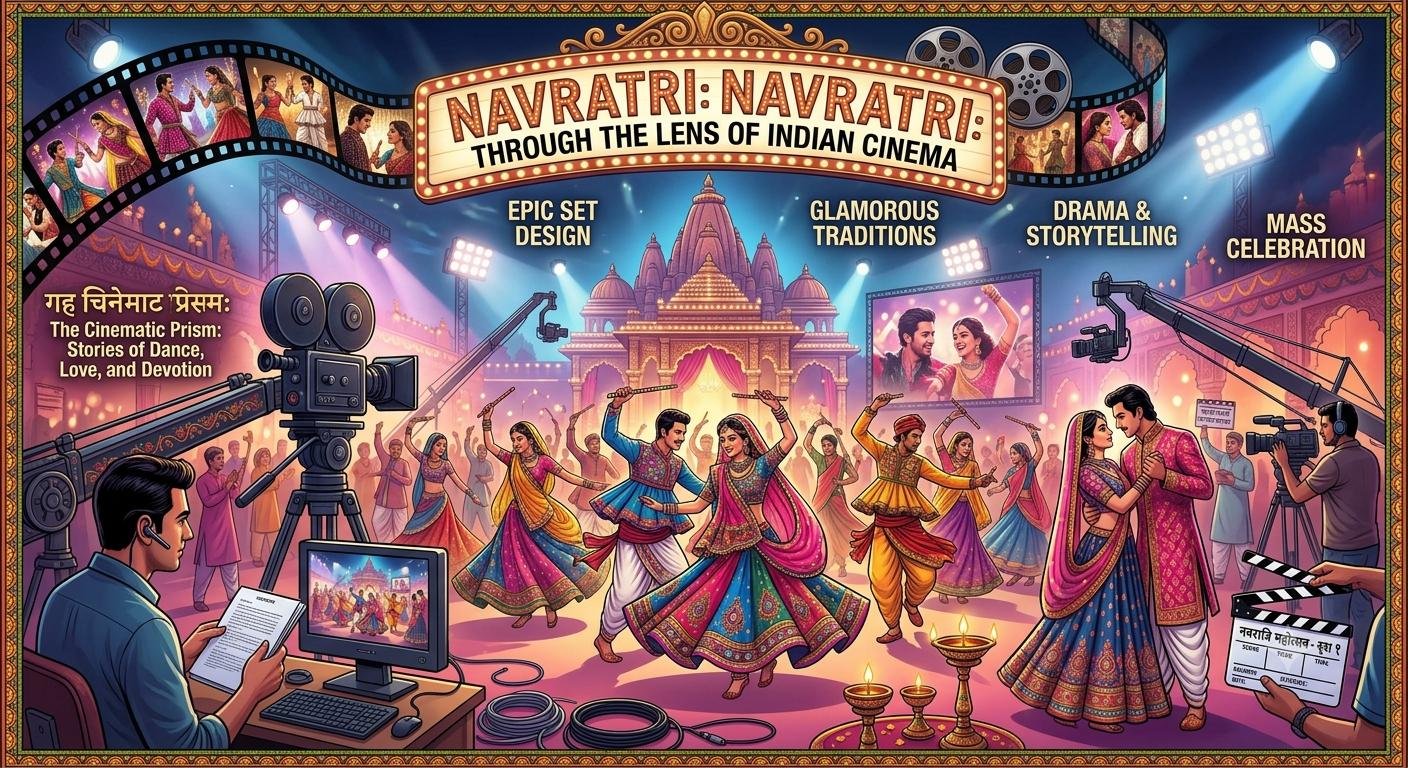
Navratri Special : For nine nights every year India transforms into a celebration of devotion, music, dance and colourful traditions. From the Garba grounds of Gujarat to Bollywoods grand dance sequences Navratri has become more than a religious festival—it is a cultural phenomenon that inspires the Indian film industry.
Cinema has played a role in bringing Gujarati Garba to audiences across India and beyond. Through songs, elaborate costumes, dramatic dance sequences and stories rooted in Indian traditions filmmakers have presented different interpretations of Navratri on the big screen.
The relationship works both ways. While films introduce Garba to audiences the festival also creates opportunities for actors, singers, choreographers, musicians and event organisers to connect with audiences outside cinema halls.
1. Bollywoods Love Affair With Garba
Bollywood has repeatedly used Garba to create some of its memorable musical moments. The circular dance formations, colourful traditional outfits and powerful percussion offer filmmakers an opportunity to combine storytelling with spectacle.
One of the known examples is “Dholi Taro Dhol Baaje” from Hum Dil De Chuke Sanam (1999). Featuring Salman Khan and Aishwarya Rai Bachchan the song brought the energy of Gujarati Garba to an audience.
Another landmark is “Nagada Sang Dhol” from Goliyon Ki Raasleela Ram-Leela (2013) featuring Deepika Padukone. Its dramatic choreography, traditional influences and powerful rhythm made it a prominent example of Garba-inspired Bollywood music.
Recently songs such as “Chogada” from Loveyatri (2018) and “Dholida” from Gangubai Kathiawadi (2022) have continued the connection between Hindi cinema and Gujarati festive culture.
These songs show how Garba can become a cinematic moment rather than simply background music.
2. Gujarati Cinema: Celebrating Its Cultural Identity
For Gujarati cinema Navratri is more than an attractive dance sequence. It is part of the regions identity.
Gujarati films often draw upon traditions, relationships, humour, family gatherings, music and community celebrations. Garba and Navratri provide a setting for stories about friendship, romance, family expectations and social life.
The festival also offers filmmakers a language that audiences immediately recognise: colourful chaniya cholis, kediyu outfits, traditional jewellery, decorated venues and circles of dancers moving together.
As Gujarati cinema reaches audiences through releases and digital platforms culturally familiar settings can help local stories connect with viewers who share those traditions.
The relationship between cinema and Navratri also creates opportunities to introduce Gujarati music, dialects and regional customs to audiences outside Gujarat.
3. Actors Become Part of the Navratri Celebration
Navratri is also a period for celebrities to connect with fans beyond film promotions.
Actors and television personalities often participate in Garba events, festive gatherings and cultural programmes. Their appearances can attract media attention. Introduce wider audiences to local celebrations.
For celebrities Navratri offers an opportunity to embrace Indian clothing and participate in a festival that brings together people from different backgrounds.
However celebrity participation is not the story. Local artists, community organisers, folk performers and audiences remain central to the festivals life.
The interaction between celebrities and Garba audiences reflects the way popular entertainment and regional traditions increasingly overlap.
4. Playback Singers: The Voices Behind Navratri Nights
Music is one of the connections between cinema and Navratri.
Playback singers lend their voices to songs that audiences later carry from movie theatres to Garba grounds. Some film tracks become favourites while established Gujarati folk singers continue to preserve traditional forms of Garba.
Artists such as Falguni Pathak, Aishwarya Majmudar, Bhoomi Trivedi and Gujarati folk and playback performers represent different parts of this musical landscape.
Their repertoires range from folk influences to contemporary arrangements designed for large live audiences.
The result is a Navratri soundtrack featuring devotional music, traditional Garba, Bollywood songs Gujarati hits and modern fusion performances.
Not every song played at a Garba event was originally composed as Garba. Sometimes a film song becomes popular because its rhythm, choreography or festive atmosphere suits the occasion.
5. Fashion: How Cinema Influences Navratri Style
Navratri has become an occasion for traditional fashion and cinema helps shape how these outfits are presented to wider audiences.
For women colourful chaniya cholis, embroidered skirts, mirror work oxidised jewellery and traditional accessories are choices. Men often choose kediyu outfits, embroidered jackets, kurtas and traditional footwear.
Film costumes can inspire looks particularly when popular actors wear traditional clothing in Garba sequences.
Designers and fashion labels may also use the Navratri season to showcase collections inspired by Gujarati embroidery, mirror work, folk patterns and regional craftsmanship.
At the time contemporary Garba fashion is not limited to cinema trends. Local artisans, regional designers and traditional clothing businesses play a role in preserving and evolving these styles.
6. Choreography: Traditional Garba Meets Spectacle
Traditional Garba is a participatory dance performed in a circle often around a representation of the divine feminine. Its movements, rhythms and patterns have cultural significance.
Film choreography adapts these elements for the camera. Directors and choreographers may use formations, coordinated costumes, dramatic lighting and carefully planned movements to create a cinematic performance.
This can make Garba visually spectacular. There is an important distinction between a choreographed film sequence and a traditional community celebration.
Cinema can popularise dance steps and songs while actual Garba grounds preserve the shared experience of people dancing regardless of professional training.
The interaction between these forms allows Garba to remain recognisable while reaching audiences.
7. Navratri as an Opportunity for the Film and Entertainment Business
The festival also creates opportunities across the entertainment industry.
Garba organisers may invite singers and performers while production companies, music labels and event promoters can use the season to reach audiences in festive entertainment.
Popular songs can receive renewed attention through playlists, short-form videos, dance performances and live shows. Film clips and music videos may also become part of Navratri conversations.
For Gujarati cinema the season can provide an opportunity to promote music, films and artists to culturally engaged audiences.
However the festivals commercial dimension exists alongside its community significance. Successful Navratri entertainment often brings these elements together than treating the festival only as a marketing opportunity.
8. From Gujarat to the Global Stage
Garba has a following among Gujarati communities living across India and overseas. Navratri celebrations in countries such as the United States, Canada, the United Kingdom and Australia bring together families, students and cultural organisations.
Film music helps make the festival accessible to people who may be more familiar with Bollywood songs than traditional folk recordings.
At the time Gujarati singers and cultural groups continue to introduce audiences to regional music and dance traditions.
This combination of heritage and popular entertainment has helped Garba travel across borders while retaining its distinctive identity.
9. The Future of Navratri in Indian Cinema
The relationship between Navratri and Indian cinema continues to evolve.
Audiences now discover songs through streaming services, social media, dance videos and live performances. Filmmakers can draw inspiration from folk music while regional cinema can bring local stories and cultural experiences to larger audiences.
Future films may explore Navratri through family dramas, romantic stories, music-led narratives and contemporary interpretations of Gujarati life.
The challenge is to represent the festival recognising that its significance goes beyond costumes, choreography and entertainment.
When Cinema Meets the Spirit of Navratri
From Hum Dil De Chuke Sanam and Goliyon Ki Raasleela Ram-Leela to Loveyatri and Gangubai Kathiawadi Bollywood has helped bring Garba-inspired music and visuals to audiences across India.
Gujarati cinema, regional singers, traditional performers and local communities contribute another part of the story by keeping the festival connected to its roots.
Ultimately Navratri through the eyes of the film industry is a story of culture meeting creativity. Cinema may provide the songs, stars and spectacular visuals. The heart of Navratri remains in devotion, shared traditions and the joy of dancing together.
For nine nights the screen and the Garba ground may share the rhythm—but it is the people who keep the tradition alive.
Stay updated with the latest news and articles. Subscribe Now for more articles.
