
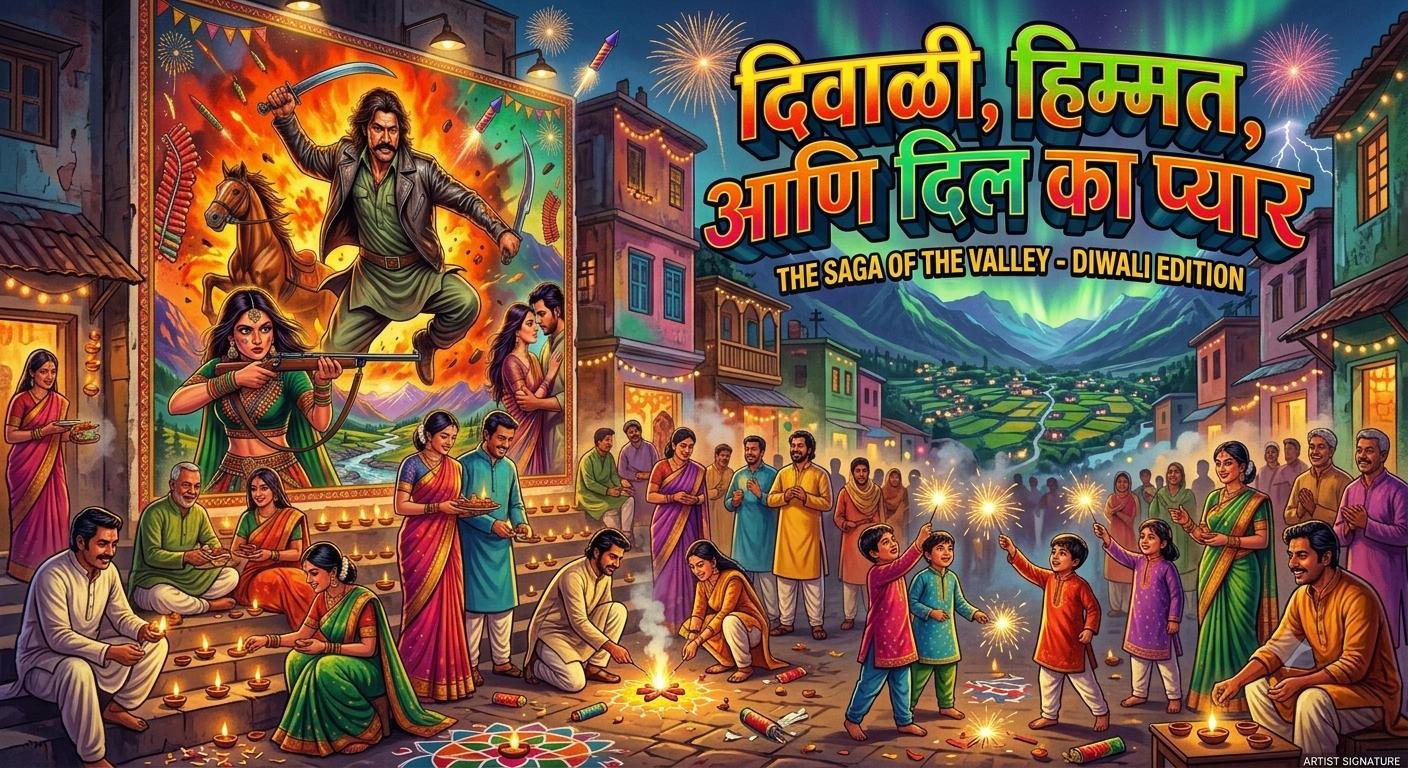
Diwali Special: When the glow of diyas fills homes families gather for Lakshmi Puja and colorful celebrations begin across India the festival of lights also finds a place on the big screen. Indian cinema has used Diwali to tell stories of family reunions, romance, hope, heartbreak, comedy and the victory of good over evil.
From the homecoming in Kabhi Khushi Kabhie Gham to the iconic festive sequence in Mohabbatein Diwali has become much more than a decorative background in Hindi cinema. Sometimes it marks a turning point in a characters life; at times it captures the warmth of family traditions or contrasts the brightness of the festival with the struggles of everyday life.
As audiences celebrate Diwali 2026 lets revisit the films, songs and cinematic moments that have made the festival memorable for movie lovers.
1. Kabhi Khushi Kabhie Gham: Diwali, Family and Homecoming
Bollywood films are as closely associated with an emotional Diwali scene as Kabhi Khushi Kabhie Gham (2001).
Directed by Karan Johar the film features Amitabh Bachchan, Jaya Bachchan, Shah Rukh Khan, Kajol, Hrithik Roshan and Kareena Kapoor Khan.
The Diwali sequence becomes a moment of family longing when Nandini Raichand senses the return of her son Rahul. The diyas, festive decorations and traditional puja create an atmosphere in which the festival represents more than celebration—it becomes a symbol of belonging and reconciliation.
The scene remains one of the recognizable examples of Diwali storytelling in mainstream Hindi cinema. <Cite refs={[“turn358489search3″,”turn358489search8”]}/>
2. Mohabbatein: A Festival of Lights and Love
Aditya Chopras Mohabbatein (2000) connects Diwali with romance, friendship and the courage to challenge strict rules.
The song sequence “Pairon Mein Bandhan Hai” takes place against a backdrop. The students Diwali celebration becomes an expression of their desire for freedom and happiness within the environment of Gurukul.
Featuring Amitabh Bachchan, Shah Rukh Khan and Aishwarya Rai Bachchan alongside an ensemble the film uses the festival to contrast discipline with emotion and tradition with youthful aspirations.
Its Diwali sequence demonstrates how a celebration can help move a films story forward. <Cite refs={[“turn358489search3″,”turn358489search10”]}/>
3. Hum Aapke Hain Koun..!. The Joy of Celebrating
Sooraj Barjatyas Hum Aapke Hain Koun..! (1994) is remembered for its family relationships, wedding celebrations and musical moments.
The film includes a celebration that brings relatives together during an important family development. The song “Dhiktana” contributes to the atmosphere.
The movie reflects an aspect of Indian festivals: celebrations often become occasions for families to share important news strengthen relationships and create memories across generations.
That theme continues to resonate with audiences who associate Diwali with family gatherings, traditional food, gifts and shared rituals. <Cite refs={[“turn358489search1″,”turn358489search3”]}/>
4. Zanjeer: When Diwali Becomes a Turning Point
Not every cinematic Diwali is filled with happiness.
In Prakash Mehras Zanjeer (1973) the festival is connected to an event in the childhood of Vijay Khanna, played by Amitabh Bachchan. The opening incident shapes his life and his pursuit of justice.
The use of Diwali is significant because the festivals lights and celebrations contrast with the violence that changes the protagonists future.
Than using the occasion simply as a festive backdrop the film makes it part of the characters central motivation. <Cite refs={[“turn358489search1″,”turn358489search8”]}/>
5. Vaastav: The Darker Side of a Festival
Mahesh Manjrekars Vaastav: The Reality (1999) starring Sanjay Dutt offers a different portrayal of Diwali.
During a festive sequence Raghu visits his family and displays his newly acquired wealth. His mothers reaction exposes the moral distance that has developed between them.
The famous “pachaas tola” moment became widely remembered,. The scene also carries a deeper contrast: while the neighbourhood celebrates Raghus life has taken a troubling direction.
The film demonstrates how Indian cinema can use a festival associated with light and prosperity to explore guilt family relationships and the consequences of choices. <Cite refs={[“turn358489search1″,”turn358489search3”]}/>
6. Chachi 420: Diwali With Comedy and Family Emotions
Kamal Haasans Chachi 420 (1997) brings comedy and family drama together through the story of a father trying to remain close to his daughter.
A Diwali sequence becomes important when the disguised Chachi attempts to protect the child during a firecracker mishap.
The scene combines humour with affection reminding viewers that festivals can bring unexpected situations alongside their joyful moments.
The films approach is different from the grand family celebrations of Bollywood dramas but it still uses Diwali to highlight the emotional bonds at the center of the story. <Cite refs={[“turn358489search1″,”turn358489search10”]}/>
7. Taare Zameen Par: When the Festival Highlights Loneliness
Aamir Khans Taare Zameen Par (2007) presents a reflective view of Diwali.
While families and neighborhoods celebrate young Ishaan struggles with feelings of isolation after being sent to boarding school.
The contrast between the atmosphere and his sadness makes the scene emotionally powerful. It reminds audiences that celebrations can sometimes intensify the loneliness of people who feel separated from their loved ones.
This portrayal broadens the meaning of Diwali in cinema: the festival is not about lights and happiness but also about the human need for understanding, belonging and care. <Cite refs={[“turn358489search3″,”turn358489search4”]}/>
8. Aamdani Atthanni Kharcha Rupaiya: A Diwali Song for the Family
The 2001 comedy Aamdani Atthanni Kharcha Rupaiya, featuring Govinda, Juhi Chawla and other ensemble cast members includes the song “Aayi Hai Diwali.”
The song captures the sometimes chaotic atmosphere of family celebrations. Its focus on people makes it a useful example of how Hindi cinema represents Diwali outside lavish palaces and glamorous parties.
The sequence celebrates the pleasures of the season: music, family, food and the excitement surrounding the festival. <Cite refs={[“turn358489search4″,”turn358489search9”]}/>
9. Swades: The Cultural Meaning Behind the Lights
Ashutosh Gowarikers Swades (2004) includes the sequence “Pal Pal Hai Bhaari,” which draws upon the Ramayana and a village performance associated with the story of Lord Ram.
The sequence connects cinema with a cultural tradition in which stories of Rams victory over Ravana and return to Ayodhya are associated with the significance of Diwali.
The films larger focus is on community, responsibility and social change. Its use of performance highlights how Indian cinema can connect festivals with cultural storytelling and collective identity. <Cite refs={[“turn358489search7”]}/>
10. Diwali and the Bollywood Release Tradition
Diwali is important to cinema not only because it appears on screen but also because it has traditionally been considered a major release window.
Producers and distributors have often targeted the holiday period, when families may have opportunities to visit theatres together.
Films such as Baazigar (1993) Dilwale Dulhania Le Jayenge (1995) Raja Hindustani (1996) Kuch Kuch Hota Hai (1998) and Mohabbatein (2000) are among the titles associated with Diwali-period releases or the surrounding festive window. <Cite refs={[“turn358489search0”]}/>
The release date alone does not guarantee a films success. However the holiday period can offer filmmakers an opportunity to reach audiences seeking entertainment during family celebrations.
Diwali also provides a promotional theme for trailers festive posters, celebrity appearances and film-related campaigns.
Why Diwali Works So Well in Indian Cinema
Diwali offers filmmakers powerful storytelling elements:
- Family reunions: Characters return home reconnect and resolve conflicts.
- Romance: Festive lights and gatherings create a memorable setting for love stories.
- Comedy: Family preparations and celebrations create opportunities for humor.
- Drama: The contrast between happiness and private struggles can deepen a story.
- Cultural heritage: Religious rituals, traditional clothing, music and stories connect films with Indian customs.
- Hope and transformation: The symbolism of light provides a natural way to explore new beginnings.
The memorable festive scenes use these elements to support the story rather than relying on decorations alone.
The Changing Face of Diwali in Modern Cinema
Todays audiences experience cinema differently from generations. Alongside releases viewers discover films through streaming platforms, television reruns, short videos and social media conversations.
As a result an older Diwali scene can become popular again when audiences revisit it during the season.
The festival also continues to inspire fashion, music, celebrity celebrations and entertainment coverage. For industries, including Gujarati cinema Diwali is an opportunity to highlight local traditions, stories and artists.
At the time the strongest cultural portrayals recognize that Diwali is celebrated in different ways across communities and regions. Its significance can include devotion, family traditions, renewal and the gathering of loved ones.
When the Lights of Diwali Meet the Magic of Cinema
From the family longing of Kabhi Khushi Kabhie Gham, to the celebration of Mohabbatein the emotional contrasts of Vaastav and the reflective storytelling of Taare Zameen Par Indian cinema has portrayed Diwali in many different ways.
These movies show that the festival is not about diyas, fireworks and special clothes. It can be a homecoming, a change, a family memory or a moment of hope.
As people celebrate Diwali 2026 these movie moments give a chance to look back at the stories that have become part of life.
In cinema Diwali is not just a festival in the background. Sometimes it is the light that shows what a story is really about.
Stay updated with the latest news and articles. Subscribe Now for more articles.
