
Imagine downloading files in seconds joining virtual meetings that feel very real controlling smart devices from far away and using intelligent gadgets that talk to each other almost instantly.
These possibilities are part of the goals behind 6G technology the generation of wireless communication that scientists and engineers examine everywhere.
While 5G keeps growing researchers are already studying what comes after. 6G is not about faster internet. 6G might bring connectivity, artificial intelligence, sensing tools and smart computing to make fresh digital experiences.
What exactly is 6G? How might 6G work?. What could 6G mean for everyday life?
What Is 6G Technology?
6G means sixth‑generation wireless communication technology. 6G is expected to follow 5G and meet needs for connected devices, smart applications and services that use a lot of data.
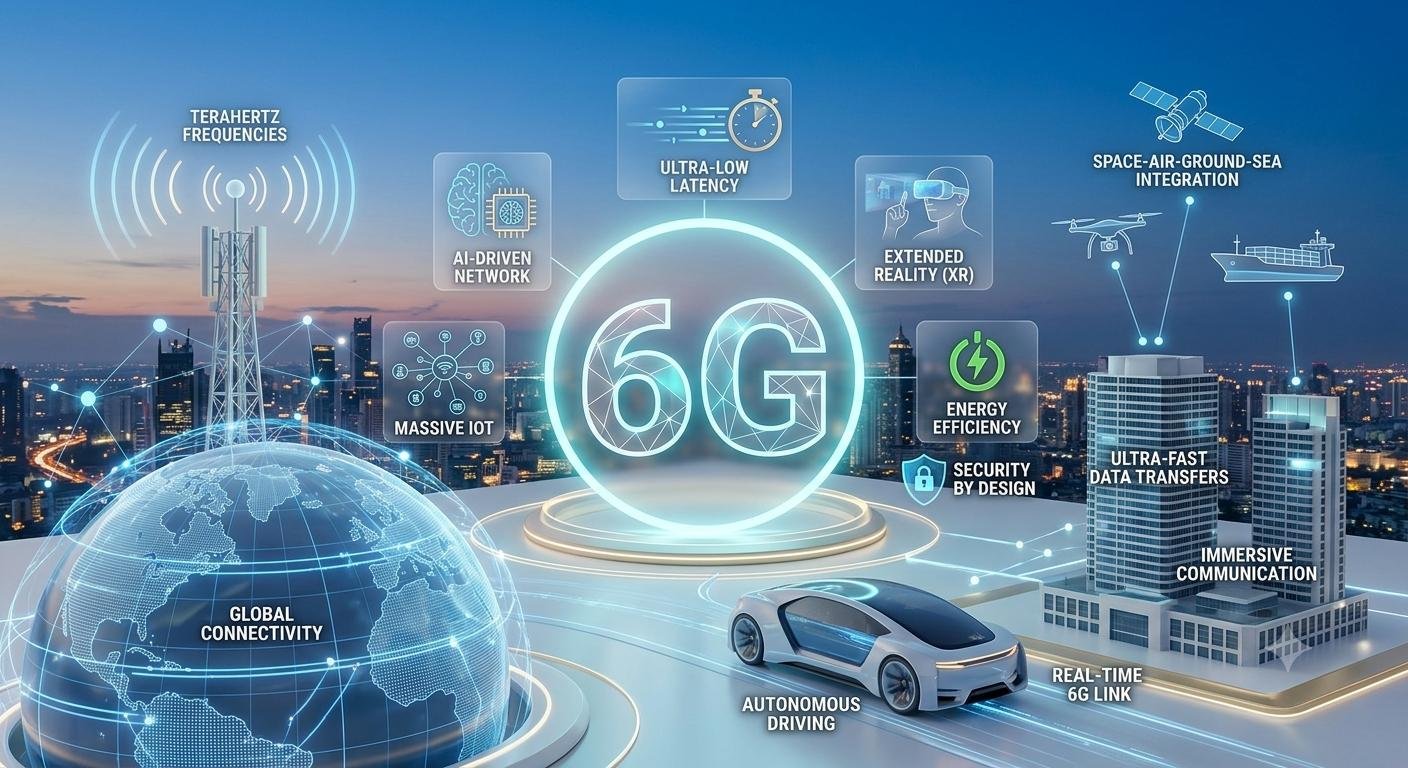
Research into 6G includes areas:
– Higher data speeds
– Lower communication delays
– AI‑assisted network management
– Advanced connectivity for smart devices
– Integrated sensing and communication
– Improved support for immersive digital experiences
– More efficient use of network resources
6G standards and technical rules are still being made. The final abilities, prices and when 6G will be sold to the public will depend on research, rules and how many companies adopt it.
How Could 6G Be Different From 5G?
5G brought improvements to mobile links, like faster possible speeds, less waiting time in good conditions and better support for many devices.
6G research wants to push links even further.
| Technology area | 6G development |
|—|—|
| Internet speed | Higher peak data rates |
Network response | Lower latency in suitable applications |
| Artificial intelligence | More intelligent network management |
| Connected devices | Improved support for complex connected environments |
| Digital experiences | More immersive virtual and augmented reality |
| Sensing | Potential integration of communication and environmental sensing |
These are research goals, not guaranteed performance levels for every future 6G connection.
6G and Healthcare
Healthcare could be one of the areas that gains from communication networks.
Future networks may help with things like linked devices doctors working together from far away and fast transfer of big medical pictures.
For example a specialist in one city could look at high‑resolution data taken at a clinic in another city.
Strong networks could also connect devices where steady talk is very important.
Remote medical operations and other risky uses need more than quick internet. They need systems, tight security, proper gear and expert supervision.
6G and Smarter Transportation
Future transport systems may depend on cars, road structures, traffic lights. Linked sensors that share data.
Strong wireless links could help these systems share data better.
Potential applications include:
– Real‑time traffic information
– Connected vehicle communication
– Smarter traffic management
– Improved coordination between transport systems
– Support for mobility research
For example linked infrastructure could send road conditions or traffic data to cars that can receive it.
6G by itself will not make a car drive by itself or assure safer roads. Sensors, programs, car design and safety systems stay essential.
6G and Artificial Intelligence
Artificial intelligence and wireless links could become more connected.
Future networks may use AI to manage traffic, spot network issues and give resources better.
At the time stronger links could help AI apps that need data from many connected gadgets.
Picture a factory where sensors, robots and watch systems talk all the time. A strong network could help coordinate them. Real performance would depend on the network layout and computing power.
This mix could help build AI‑powered cities, smart factories and linked services.
6G and Augmented Reality
Augmented reality (AR) adds data to the real world while virtual reality (VR) creates all‑digital worlds.
Both tech can need computing power and steady links especially when they use detailed pictures or talk to faraway systems.
Future 6G networks could help support advanced applications, including:
– Immersive remote collaboration
– Interactive educational experiences
– Virtual product demonstrations
– Remote technical assistance
– Digital training environments
– Real‑time 3D communication
For example a technician could receive guidance from an expert who is located elsewhere.
I have seen how such guidance can be very helpful when troubleshooting equipment.
Such experiences will also depend on devices, software, processing power and on the practical availability of the network.
6G in Manufacturing
I have seen factories becoming more connected through sensors, robotics and automated equipment.
Future wireless technologies could support flexible industrial systems where machines exchange information and respond to changing conditions.
Potential uses include equipment monitoring, robotic coordination, production analytics and remote maintenance.
For manufacturers the real benefit could be improved visibility into operations. More efficient coordination between systems.
Nevertheless industrial applications need connectivity and proper backup arrangements especially when communication failures could affect safety.
6G and Smart Agriculture
Agriculture could also benefit from wireless communication.
Connected farms may use sensors, drones, automated machinery and digital monitoring platforms to gather information about crops and soil conditions.
Advanced networks could support the exchange of large amounts of data across complex agricultural environments.
For farmers this may improve access to information used for irrigation planning, crop monitoring and farm management.
However rural coverage, equipment costs and local infrastructure will influence how useful these technologies become.
Could 6G Make Smart Cities Smarter?
Smart cities use systems to monitor and manage services such as transportation, energy, water and public infrastructure.
Future wireless networks could help these systems exchange information effectively.
Potential applications include:
– Connected traffic systems
– electricity infrastructure
– Environmental monitoring
– Intelligent public transport
– Infrastructure maintenance
– Emergency communication support
For example connected sensors could help identify unusual conditions in infrastructure and alert the relevant teams.
The effectiveness of these applications will depend on data quality, privacy safeguards, investment and coordination between agencies.
Security and Privacy Challenges
As more devices become connected, cybersecurity and privacy will become more important.
A future wireless network may support communication between devices, businesses, vehicles and critical infrastructure.
Potential concerns include access, data interception, network disruption and misuse of personal information.
Important safeguards may include encryption, secure device authentication, regular software updates and careful management of access permissions.
Privacy should also be considered when networks support sensing technologies that may reveal information about people or their surroundings.
What Could 6G Mean for India?
India has been investing in telecommunications infrastructure, digital services and research into wireless technologies.
In the term 6G could support new opportunities in areas such as manufacturing, healthcare, education, agriculture and connected infrastructure.
It may also create opportunities for telecommunications companies, software developers, researchers, equipment manufacturers and startups.
For these benefits to reach a population, affordability, reliable coverage, local innovation and digital skills will be important.
The impact will depend not on network performance but also on how useful and accessible the services built on top of it become.
Challenges Before 6G Becomes Mainstream
Despite its potential several challenges must be addressed.
Infrastructure costs: New networks may require investment in equipment and deployment.
Spectrum availability: Regulators and industry organizations must coordinate the use of radio frequencies.
Device compatibility: Consumers may need devices to use future network capabilities.
Energy efficiency: Advanced networks must balance performance with electricity consumption.
Coverage: Very high-frequency communication can present coverage and range challenges in environments.
Cybersecurity: connected systems require robust security from the beginning.
Standardization: International cooperation is needed to develop technologies.
These challenges mean that 6G adoption will take time and will likely vary across countries and industries.
When Will 6G Arrive?
6G is still in the research and standardization phase. The industry is broadly working toward deployment around **2030** although timelines and actual availability may vary.
Before adoption the technology must progress through research, standards development, testing, infrastructure deployment and device development.
Consumers should therefore view current 6G demonstrations and predictions as research developments rather than features that are already available in ordinary mobile networks.
Final Thoughts
6G technology could represent the major evolution, in wireless connectivity.
Its potential goes beyond faster downloads. Researchers are looking into how advanced networks might help AI, immersive experiences, smart infrastructure, connected vehicles and industrial automation.
Technology alone does not ensure progress. Affordability, safety, cybersecurity and real‑world usefulness will decide how much people benefit.
As 5G keeps developing 6G research gives a glimpse of a future where connectivity may become more intelligent and deeply woven into activities.
The ultimate goal is not to connect devices faster.
It is to build communication systems that help people, businesses and communities work efficiently access services more easily and create new possibilities with technology.
Stay updated with the latest news and articles. Subscribe Now for more articles.
