When the first beats of Garba begin during Navratri, Gujarat transforms into a celebration of music, devotion, colour and community.
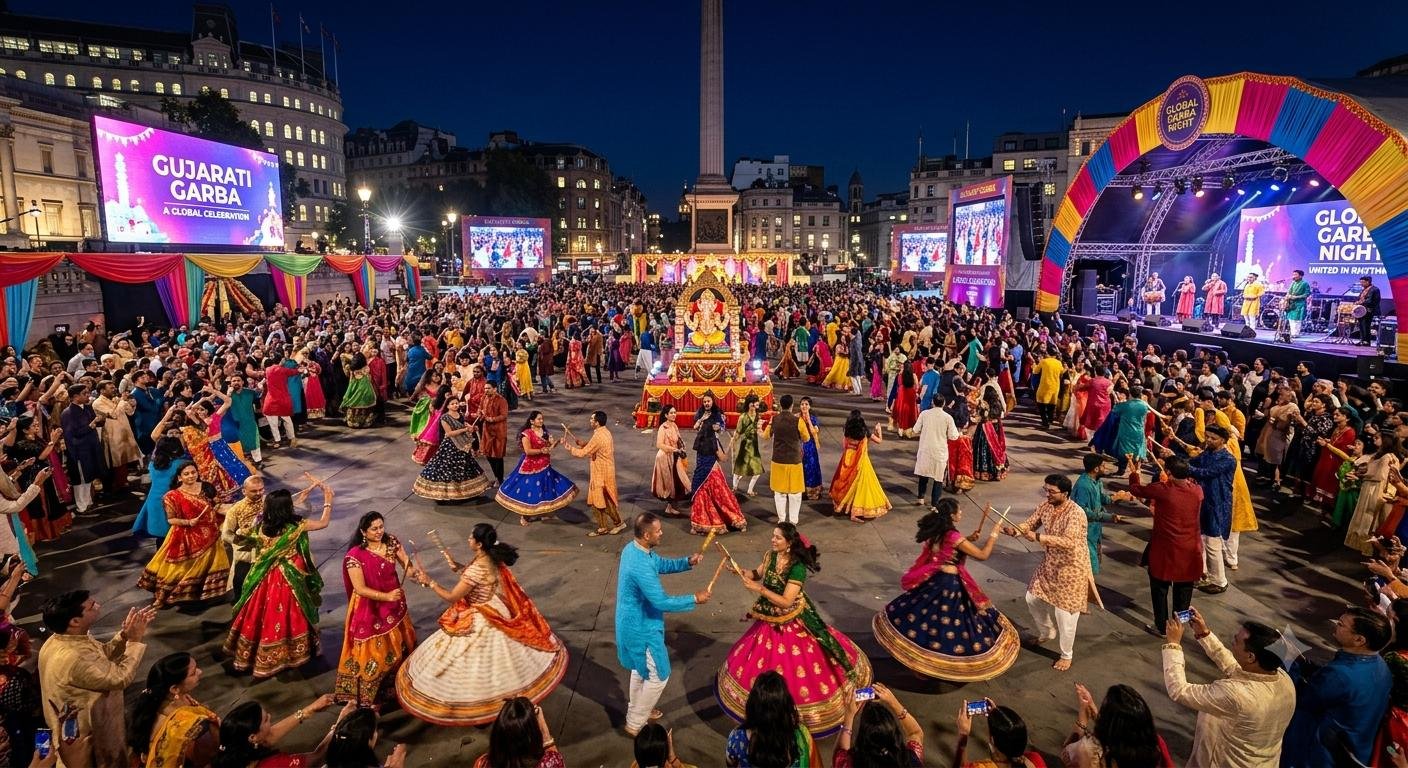
From Ahmedabad and Vadodara to London, New Jersey, Dubai, Sydney and other cities with Gujarati communities, people gather in circles, wear traditional outfits and dance to the rhythm of devotional and folk-inspired music.
But how did a traditional Gujarati folk dance become an internationally recognised part of Navratri?
And while Gujarat celebrates Navratri through Garba and Dandiya, how do other regions of India celebrate the same festival?
The answer reveals something fascinating about Indian culture: one festival can have many different cultural expressions while retaining a common spiritual connection with Shakti.
What Is Garba?
Garba is a traditional folk dance associated particularly with Gujarat.
The word is commonly connected with the Gujarati/Sanskrit-rooted idea of garbha, meaning womb or the inner space of a vessel. Traditionally, Garba is performed around a centrally placed lamp or another symbolic representation of divine energy.
The circular movement of the dancers is one of its most recognisable features.
People move around the centre while singing or dancing to rhythmic devotional and folk songs.
Over time, Garba has developed from community-based traditional celebrations into large-scale cultural events featuring elaborate stages, musicians, professional performers and contemporary music.
Yet its connection with Navratri remains central.
Why Is Garba So Closely Connected With Navratri?
Navratri is associated with the worship of Shakti, the Divine Feminine.
In Gujarat, this spiritual celebration became closely connected with community dancing.
Traditionally, people gathered in neighbourhoods and villages to sing and dance as an expression of devotion.
The circular formation of Garba has also been interpreted symbolically as representing the cycle of life and the eternal nature of divine energy.
The lamp placed at the centre can represent the divine presence, while the dancers move around it.
Thus, Garba is not simply a dance performance.
For many participants, it is simultaneously culture, community and devotion.
From Village Courtyards to Global Cities
One of the biggest reasons Garba has travelled so successfully around the world is the global Gujarati diaspora.
Gujarati communities living outside India have continued celebrating Navratri and passing traditional music, clothing, dance and food to younger generations.
As these communities grew, Navratri events became larger.
Today, Garba celebrations can be found in cities across North America, the United Kingdom, the Middle East, Africa, Australia and other parts of the world.
For Gujaratis living abroad, a Navratri event can become more than a religious celebration.
It can provide a connection to:
– Gujarati language
– Traditional clothing
– Folk music
– Family
– Food
– Community
– Indian heritage
– Cultural identity
This combination makes Garba particularly adaptable to an international environment.
Why Does Garba Appeal to People Beyond Gujarat?
Garba has several qualities that make it accessible to people who may not have grown up with Gujarati culture.
1. It Is Community-Based
Garba is traditionally performed in groups.
Participants do not need to dance alone or perform a complicated individual routine. They become part of a circle.
That makes the experience social and inclusive.
2. The Music Is Highly Rhythmic
Traditional Garba uses strong rhythmic patterns that naturally encourage movement.
Modern Garba events have expanded this musical vocabulary by combining traditional instruments and melodies with contemporary arrangements.
3. It Is Visually Colourful
Gujarati traditional clothing adds another dimension.
Women may wear colourful Chaniya Choli, while men often wear Kediyu or other traditional outfits.
Mirrors, embroidery, jewellery and bright fabrics make the celebration visually distinctive.
4. It Combines Tradition and Modernity
One reason Garba continues to attract younger generations is its ability to evolve.
Traditional songs can coexist with modern compositions.
Traditional clothing can be combined with contemporary fashion.
Large community celebrations can use modern sound, lighting and stage production.
This allows the tradition to remain recognisable while adapting to changing generations.
Garba and Dandiya: Are They the Same?
Garba and Dandiya Raas are related Gujarati dance traditions, but they are not identical.
Garba is traditionally associated with dancing around a central lamp or symbolic representation of the divine.
Dandiya Raas uses decorated sticks, traditionally called dandiya, with dancers striking the sticks rhythmically while moving through coordinated patterns.
In modern Navratri events, the two are frequently presented together.
This is why people outside Gujarat sometimes use “Garba” as a general term for the entire Navratri dance celebration.
How Does West Bengal Celebrate Navratri?
While Gujarat is famous for Garba, West Bengal is internationally known for Durga Puja.
The emphasis here is strongly centred on Goddess Durga.
Large temporary structures called pandals are constructed, often featuring elaborate artistic designs.
Beautiful idols of Goddess Durga are installed, and communities organise worship, cultural programmes, music and gatherings.
The festival culminates with the immersion of the Durga idol.
Durga Puja is therefore a major religious and cultural event rather than primarily a dance festival.
The celebration also has enormous importance in the cultural life of Kolkata and other parts of West Bengal.
How Does Himachal Pradesh Celebrate Navratri?
Himachal Pradesh has several distinctive traditions associated with the worship of deities.
One particularly notable celebration is the Kullu Dussehra, which takes place after much of India has observed Dussehra.
It is associated with Lord Raghunath and involves processions, local deities and large community gatherings.
The event demonstrates how the broader Navratri-Dussehra season can take a very different form depending on regional traditions.
How Does Karnataka Celebrate Navratri?
In Karnataka, the festival season includes the famous Mysuru Dasara.
The celebrations have a long royal and cultural association with Mysuru.
The illuminated Mysore Palace, processions, cultural programmes and traditional ceremonies make the event one of Karnataka’s best-known festivals.
The emphasis here is different from Gujarat’s nightly Garba, demonstrating the regional diversity of the Navratri and Dussehra season.
How Does Tamil Nadu Celebrate Navratri?
Tamil Nadu has a distinctive Navratri tradition known as Golu or Kolu.
Families arrange dolls and figurines on specially constructed steps in their homes.
These displays can represent deities, stories, cultural scenes and traditional themes.
Women and families visit one another’s homes, exchange traditional items and participate in devotional activities.
The atmosphere is therefore more closely associated with home-based cultural and devotional gatherings than with the large-scale Garba nights of Gujarat.
How Does Kerala Celebrate Navratri?
In Kerala, the final days of Navratri have an important connection with education and learning.
The Ayudha Puja and Vijayadashami traditions are particularly significant.
Books, musical instruments, tools and other objects associated with work and learning may be placed for worship.
Vijayadashami is also associated with Vidyarambham, a ceremony in which children are traditionally introduced to learning and writing.
The regional emphasis therefore highlights knowledge and education.
How Does Maharashtra Celebrate Navratri?
Maharashtra observes Navratri with devotional worship, community events and cultural traditions.
In many communities, Goddess Durga and other forms of Shakti are worshipped.
The festival is also connected with Ghatsthapana, fasting and daily religious observances.
As in Gujarat, modern urban celebrations can include large community gatherings, music and dance.
However, the style and traditions vary from community to community.
How Does Uttar Pradesh and North India Celebrate Navratri?
Across several parts of North India, Navratri is strongly associated with fasting, temple worship and devotion to the Goddess.
Many devotees observe fasts during the nine days.
The festival is also connected with Ram Lila performances in several regions, especially as the season progresses toward Dussehra.
Dussehra then commemorates the victory of Lord Rama over Ravana in the Ramayana tradition.
Thus, the same festival season can connect Goddess worship with the Ramayana depending on regional customs.
Why Does Every Region Celebrate Navratri Differently?
This is one of the most beautiful aspects of Indian culture.
There is no requirement that every region celebrate a major festival in exactly the same way.
The same broad religious season can produce completely different cultural expressions.
Gujarat: Garba and Dandiya
West Bengal: Durga Puja and pandals
Karnataka: Mysuru Dasara
Tamil Nadu: Golu/Kolu
Kerala: Ayudha Puja and Vidyarambham
Himachal Pradesh: Kullu Dussehra
North India: Fasting, worship, Ram Lila and Dussehra traditions
The rituals differ, but devotion, community and the celebration of divine power connect many of these traditions.
Why Has Gujarati Garba Become a Global Cultural Symbol?
Garba’s international growth can be understood through several factors.
Gujarati Diaspora
Gujarati communities around the world have maintained Navratri traditions outside India.
Youth Participation
Young people have helped introduce new music, choreography and event formats while retaining traditional elements.
Social Experience
Garba creates an opportunity for thousands of people to participate together rather than simply watch a performance.
Fashion
Chaniya Choli, Kediyu, jewellery and colourful accessories have become an important part of the visual identity of international Garba events.
Digital Media
Social media, music platforms and videos have made Gujarati dance and Navratri music accessible to audiences far beyond Gujarat.
Cultural Pride
For many Gujaratis, Garba is a direct connection to their heritage.
This emotional connection helps keep the tradition alive across generations.
Garba’s Growing Global Recognition
Garba’s international cultural importance reached another milestone when UNESCO inscribed Garba of Gujarat on the Representative List of the Intangible Cultural Heritage of Humanity in 2023.
UNESCO describes Garba as a devotional and social dance tradition performed during the Hindu festival of Navaratri and notes its strong connection with Gujarat’s cultural identity.
This recognition does not mean Garba suddenly became important in 2023. Rather, it formally recognised an existing living cultural tradition with deep roots in Gujarati society.
From Gujarat to the World
Today, Navratri can look completely different depending on where you are.
In Ahmedabad, you mig
In Ahmedabad, you might see thousands of people dancing Garba.
In Kolkata, you may find magnificent Durga Puja pandals.
In Mysuru, the palace becomes part of a spectacular Dasara celebration.
In Tamil Nadu, families may create beautiful Golu displays.
In Kerala, children may begin their educational journey during Vijayadashami traditions.
And in cities outside India, Gujarati communities may recreate the energy of Gujarat through large-scale Garba nights.
Different traditions.
Different languages.
Different music.
Different rituals.
Yet one powerful cultural season connects them.
Conclusion: One Navratri, Many Expressions
The global popularity of Gujarati Garba is not simply because it is a colourful dance.
It combines devotion, music, movement, community, fashion and cultural identity in a form that can be shared across generations and geographical boundaries.
At the same time, Garba is only one expression of Navratri.
Across India, the festival takes many forms—from Durga Puja in West Bengal and Golu in Tamil Nadu to Mysuru Dasara in Karnataka and educational traditions in Kerala.
That diversity is the real beauty of Indian festivals.
One festival. Many traditions. Many languages. Many ways of expressing devotion.
And when the Garba circle begins moving under the Navratri lights, Gujarat offers the world its own unique expression of that timeless celebration.
Garba is Gujarati at heart—but its circle has become global.
Stay Updated With the Latest Articles
Stay updated with the latest news, insights, and articles.
Subscribe Now for more articles and updates.
