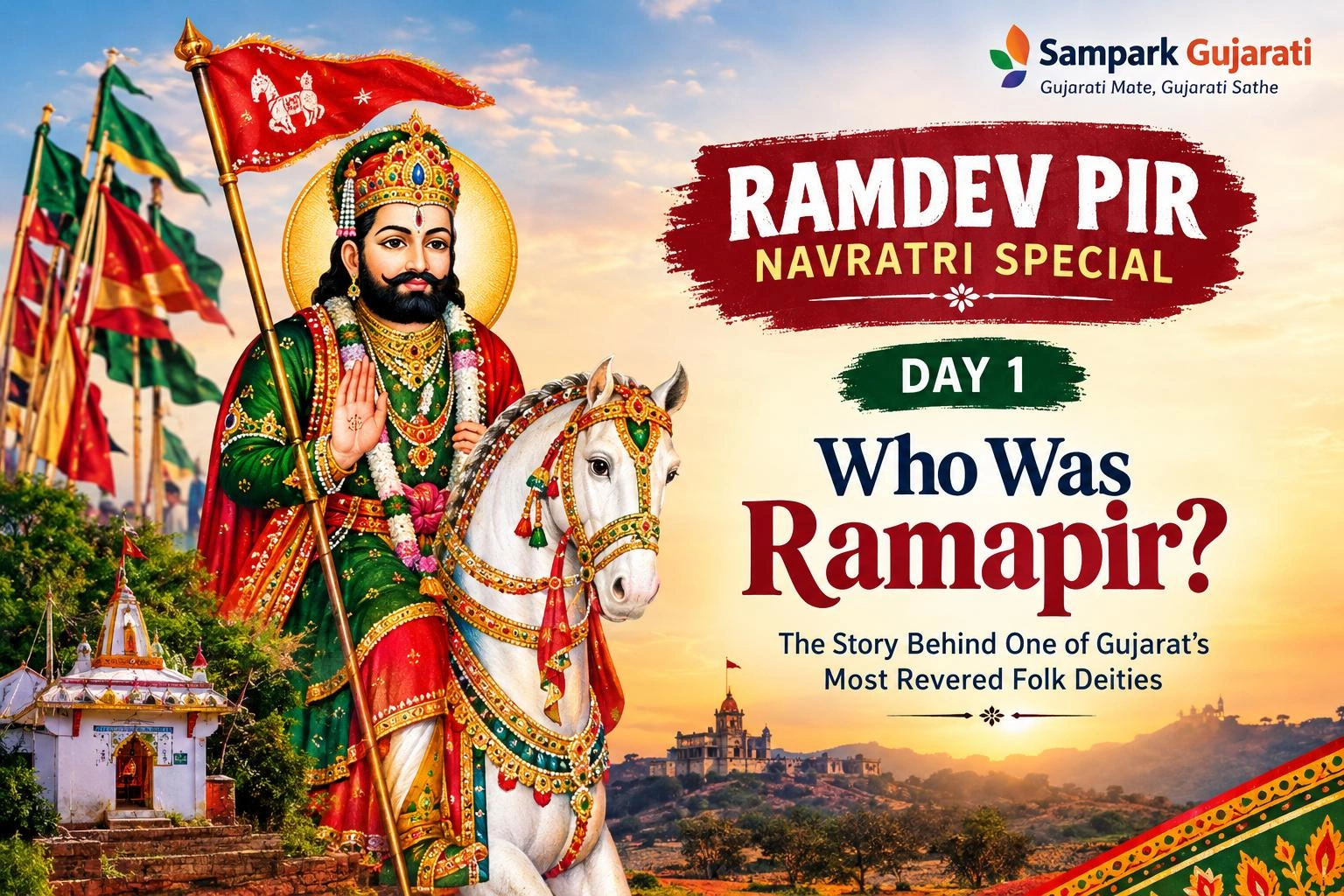
Ramdev Pir Navratri Special | Day 1
What makes a folk deity so powerful that generations continue to remember his name, sing his bhajans and carry his traditions long after his time?
In Gujarat and Rajasthan, the answer for millions of devotees is Ramdev Pir, popularly known as Ramapir or Baba Ramdev.
His name is closely connected with faith, folk culture, devotion and social harmony. His presence can be seen not only in places of worship but also in bhajans, folk songs, religious gatherings, traditional flags or “nejā”, fairs and family traditions passed from one generation to another.
But who exactly was Ramdev Pir? Why did his influence spread so widely? And why does his name continue to hold such an important place in the devotional culture of Gujarat and Rajasthan?
As part of the Ramdev Pir Navratri Special, Sampark Gujarati begins a nine-day journey into the stories, traditions and cultural significance surrounding Ramapir.
Who Was Ramdev Pir?
Ramdev Pir is a highly revered folk deity, particularly worshipped in Rajasthan and Gujarat. He is also remembered by names such as Ramapir and Baba Ramdev.
According to popular traditions, Ramdev Pir was born in Rajasthan and became known for his spiritual life, compassion and connection with people from different communities.
Much of what is popularly known about his life has been preserved through oral traditions, devotional narratives, folk literature and community beliefs. As a result, some details can vary from one tradition or region to another.
For devotees, these stories form an important part of a living cultural heritage.
Rather than viewing Ramdev Pir only through historical records, his legacy is also understood through the traditions that communities have preserved for centuries.
Why Is Ramdev Pir Known as Ramapir?
The name Ramapir carries a strong devotional meaning.
“Pir” is traditionally associated with a spiritual guide or revered saint in South Asian religious culture. The name therefore reflects the spiritual respect with which followers remember Ramdev Pir.
One of the distinctive features of Ramapir’s devotional tradition is its reach across communities.
His worship developed into a shared folk tradition in which different groups could connect through devotion, prayers and cultural practices.
This broad appeal is one of the reasons Ramdev Pir remains an important figure in the folk religious landscape of western India.
Ramdev Pir and the Tradition of Equality
Among the most frequently highlighted themes in Ramdev Pir’s stories is social equality.
The traditions surrounding Ramapir often portray him as someone whose compassion extended beyond social divisions.
This aspect of his legacy has helped make him more than a religious figure for many followers. He has also become a cultural symbol of unity and social harmony.
The idea is particularly significant in India’s diverse social landscape, where religious and folk traditions have historically brought communities together.
Ramdev Pir’s Connection With Seva
Another important element associated with Ramapir is seva, or service.
For devotees, religious faith has traditionally been connected with helping others. Serving food, supporting people in need, caring for elders and showing compassion are examples of everyday actions that can give devotional beliefs a practical meaning.
This connection between devotion and service is one of the enduring themes found in stories associated with Ramdev Pir.
Ramdev Pir’s Influence on Gujarati Folk Culture
The influence of Ramapir can be seen in several aspects of Gujarati folk culture.
Devotees may express their faith through:
– Ramdev Pir bhajans
– Religious gatherings
– Temple visits
– Traditional flags and nejā
– Folk songs
– Community celebrations
– Religious fairs
– Personal prayers and family traditions
These practices can differ according to region and community, making Ramdev Pir worship a fascinating part of Gujarat’s broader devotional culture.
For many families, such traditions are not simply religious activities. They are also a way of keeping cultural memories alive.
The Storytelling Tradition of Ramapir
One reason Ramdev Pir remains so popular is the power of storytelling.
Before digital media, television and social media became part of everyday life, stories about revered figures were passed from elders to younger generations through oral storytelling, songs and community gatherings.
Ramapir’s stories became part of this tradition.
Different communities may tell particular episodes in different ways, but the stories collectively contribute to the larger cultural identity surrounding Ramdev Pir.
This also explains why devotees may hear different versions of certain Ramapir stories while still sharing the same deep respect for him.
Ramdev Pir: History, Faith and Folk Tradition
It is important to understand that Ramdev Pir’s legacy exists at the intersection of history, folk tradition and faith.
Some elements of his life are discussed through historical and traditional accounts, while other popular stories belong primarily to devotional folklore.
For responsible storytelling, these should not be presented as identical.
The beauty of folk traditions is that they often survive because communities continue to tell, sing and celebrate them. Ramdev Pir’s story is an example of how a revered figure can become deeply embedded in the cultural memory of an entire region.
Why Is Ramdev Pir Still Relevant Today?
The continued popularity of Ramapir demonstrates how traditional figures can remain relevant even in a rapidly changing world.
Modern lifestyles may have changed dramatically, but people continue to look towards cultural traditions for a sense of identity and connection.
For many devotees, Ramdev Pir represents a link between faith, family, community and tradition.
His story also encourages conversations about values such as compassion, equality and helping others—ideas that remain relevant regardless of time or generation.
Ramdev Pir and the Nine-Day Navratri Journey
Navratri is one of India’s most celebrated periods of devotion and cultural expression.
During these nine days, Sampark Gujarati will explore different dimensions of Ramdev Pir’s tradition—not simply repeating the same devotional message, but looking at the stories, symbols, customs, folk culture and beliefs that have made Ramapir such a significant figure.
From the meaning of the Ramapir nejā to the traditions surrounding his worship, every day will reveal another part of this fascinating cultural journey.
Day 1 Takeaway
The story of Ramdev Pir cannot be understood through a single description.
He is simultaneously remembered as a folk deity, spiritual figure, cultural symbol and beloved figure of devotion.
His traditions have travelled across generations and regions, particularly through Gujarat and Rajasthan, becoming part of the cultural fabric of countless families.
And that is what makes the story of Ramapir so interesting: it is not simply about the past. It is about how a tradition continues to live through the people who remember it.
🚩 Day 2: The Mystery and Meaning Behind Ramapir’s Neja
Tomorrow on Sampark Gujarati:
Why is the Ramapir Neja such an important symbol among devotees? What does the traditional flag represent, and how did this distinctive practice become associated with Ramapir’s worship?
Day 2 of the Ramdev Pir Navratri Special will explore the story, symbolism and cultural significance of the Ramapir Neja.
Stay connected with Sampark Gujarati for the next chapter.
Jai Ramapir 🚩
Ramdev Pir, also known as Ramapir or Baba Ramdev, is a widely revered folk deity, particularly in Gujarat and Rajasthan. His traditions are associated with devotion, social harmony, service and folk culture.
“Ramapir” is a popular devotional name used by followers to respectfully refer to Ramdev Pir. The term “Pir” has traditionally been associated with a spiritual guide or revered saint.
Ramdev Pir is particularly revered across Rajasthan and Gujarat, although his devotional tradition is also followed in other parts of India.
The nejā, commonly understood as a traditional religious flag or banner, is an important symbol in various Ramdev Pir devotional traditions. Its meaning and customs can vary between communities and regions.
Ramdev Pir holds religious and cultural significance for devotees, with his traditions particularly associated with faith, equality, community, service and folk culture.
Stay updated with the latest news and articles. Subscribe Now
Authoritative Sources
- Rajasthan Tourism – Ramdevra Temple
- Rajasthan Devasthan Department – Ramdevji Temple Profile
- Rajasthan Government – Ramdevra Development & Cultural Significance Report
- Rajasthan Tourism – Baba Ramdevji Panorama
