
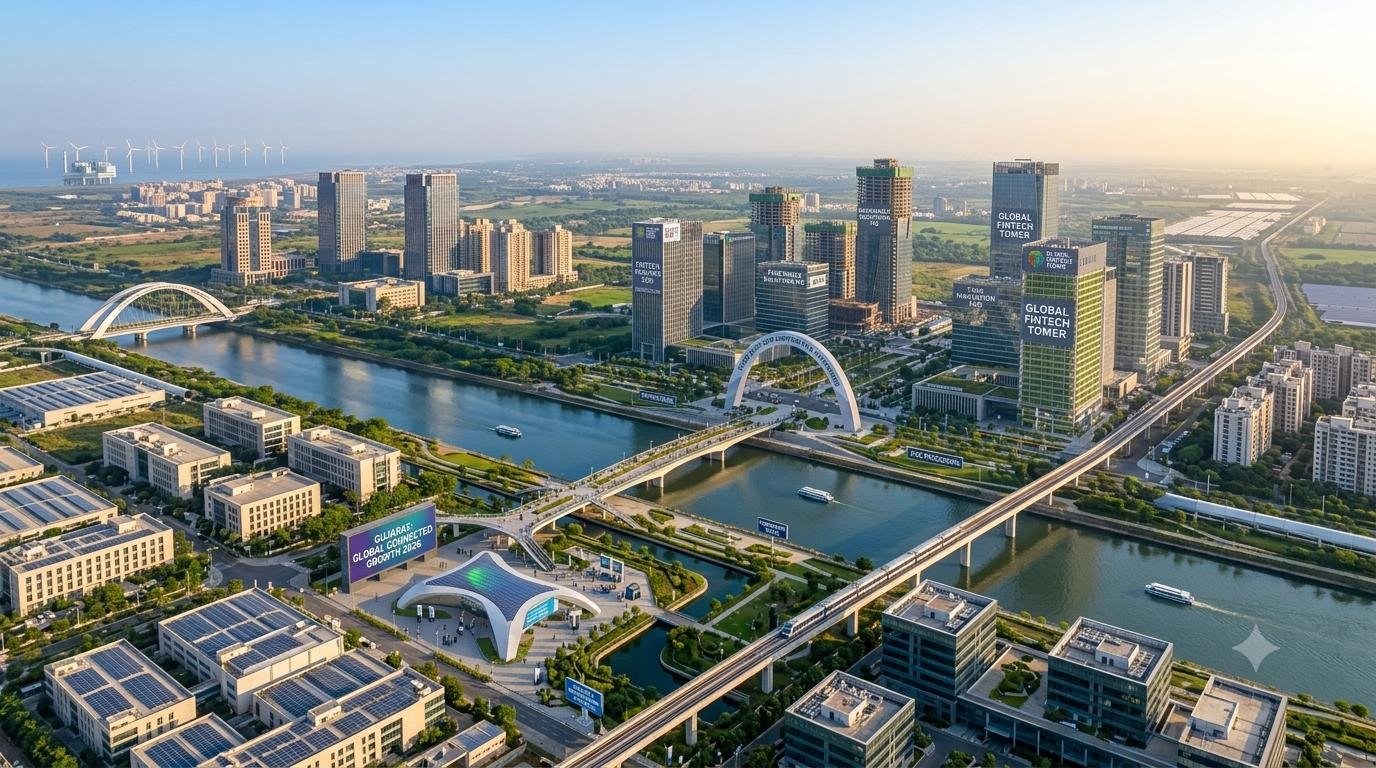
Gujarat’s real-estate story is increasingly being shaped by something much bigger than housing projects. Roads, metro networks, industrial corridors, financial centres, technology hubs, airports and planned cities are changing where people work, live and invest.
At the national level, Prime Minister Narendra Modi has continued to emphasize infrastructure, manufacturing, connectivity and the broader Viksit Bharat 2047 vision. At the state level, Gujarat Chief Minister Bhupendra Patel‘s government is focusing on urban infrastructure, industrial development, technology partnerships and major economic centres.
Together, these policy directions are influencing the state’s property landscape.
From Property Development to Economic Development
The biggest change in Gujarat is the increasing connection between economic activity and real estate.
Instead of developing residential areas in isolation, the state is increasingly building ecosystems around:
– Financial services
– Manufacturing
– Semiconductors
– Technology
– Logistics
– Renewable energy
– Industrial corridors
– Urban infrastructure
When companies establish operations in a location, they create employment. Employment brings workers and professionals. Those people need homes, offices, retail, schools, restaurants and transportation.
This creates a wider real-estate ecosystem.
GIFT City: The Biggest Example
GIFT City is perhaps the clearest example of Gujarat’s economic-development-led property strategy.
The project is promoted by the Government of Gujarat as a global financial hub in the Ahmedabad-Gandhinagar region. Its ecosystem combines financial services, technology, commercial offices and supporting infrastructure.
GIFT City’s official platform currently reports more than 1,000 operational entities, over 20,000 employment opportunities, and more than 29 million square feet allotted.
The Gujarat Chief Minister also reviewed commercial, residential and social-infrastructure projects in GIFT City in July 2026 and emphasized business growth, infrastructure, talent development and global connectivity.
For property investors, this is significant because the city’s real-estate demand is being supported by an expanding business ecosystem.
Gujarat Is Moving Towards Technology-Led Growth
Gujarat’s development strategy is also becoming increasingly technology-focused.
In August 2026, Chief Minister Bhupendra Patel’s international outreach included discussions with major technology companies around areas such as artificial intelligence, data centres, semiconductors, green energy and innovation-led manufacturing.
This could have a long-term effect on property markets.
Technology companies require:
– Office campuses
– Data centres
– Employee housing
– Hotels
– Retail
– Transportation
– Supporting commercial services
Therefore, technology investment can eventually translate into real-estate demand.
Ahmedabad’s Metro Expansion
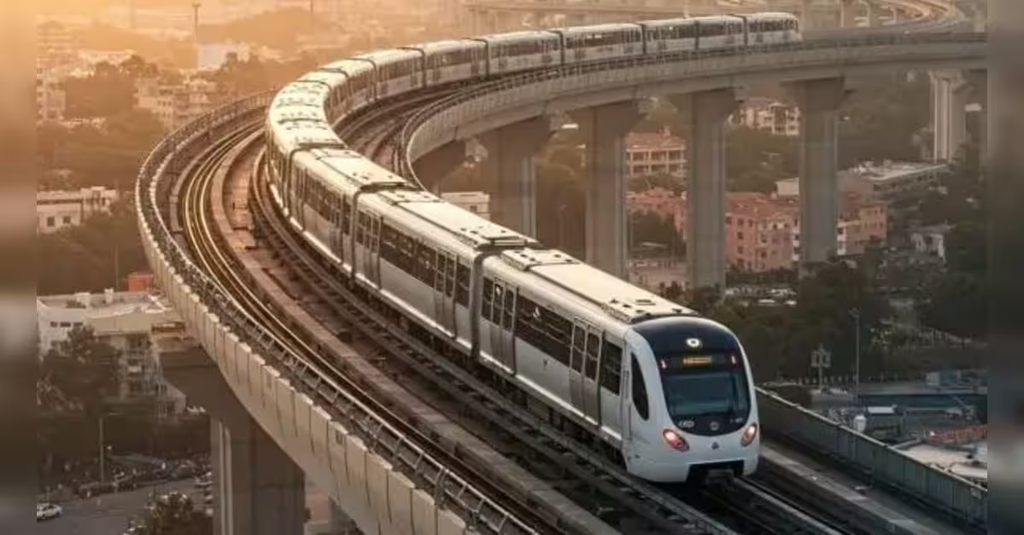
Ahmedabad’s property market is also being influenced by expanding public transportation.
Ahmedabad Metro Phase II already connects Ahmedabad and Gandhinagar, including the GIFT City corridor.
The next phase is moving toward physical preparation, with utility-shifting work underway on proposed corridors in August 2026.
Metro connectivity can change property preferences because locations that become easier to access may attract new residents, businesses and investors.
For real estate, connectivity is often as important as the property itself.
Dholera: Manufacturing Could Create a New Property Story
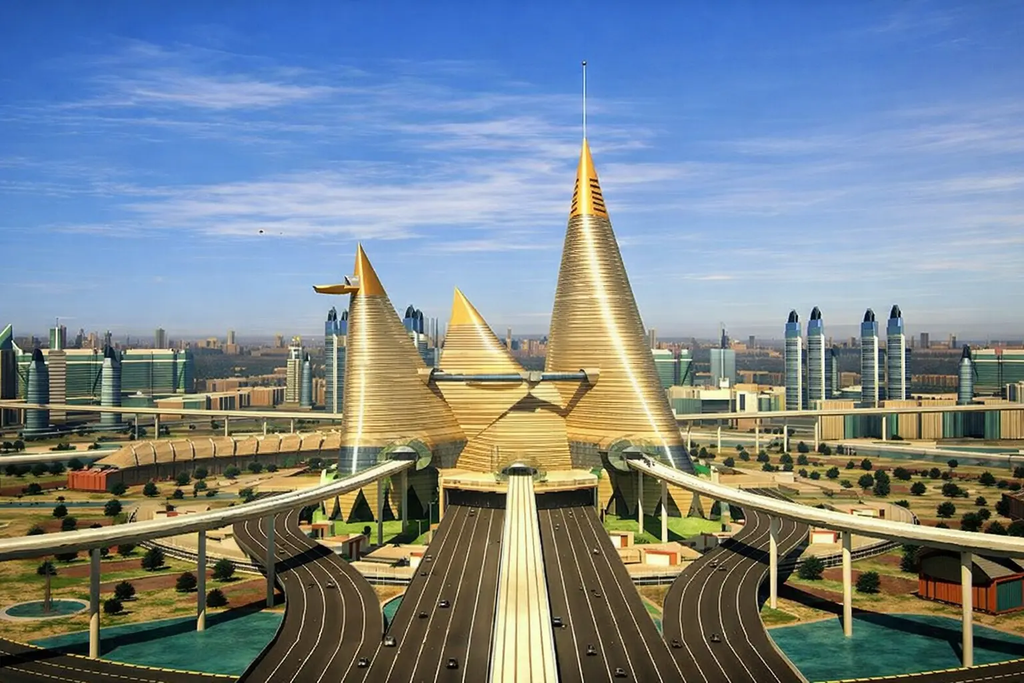
Dholera is another major example of Gujarat’s infrastructure-first development approach.
The state government’s 2026-27 budget includes funding for trunk infrastructure in Dholera SIR, including climate-resilient and new-technology road infrastructure.
The larger Dholera story is connected to manufacturing, industrial investment and strategic infrastructure.
If industrial activity develops at scale, the surrounding region could eventually require:
– Worker housing
– Staff accommodation
– Commercial centres
– Warehouses
– Hotels
– Logistics facilities
– Supporting services
This is why investors are watching Dholera — although it remains important to distinguish future potential from already-established property demand.
Infrastructure Is Changing Ahmedabad’s Property Map
Ahmedabad’s development is no longer limited to the traditional city centre.
Growth is spreading towards corridors connected with:
– SP Ring Road
– SG Highway
– Gandhinagar
– GIFT City
– Dholera
– Sanand
– Airport connectivity
– Metro corridors
The result is a broader metropolitan property market.
Areas that were once considered peripheral can become strategically important when roads, public transport and employment centres reach them.
Government Spending Can Influence Property Values — But Not Automatically
Infrastructure investment can create a positive environment for property appreciation.
For example:
New road → better connectivity → business expansion → employment growth → housing demand → rental demand → potential property appreciation.
But this is not guaranteed.
A new road does not mean every nearby plot will become a successful investment.
Investors still need to examine:
– Land title
– RERA registration
– Developer reputation
– Current property price
– Rental demand
– Infrastructure completion status
– Distance from actual employment centres
– Future supply
– Exit liquidity
Urban Development Is Becoming More Planned
Gujarat’s 2026-27 budget indicates a strong emphasis on capital expenditure, with planned capital outlay of ₹1.07 lakh crore. Transport and urban development are among the areas receiving increased capital allocations.
This matters for real estate because urban infrastructure creates the foundation on which private development can expand.
The state’s property market is therefore increasingly influenced by a combination of:
Government infrastructure + private development + industrial investment + employment generation.
Infrastructure Quality Is Also Becoming Important
Rapid property development can create challenges if civic infrastructure does not keep pace.
Recent heavy rainfall in parts of western Ahmedabad, including Bopal-Ghuma and nearby areas, has highlighted drainage problems in rapidly developing neighbourhoods.
This provides an important lesson for property buyers:
Do not judge a location only by future development announcements.
Check the actual quality of:
– Drainage
– Roads
– Water supply
– Public transport
– Electricity
– Emergency services
– Social infrastructure
A property with excellent connectivity but poor civic infrastructure can still face practical problems.
Which Gujarat Locations Could Benefit From This Development Model?
Investors are increasingly watching several different growth stories.
Ahmedabad–Gandhinagar
Best suited to investors looking for an established urban market combined with new infrastructure.
GIFT City

Strongest business-led development story, particularly for financial services, technology and commercial real estate.
Dholera
A long-term industrial and infrastructure opportunity where investors should be prepared for a longer development cycle.
Sanand

An important manufacturing and industrial corridor with potential supporting demand.
Emerging Ahmedabad Corridors
Locations around major roads, metro routes and employment centres could benefit from continued urban expansion.
The Bigger Vision
The larger story is not simply about building roads or new buildings.
The objective is to create economic centres where infrastructure, industries, technology and urban development support each other.
Prime Minister Modi’s Viksit Bharat 2047 vision and Gujarat’s state-level development strategy are increasingly visible through projects such as GIFT City, Dholera, metro expansion and industrial infrastructure. The Gujarat Chief Minister has specifically described GIFT City as an important part of this longer-term development vision.
Final Verdict
Gujarat’s property market is entering a different phase.
The strongest opportunities may increasingly appear where infrastructure meets employment.
For investors, the most important question should not simply be:
“Where are property prices increasing today?”
Instead, ask:
“Where is the government building infrastructure, where are companies investing, and where will future employment be created?”
That approach can help identify the next generation of Gujarat’s real-estate growth corridors.
GIFT City, Ahmedabad-Gandhinagar, Dholera, Sanand and emerging metro and highway corridors all represent different stages of this transformation.
However, government development creates potential — it does not guarantee property returns. Smart investors still need project-level research before putting their money into the market.
Stay updated with the latest news and articles. Subscribe Now for more articles.
