
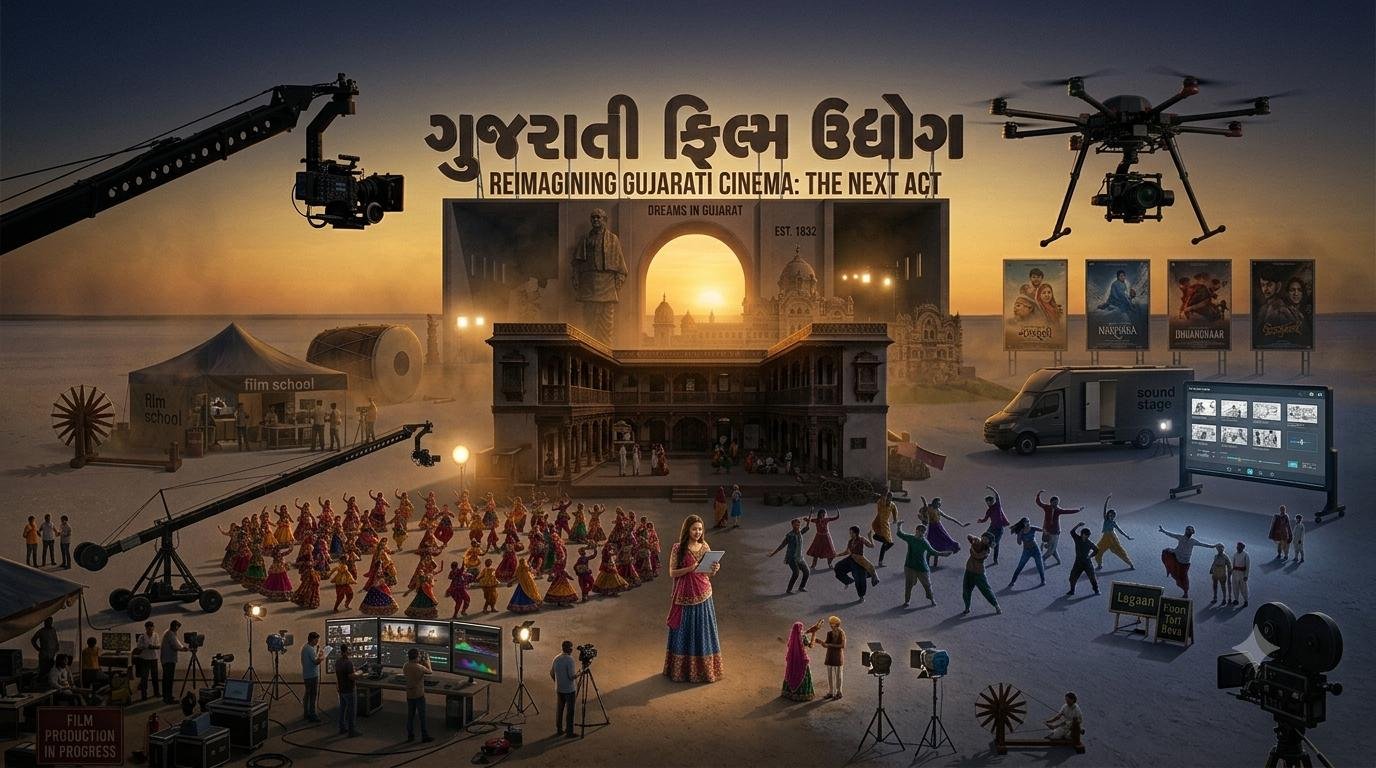
The Gujarati film industry has made remarkable progress over the last decade. Films such as Hellaro, Chaal Jeevi Laiye, Vash, and Wrong Side Raju proved that quality Gujarati stories can attract genuine audiences and meaningful critical appreciation. Yet for the industry to compete consistently with the leading regional cinemas of India — Malayalam, Tamil, and Telugu — several areas require sustained attention and deliberate investment. Here is an honest and constructive assessment of the ten key changes that could transform Dhollywood into India’s next major regional cinema.
1. Invest More in Original Scripts and Diverse Storytelling
The most fundamental strength of any successful film industry is the quality and originality of its storytelling, and this is where the most important investment needs to be made. Gujarati cinema should actively encourage original screenplays, adaptations of notable Gujarati novels and plays, exploration of historical subjects, biographical films about the state’s extraordinary figures, science fiction, sports dramas, and mystery thrillers. Strong writing consistently creates long-term success — no amount of star power or production value can compensate for a weak or derivative script, while a truly original and well-crafted screenplay can elevate a modestly budgeted film to genuine cultural significance.
2. Expand Beyond Family Comedy Into Diverse Genres
Family entertainers remain an important and commercially reliable cornerstone of Gujarati cinema, but restricting the industry’s creative output to this single lane limits both the audience it can attract and the artistic ambitions it can realise. Contemporary audiences across Gujarat and the Gujarati diaspora are actively looking for action films, horror, fantasy, crime thrillers, psychological dramas, animation, and children’s films that they can currently only find in other languages. Genre diversity attracts new viewers who may not have considered Gujarati cinema before, and it challenges filmmakers to develop the storytelling skills and technical capabilities that sustained creative growth requires.
3. Increase Production Budgets Wisely and Strategically
Higher budgets alone do not guarantee better films — there are plenty of expensive failures and brilliant low-budget successes in every film industry to prove this point. However, targeted and intelligent investment in better cinematography, professional sound design, well-executed visual effects, and stronger production design can meaningfully improve the cinematic experience that Gujarati films offer audiences who increasingly compare them to the polished productions of other regional industries. The key is strategic investment in the areas of technical craft that most visibly and most immediately affect how a film is perceived, rather than inflating budgets indiscriminately.
4. Strengthen Marketing and Digital Promotion
Many genuinely good Gujarati films have underperformed commercially not because of any failure in the filmmaking itself but because of insufficient marketing and limited public visibility. The industry needs to invest more seriously in digital campaigns, social media promotions designed for the platforms where Gujarati audiences actually spend their time, professionally executed trailer launches that generate genuine excitement, collaborations with relevant influencers and content creators, and dedicated outreach to college campuses and younger audiences who are the most likely converts to consistent Gujarati cinema viewing. A great film that nobody knows exists cannot find the audience it deserves.
5. Develop a Stronger International Distribution Strategy
Millions of Gujaratis live outside India — in the United States, United Kingdom, Canada, Australia, East Africa, and elsewhere around the world. This represents an enormous and largely underserved audience for Gujarati cinema that a more ambitious and systematic international distribution strategy could reach. A stronger overseas release infrastructure would increase both revenue and global recognition for Gujarati films, creating the kind of international profile that helps other industries attract higher budgets and greater media attention. The Gujarati diaspora is one of the most affluent and culturally engaged diaspora communities in the world — reaching it more effectively is one of the highest-return opportunities available to Dhollywood producers.
6. Embrace OTT Platforms as a Primary Growth Channel
Streaming platforms have dramatically expanded the audience for regional cinema across India, and the Malayalam and Tamil industries in particular have used OTT strategically and aggressively to build global fan bases that theatrical distribution alone could never have created. Gujarati producers should invest in creating original web series, OTT-exclusive films, anthology projects, and documentary features specifically designed for streaming audiences. This approach can help Gujarati cinema reach younger viewers who consume content primarily on their phones and laptops, as well as international audiences who may never have access to a Gujarati theatrical release but would happily watch a well-made Gujarati series or film on a major streaming platform.
7. Invest in Film Education and Talent Development
Sustained industry growth requires a sustained pipeline of skilled talent at every level of production. The Gujarati film ecosystem would benefit enormously from more screenwriting workshops, better-resourced acting institutes, accessible film production training programmes, and systematic technical skill development initiatives that raise the baseline competency across the industry. Investing in people — particularly in the next generation of writers, directors, cinematographers, and technicians — creates compounding returns over the long term that no single film investment can match. Film training institutions have played a decisive role in the development of every major Indian film industry, and Gujarati cinema’s long-term ambitions require a similar institutional commitment to craft education.
8. Promote Cross-Industry Collaboration
Collaborations with filmmakers, technicians, and studios from other Indian film industries can bring genuinely new ideas, higher technical expertise, broader distribution networks, and cross-industry audiences to Gujarati productions. Malayalam cinema’s remarkable rise to global recognition was partly accelerated by co-productions and the willingness of its filmmakers to work across industry boundaries while maintaining an unmistakably Kerala sensibility. Gujarati cinema can pursue similar partnerships strategically — drawing on outside expertise and resources to strengthen specific capabilities without sacrificing the cultural authenticity and local specificity that give Gujarati films their distinctive voice.
9. Build and Develop the Next Generation of Stars
The industry already possesses genuinely talented actors, but developing the next generation of recognisable and beloved Gujarati film stars requires consistent, deliberate investment in casting decisions, star-building narratives, and the kind of sustained screen presence that builds audience loyalty over multiple films and years. Star culture — as the Telugu and Tamil industries have demonstrated — is a powerful driver of theatrical attendance. When audiences feel genuine personal investment in a performer’s career, they follow that performer to the cinema in ways that no marketing campaign alone can replicate. Building those relationships between Gujarati audiences and Gujarati stars is one of the most important long-term investments the industry can make.
10. Preserve and Celebrate Gujarati Cultural Identity
While modernising filmmaking techniques and expanding into new genres is essential, Gujarati cinema’s greatest and most irreplaceable strength remains its cultural identity — rooted in the language, literature, folk traditions, music, local stories, and distinctive sensibility of Gujarat and its people. Maintaining and celebrating these strengths, rather than diluting them in pursuit of pan-India appeal, is what will allow Dhollywood to genuinely stand out rather than simply imitate industries with larger budgets. The most celebrated moments in Gujarati cinema — Hellaro, Jallikattu, Vash — have succeeded precisely because they were deeply and unapologetically rooted in their cultural context, not despite it.
Additional Changes That Could Make a Real Difference
Beyond the ten priorities above, several additional initiatives could meaningfully accelerate Dhollywood’s growth. Launching an annual Gujarati Film Market to connect producers, distributors, and OTT platforms in a structured professional environment would professionalise the industry’s business infrastructure. Improving dubbing quality and subtitling standards would allow non-Gujarati audiences across India and internationally to access and enjoy Gujarati films with ease. Creating stronger film tourism initiatives that showcase Gujarat’s extraordinary landscapes and heritage through cinema could generate national and international interest in both the films and the state. Expanding dedicated Gujarati film festivals would raise the industry’s cultural profile and create spaces for emerging filmmakers to find their audiences. And using modern data analytics to understand audience preferences more precisely would help producers make more informed investment decisions rather than relying entirely on intuition and precedent.
Final Verdict: Dhollywood’s Potential Is Real and Within Reach
Gujarati cinema has already demonstrated conclusively that it can produce award-winning and commercially successful films that resonate with audiences far beyond the state’s borders. The next stage of genuine growth depends on combining strong and original storytelling with better and more consistent marketing, wider national and international distribution, sustained investment in skilled talent at every level, and the kind of consistent audience support that gives producers the confidence to take creative risks. If these areas continue to improve with the seriousness and consistency the opportunity deserves, Dhollywood has every ingredient it needs to become one of India’s leading and most respected regional film industries — while preserving, proudly and without apology, the unique cultural identity that makes it worth watching in the first place.
Stay updated with the latest news and articles. Subscribe Now for more articles.
