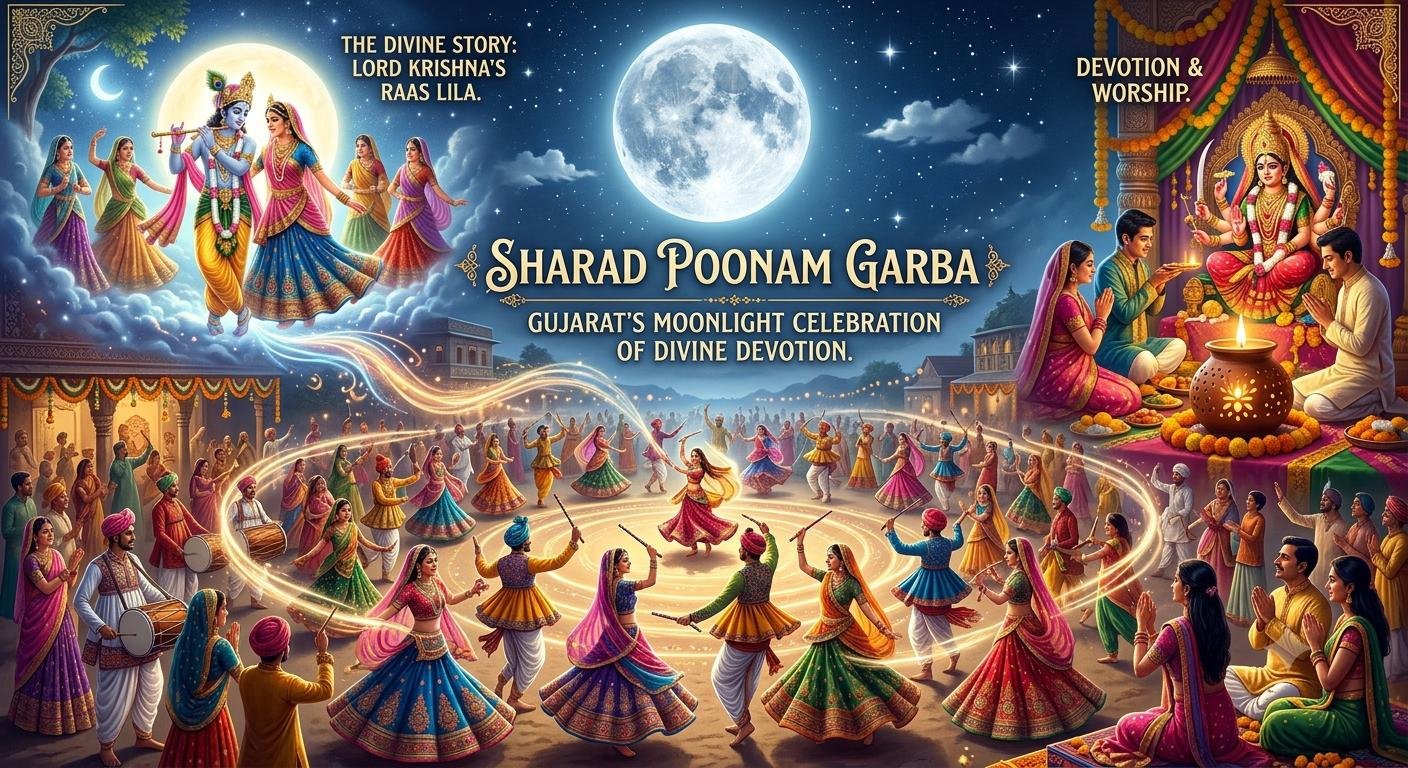
Sharad Poonam is more than a night of Garba, music and celebration. For Gujaratis it is a beautiful meeting of devotion divine love, moonlight and cultural identity.. What makes this full-moon night so special and why do people associate it with Lord Krishna’s Raas Leela?
Every year when the full moon illuminates the autumn sky communities across Gujarat celebrate Sharad Poonam with Garba, devotional songs, prayers and the sharing of milk-based prasad. The celebration brings together generations from elders who remember devotional gatherings to young people who experience the festival through organised Garba events.
To understand its popularity we need to look beyond the dance floor and explore the meaning behind the night.
What Is Sharad Poonam and Why Is It Special?
Sharad Poonam, also known as Sharad Purnima or Kojagari Purnima falls on the full-moon day of the Hindu month of Ashwin. It is associated with the arrival of the Sharad season a time traditionally connected with skies and beautiful moonlit nights.
In parts of India people observe this occasion in different ways. Some worship Goddess Lakshmi. Pray for prosperity while traditions in the Braj region connect the night with Lord Krishna’s divine Raas Leela. In Gujarat Sharad Poonam is also associated with Garba, devotional gatherings and the traditional offering of doodh-pauva.
These practices may vary from family to family. They share a common theme: gratitude, faith and togetherness. “Https://www.baps.org/cultureandheritage/Traditions/AnnualCelebrationsandFestivals/SharadPurnima.aspx” (https://www.baps.org/cultureandheritage/Traditions/AnnualCelebrationsandFestivals/SharadPurnima.aspx)
The Connection Between Sharad Poonam and Lord Krishna’s Raas Leela
One of the meaningful spiritual associations of Sharad Poonam is the Raas Leela of Lord Krishna.
According to the Krishna-bhakti tradition the Raas Leela represents a dance involving Krishna and the gopis of Vrindavan. The story is not understood merely as a dance under the moon. For devotees it expresses the soul’s longing for the divine and the power of devotion.
Krishna’s flute symbolises a call that awakens the heart. The circular dance represents harmony while the presence of Krishna at its centre reminds devotees to place the divine at the centre of life.
Sharad Poonam’s association with this story gives the night a special spiritual atmosphere. Although Gujarat’s Garba and the Braj tradition of Raas Leela are cultural forms both can bring people together through rhythm, circular movement, music and devotion.
For devotees dancing on Sharad Poonam becomes a way to remember Krishna, express gratitude and experience a sense of spiritual connection.
Why Is Sharad Poonam Garba So Popular in Gujarat?
Garba is deeply connected with Gujarat’s identity. Traditionally associated with devotion to Amba Maa during Navratri it has also become a part of many community celebrations throughout the year.
Sharad Poonam offers an atmosphere from the nine nights of Navratri. Of being primarily associated with Navratri’s sequence of nights it brings the beauty of the full moon and the devotional traditions of the autumn season into focus.
Several factors contribute to its popularity:
A moonlit atmosphere: The full moon gives gatherings a distinctive charm and adds to the traditional appeal of the celebration.
A connection: For many families the occasion offers another opportunity to sing bhajans remember Krishna and participate in a cultural celebration rooted in faith.
Gujarati identity: Garba connects people with their language, folk music, traditional clothing, community customs and shared memories.
Community togetherness: Families, friends and neighbourhoods gather to celebrate making the occasion meaningful for people of ages.
A blend of tradition and modern entertainment: Organised events may feature singers, traditional folk music, elaborate decorations and contemporary arrangements helping introduce the celebration to younger generations.
Together these elements make Sharad Poonam Garba a memorable cultural experience.
What Is the Devotion Behind Dancing on Sharad Poonam?
The spiritual meaning of a dance depends not on its movements but also on the intention behind it.
In traditions, music and dance can become forms of bhakti. A person may express devotion through singing a prayer moving to a rhythm offering gratitude or participating in a community gathering.
The deeper meaning of Sharad Poonam Garba can be understood through three ideas.
Devotion through movement
Prayer does not always have to be silent. Devotional singing and traditional dance can allow people to express faith with their being. When Garba is performed with reverence its rhythm can become an expression of gratitude and remembrance.
Unity through the circle
Garba traditionally involves dancers moving in a circle. This arrangement creates a shared space in which participants move together than celebrating individually. Spiritually the circle can remind people of continuity, harmony and the importance of community.
Love without selfishness
The Krishna-bhakti interpretation of Raas Leela places emphasis on love and surrender. For devotees this offers a reminder to move beyond ego and cultivate humility, compassion and a sincere relationship with God.
These are interpretations rather than rules that every participant must follow. Some people attend primarily for devotion others for connection and many enjoy a combination of both.
The Full Moon, Doodh-Pauva and the Tradition of Prasad
Sharad Poonam is also associated with the moon and traditional milk-based offerings.
In Gujarat, doodh-pauva—flattened rice served with milk. Often sweetened—is commonly associated with the occasion. Other regions have their customs, including preparing kheer or flavoured milk.
According to belief the moonlight of Sharad Purnima is especially auspicious. Families may offer food in worship. Share it as prasad expressing gratitude for nourishment and abundance.
The custom is significant not because of its association with the full moon but also because of what it represents: sharing food honouring tradition and celebrating with loved ones.
Claims that moonlight gives food special healing properties belong to belief and should not be treated as established medical fact.
Is Modern Sharad Poonam Garba Losing Its Devotional Meaning?
As Garba has become more popular Sharad Poonam celebrations have also evolved. Some events focus on music and traditional folk forms while others feature commercial stages, DJs, elaborate costumes and large crowds.
This evolution is not necessarily a rejection of tradition. Cultural practices naturally change as new generations participate and new forms of entertainment emerge.
The important question is whether the celebration leaves room for its cultural roots.
An event can include music and still honour its heritage. Organisers can include songs explain the significance of Sharad Poonam, respect traditional folk artists and create space for families and devotees.
Likewise participants can enjoy the celebration while remembering its associations with Krishna, the full moon, gratitude and togetherness.
The goal need not be to choose between devotion and entertainment. It can be to celebrate while preserving the meaning that makes the occasion special.
How Can We Celebrate Sharad Poonam Garba with Devotion?
Anyone who wishes to bring more spiritual meaning to the celebration can start with simple practices:
- Begin the evening with a prayer to Amba Maa, Shri Krishna or the deity worshipped by your family.
- Listen to a bhajan or learn about the traditional stories associated with Sharad Poonam.
- Participate respectfully in Garba remembering its cultural and devotional roots.
- Share prasad with family members, neighbours or people in need.
- Keep the celebration inclusive, safe and respectful of levels of religious observance.
- Teach children the meaning behind the tradition not just the steps of the dance.
Devotion is not measured by how expensive an outfit’s how large the event becomes or how long someone dances. For believers it begins with sincerity, gratitude and respect.
Sharad Poonam Garba Is a Celebration of Faith, Culture and Togetherness
Sharad Poonam Garba remains special because it combines the beauty of a full-moon night with Gujarat’s love for folk dance, music and community celebration. Its connection with Krishna’s Raas Leela gives the occasion a devotional dimension while traditions such as doodh-pauva and family gatherings keep cultural memories alive.
As celebrations grow and change the deeper meaning can continue to guide them. Whether someone attends a Garba event dances in a neighbourhood courtyard or simply offers a prayer beneath the moon the spirit of Sharad Poonam can remain the same: gratitude, harmony, love and remembrance of the divine.
Because the true beauty of Sharad Poonam is not in dancing beneath the full moon—it is in understanding what the night means to the heart.
Stay updated with the latest news and articles. Subscribe Now for more articles.
