
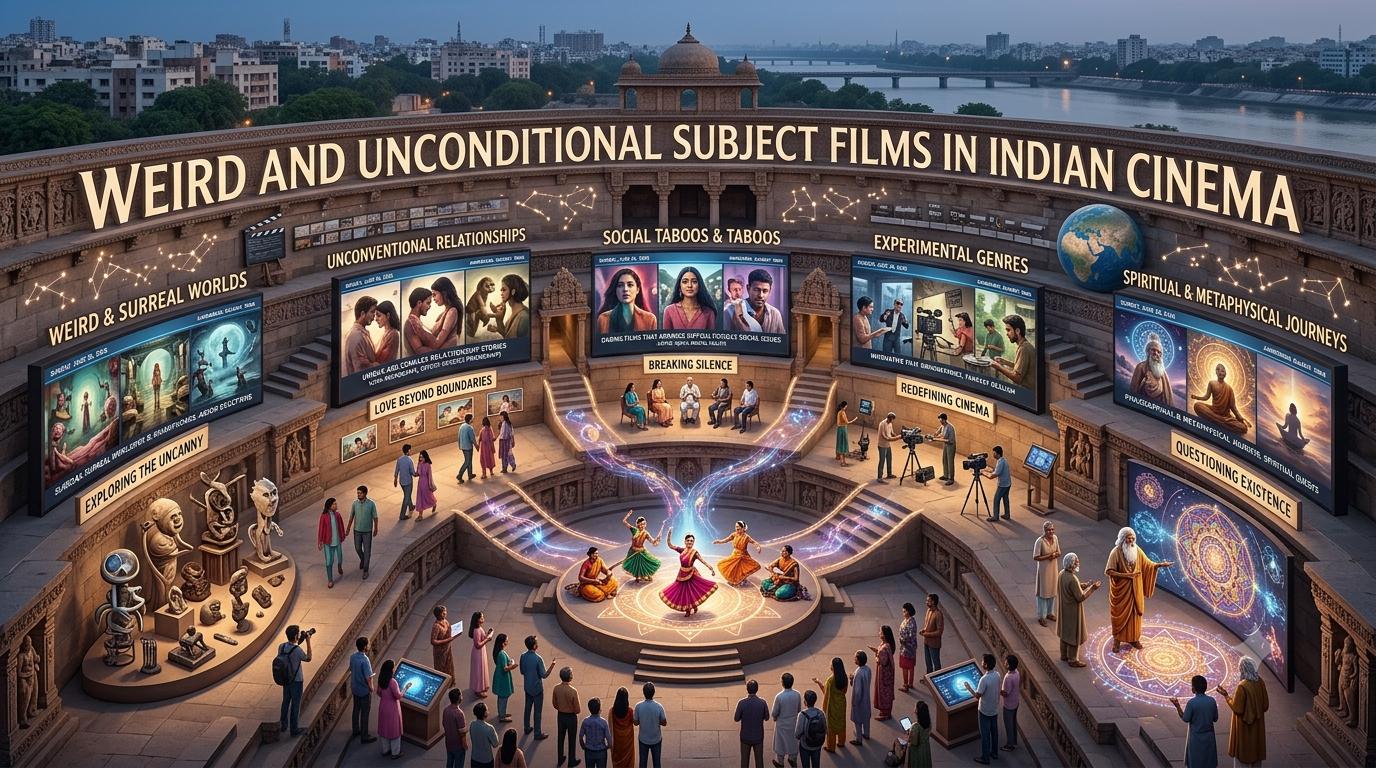
Indian cinema is often associated with romance, action, and family dramas. But over the decades, filmmakers across Hindi, Malayalam, Tamil, Telugu, Kannada, Marathi, Bengali, and other regional industries have created films based on highly unusual, experimental, and unconventional subjects that challenged everything audiences thought they understood about what Indian films could be. Here is a look at some of the most unique Indian films that broke storytelling norms and earned their place in the country’s cinematic history.
Ship of Theseus (Hindi) — Identity, Philosophy, and Organ Transplantation
Ship of Theseus is one of the rarest things in Indian mainstream cinema — a genuinely philosophical drama. Drawing on the ancient paradox of identity after which it is named, the film asks a profound and unsettling question: if every part of a person is gradually replaced, do they remain the same person? Through three interconnected stories involving an organ transplant and questions of consciousness, the film invites audiences into a level of intellectual and emotional depth that Indian commercial cinema had rarely attempted before. Its quiet, unhurried pace is itself part of its meaning.
Tumbbad (Hindi) — Mythological Horror Built Around Greed
Tumbbad is a film that feels unlike anything else produced in Hindi cinema. Blending Indian folklore, atmospheric horror, fantasy, and psychological drama around the central theme of insatiable human greed, it created a completely original cinematic universe rooted in mythology and dread. Visually extraordinary and narratively bold, the film built an audience gradually through word of mouth long after its theatrical release — becoming a cult classic that demonstrated how Indian folklore could power genuinely world-class genre filmmaking when treated with imagination and seriousness.
Super Deluxe (Tamil) — Identity, Morality, and Unconventional Multi-Narrative Storytelling
Super Deluxe is widely regarded as one of the boldest multi-narrative films in Indian cinema. Weaving together several deeply unconventional stories involving questions of identity, morality, faith, and the nature of coincidence, it consistently subverts audience expectations at every turn. The film challenges social norms with a confidence and wit that few Indian productions have matched, proving that Tamil cinema is willing to take genuine creative risks with subjects that mainstream filmmaking almost always avoids entirely.
Awe (Telugu) — Psychological Fantasy Across Multiple Realities
Awe is a genuinely daring experiment in mainstream Telugu cinema. Featuring talking objects, richly symbolic storytelling, and a deliberately non-linear narrative that unfolds across what appear to be multiple realities, it challenges the viewer to remain engaged with a story that refuses to resolve itself in any conventional way until its final moments. Its willingness to risk audience confusion in service of a more ambitious cinematic experience marks it as a genuinely significant landmark in the evolution of Telugu cinema’s creative ambitions.
Lucia (Kannada) — Dreams, Reality, and the Blurred Space Between
Lucia is widely regarded as a landmark in modern Kannada cinema. Built around the experience of insomnia and the altered perception it produces, the film explores the increasingly blurred boundary between dream and waking life through a mind-bending narrative structure that keeps the audience perpetually uncertain about which reality they are witnessing at any given moment. Its extraordinary achievement — made on a crowdfunded budget — proved that Kannada filmmakers had the creative vision and technical craft to produce genuinely world-class experimental cinema.
Jallikattu (Malayalam) — A Runaway Buffalo and the Darkness of Human Instinct
Jallikattu uses the premise of an entire village chasing a single runaway buffalo to explore something far larger and more disturbing — the thin line between civilised community behaviour and the primal violence that lies beneath it. As the chase intensifies, the film gradually strips away social pretence to expose the mob psychology and animal instincts that human culture is designed to suppress but never fully succeeds in eliminating. Internationally acclaimed for its visceral and technically extraordinary visual storytelling, it represents Malayalam cinema at its most fearlessly experimental.
Harishchandrachi Factory (Marathi) — The Story of India’s First Feature Film
Harishchandrachi Factory takes one of the most unusual subjects imaginable for a film — the making of India’s very first feature film — and turns it into an engaging, warm, and thoroughly cinematic story. The film chronicles the obsessive determination of Dadasaheb Phalke as he pursued his vision of creating Indian cinema against formidable practical and social obstacles. Chosen as India’s official entry for the Academy Awards, it occupies a unique place in Indian film history, being both a tribute to the origins of Indian cinema and itself a fine example of what that tradition has grown capable of producing.
Nagarkirtan (Bengali) — Gender Identity and the Search for Social Acceptance
Nagarkirtan is a sensitive and deeply felt exploration of gender identity and the longing for social acceptance set against the backdrop of street music and urban marginalisation in Kolkata. Critically acclaimed for its performances and for the emotional honesty with which it treats its subject matter, the film demonstrates Bengali cinema’s long tradition of engaging seriously with complex human experiences that popular culture tends either to mock or to ignore entirely.
Short Circuit (Gujarati) — Time Loops and Wormholes in Regional Cinema
Short Circuit holds a genuinely pioneering place in Gujarati cinema as one of the first films from the industry to explore science fiction concepts including time loops and wormholes. Its willingness to bring futuristic ideas to a regional audience that had largely not encountered these subjects in their own cinematic language represented a significant creative leap — and helped signal a new era of ambition and experimentation within Gujarati filmmaking that continues to develop with each passing year.
Gajab Thai Gayo! (Gujarati) — Fantasy Adventure with Science Fiction Elements
Gajab Thai Gayo! combines family-oriented entertainment with genuinely imaginative science fiction storytelling in a way that is rare for any Indian regional cinema. Its willingness to blend accessible family drama with fantastical and speculative concepts makes it a unique experiment in Gujarati cinema — one that expanded the creative vocabulary of what Gujarati filmmakers and audiences were willing to explore together on screen.
No Smoking (Hindi) — Addiction, Control, and Surreal Psychological Horror
No Smoking remains one of the most discussed and debated films in Anurag Kashyap’s career — a genuinely unconventional exploration of addiction, free will, and the psychological horror of surrendering control. Its surreal and deliberately disorienting narrative has been interpreted in numerous ways since its release, and it continues to generate fresh analysis from viewers who approach it as an allegorical text rather than a straightforward story. It stands as one of the most challenging and most rewarding films in contemporary Hindi cinema for those willing to engage with it on its own terms.
Kaalakaandi (Hindi) — A Single Chaotic Night After a Life-Changing Diagnosis
Kaalakaandi follows a single chaotic night in the lives of several characters after one of them receives a terminal diagnosis — a premise that allows the film to blend dark comedy, crime, hallucinatory sequences, and genuinely absurd situations into something that feels both anarchic and strangely moving. Its willingness to treat a life-threatening diagnosis as a trigger for comedy rather than melodrama places it firmly in the tradition of unconventional filmmaking that refuses to follow the emotional playbook its subject matter would typically demand.
What Makes These Films So Distinctive?
What unites all of these films is their willingness to explore territory that mainstream Indian cinema typically avoids — philosophy and identity, time travel and time loops, dream worlds, folklore and mythology, psychological complexity, symbolic social commentary, and surreal storytelling structures that demand active engagement rather than passive viewing. Rather than following proven commercial formulas, each of these films chose to take the audience somewhere genuinely unexpected, trusting that the most meaningful cinema is cinema that challenges people to think differently about the world and about themselves.
Final Verdict: Indian Cinema Is Far Bigger Than Any Formula
Some films entertain, while others challenge the way we think — and the best ones often do both simultaneously. These unconventional Indian films prove that great cinema does not need to follow familiar formulas to find an audience or leave a lasting impression. Whether it is the philosophical questions of Ship of Theseus, the haunting folklore of Tumbbad, the surreal psychological world of Awe, the community violence of Jallikattu, or the pioneering science fiction of Short Circuit, these films showcase the extraordinary creative diversity of Indian cinema — a tradition far wider, stranger, and more ambitious than any single genre or industry can contain.
Stay updated with the latest news and articles. Subscribe Now for more articles.
