
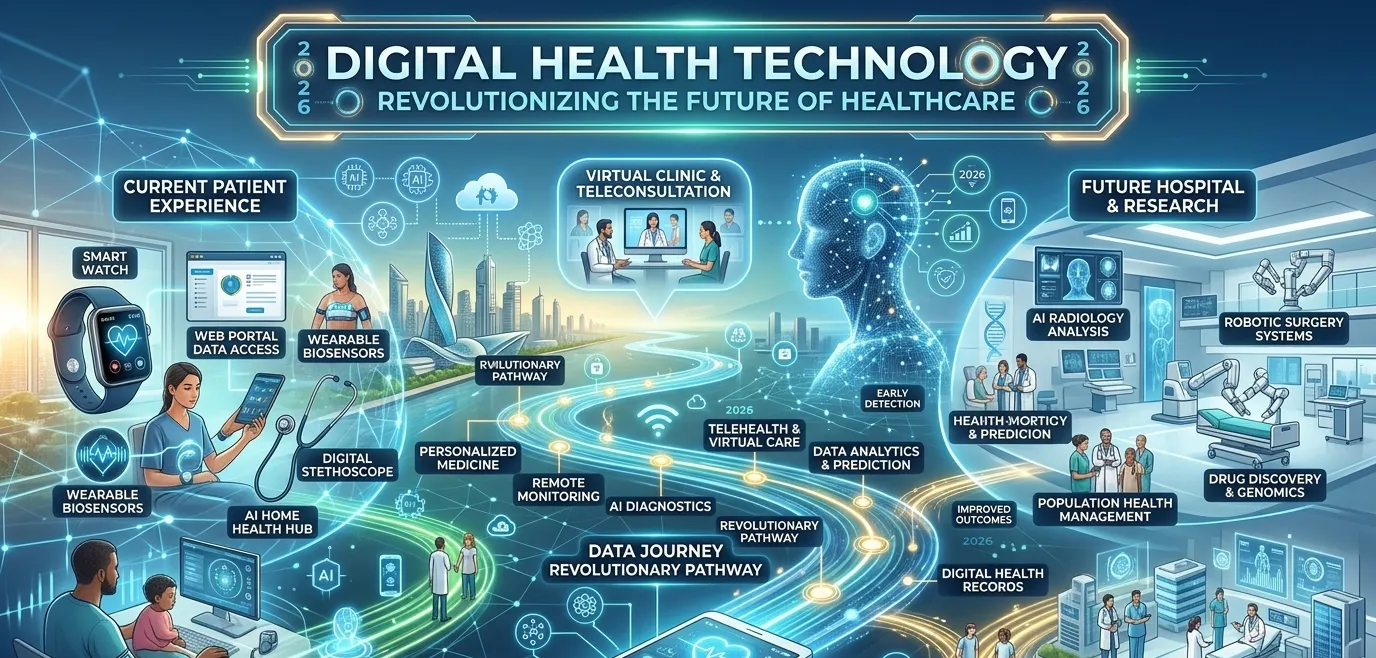
Digital Health Technology is transforming the healthcare industry by combining medical science with advanced digital innovation. From wearable fitness devices and telemedicine to Artificial Intelligence-powered diagnostics and smart health monitoring systems, digital health is making healthcare more accessible, efficient, and personalized.
As technology continues to evolve, healthcare services are becoming smarter and more connected. Digital health solutions are helping doctors improve patient care, enabling faster diagnosis, and giving people more control over their health and wellness.
What Is Digital Health Technology?
Digital Health Technology refers to the use of digital tools, software, and connected devices to improve healthcare services and patient outcomes.
Core components of digital health include:
- Telemedicine platforms
- Wearable health devices
- Mobile health applications
- Artificial Intelligence in healthcare
- Electronic Health Records (EHR)
- Remote patient monitoring systems
These technologies improve communication, diagnosis, treatment, and healthcare management.
Telemedicine and Virtual Healthcare
Telemedicine has become one of the fastest-growing digital health solutions. Key benefits include:
- Remote doctor consultations
- Reduced hospital visits
- Faster medical support
- Healthcare access in remote areas
Patients can receive medical advice and treatment without traveling long distances.
Wearable Health Technology
Wearable devices are helping people monitor their health in real time. Popular features include:
- Heart rate monitoring
- Sleep tracking
- Fitness and activity tracking
- Blood oxygen monitoring
These devices encourage healthier lifestyles and early detection of health issues.
Artificial Intelligence in Healthcare
Artificial Intelligence is improving medical diagnosis and treatment. AI applications in healthcare include:
- Disease prediction and detection
- Medical image analysis
- Personalized treatment recommendations
- Virtual healthcare assistants
AI helps healthcare professionals make faster and more accurate decisions.
Digital Health and Personalized Medicine
Digital technology is enabling personalized healthcare based on patient data. Key advantages include:
- Customized treatment plans
- Better medication management
- Improved patient outcomes
- Preventive healthcare strategies
Personalized medicine focuses on individual health needs rather than general treatment approaches.
Remote Patient Monitoring
Connected medical devices allow healthcare providers to monitor patients remotely. Key benefits include:
- Real-time health tracking
- Faster emergency response
- Reduced hospital admissions
- Better chronic disease management
Remote monitoring is especially useful for elderly and long-term patients.
Electronic Health Records (EHR)
Digital health systems store patient records electronically. EHR benefits include:
- Easy access to medical history
- Faster information sharing
- Reduced paperwork
- Improved treatment coordination
Doctors can make informed decisions using accurate digital records.
Smart Healthcare Devices
Modern healthcare devices are becoming more intelligent and connected. Examples include:
- Smart insulin pumps
- Digital blood pressure monitors
- AI-powered diagnostic tools
- Connected inhalers
These devices improve treatment accuracy and patient convenience.
Digital Health in Rural and Remote Areas
Digital technology is improving healthcare access in underserved regions. Key impacts include:
- Remote medical consultations
- Mobile health services
- Health awareness applications
- Reduced healthcare inequality
Technology is bridging the gap between urban and rural healthcare systems.
Cyber Security and Data Privacy in Healthcare
Digital healthcare systems must protect sensitive patient information. Key challenges include:
- Medical data breaches
- Cyber attacks on hospitals
- Patient privacy concerns
Strong cyber security measures and encryption systems are essential to safeguard patient data.
Challenges of Digital Health Technology
Despite its benefits, digital health faces several challenges:
- High implementation costs
- Limited digital literacy
- Dependence on internet connectivity
- Regulatory and compliance issues
Healthcare systems must ensure technology remains accessible and secure for all.
Future of Digital Health Technology
The future of healthcare is becoming more connected and intelligent. Emerging trends include:
- AI-driven healthcare systems
- Smart hospitals
- Predictive healthcare analytics
- Advanced wearable medical devices
- Integration with robotics and biotechnology
Digital health technology will continue improving healthcare quality and accessibility worldwide.
Conclusion
Digital Health Technology is revolutionizing healthcare by making medical services faster, smarter, and more personalized. From telemedicine and wearable devices to AI-powered diagnosis and remote monitoring, digital innovation is transforming patient care worldwide.
As technology continues to evolve, digital health solutions will play a major role in creating a healthier, more connected, and more efficient healthcare system for the future.
Subscribe Now For More articles.
