
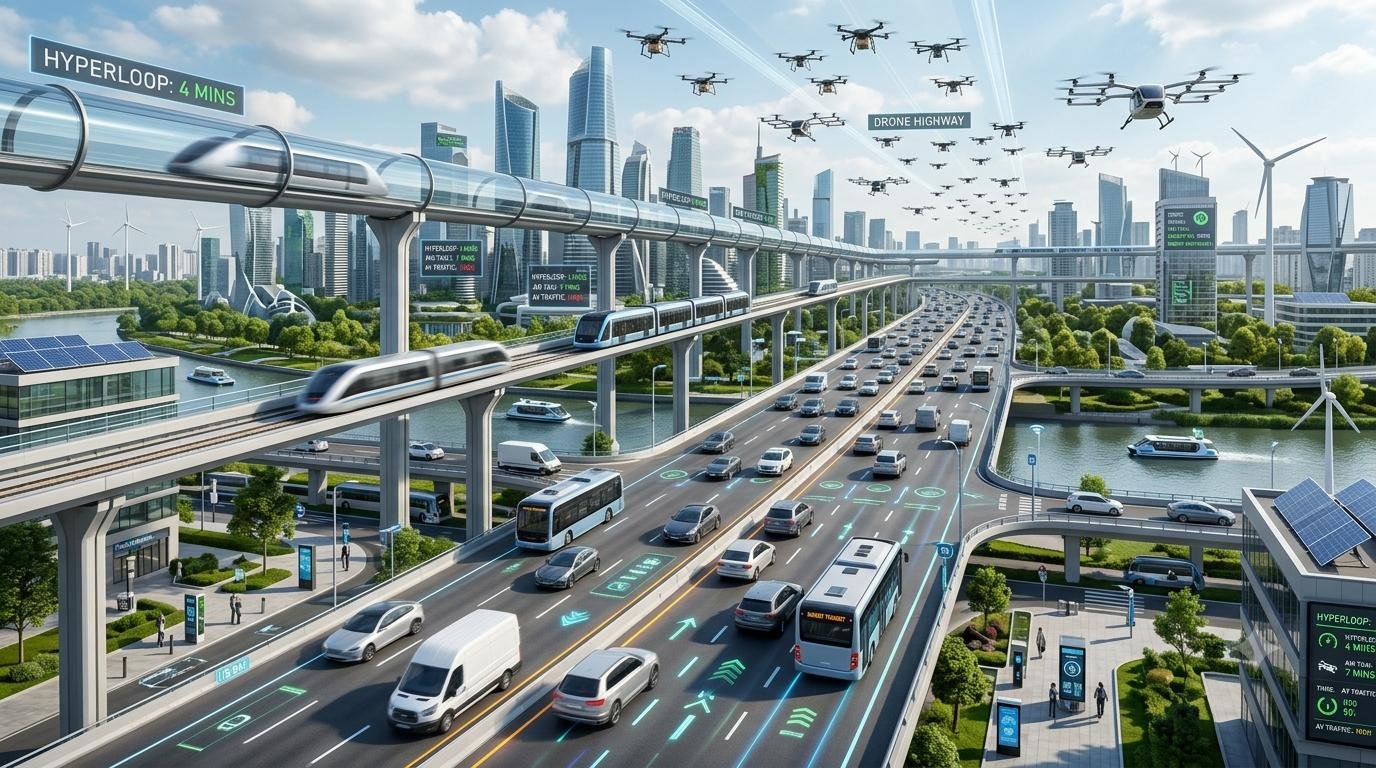
Transportation is an essential part of modern life. Every day millions of people travel to offices, schools, colleges, shopping centres and other destinations. However traffic congestion, fuel consumption, road accidents and parking difficulties continue to create challenges in cities around the world.
Technology is opening possibilities for making transportation smarter, safer and more efficient. From AI-powered traffic signals and electric vehicles to roads and self-driving cars intelligent mobility is becoming a part of the future.
Smart transportation is not about developing vehicles. It is about creating a travel ecosystem where vehicles, roads, traffic systems and digital applications work together.
Lets explore how smart transportation technology could transform travel.
What Is Smart Transportation Technology?
Smart transportation technology refers to the use of systems, artificial intelligence, sensors, automation and connected networks to improve the movement of people and goods.
These systems analyse transportation information to support decisions.
Some important examples include:
- AI-powered traffic management
- traffic signals
- GPS-based navigation
- Electric and connected vehicles
- Autonomous driving technology
- Intelligent parking systems
- Digital public transportation services
- highways and connected infrastructure
The objective is to reduce delays improve road safety and make transportation more sustainable.
1. AI-Powered Traffic Management
Traffic congestion is one of the challenges in growing cities.
Traditional traffic signals generally follow fixed timing schedules. However traffic volume can change significantly throughout the day.
AI-powered traffic management systems can analyse information from cameras, road sensors and connected devices to understand traffic conditions.
Based on information systems may adjust signal timings to improve traffic flow.
For example if one road has vehicles than another an adaptive traffic signal may provide additional green-light time where appropriate.
Such technology could help reduce waiting times and improve road management although results depend on infrastructure and implementation.
2. Smart Navigation Applications
GPS-based navigation has already changed how people travel.
Applications can provide directions estimated arrival times, alternative routes and traffic updates.
Modern navigation systems increasingly use real-time information to identify congestion, road closures and other travel disruptions.
For people travelling between Ahmedabad, Surat, Vadodara and Rajkot navigation technology can make route planning easier.
Future navigation platforms may also integrate information about charging stations, parking availability, transport and road conditions.
3. Electric Vehicles and Mobility
Electric vehicles are becoming a part of the transportation industrys transformation.
Unlike petrol and diesel vehicles, battery-electric vehicles use motors for propulsion.
Their environmental impact depends on factors such as electricity generation, battery production and vehicle lifecycle. However they offer the opportunity to reduce tailpipe emissions and dependence on fuels.
The expansion of charging infrastructure, battery technology and vehicle options could make electric mobility more practical for users.
In India, electric scooters, motorcycles, cars, buses and commercial vehicles are contributing to the changing mobility landscape.
4. Autonomous Vehicles: The Future of Driving?
Autonomous vehicles use technologies such as cameras, radar, sensors, mapping systems and artificial intelligence to understand their surroundings.
Depending on their automation level these vehicles can assist drivers with tasks. Perform more driving functions independently.
Advanced driver assistance features already include:
- emergency braking
- Adaptive cruise control
- Lane-keeping assistance
- Blind-spot monitoring
- Parking assistance
Autonomous driving remains a complex technological challenge. Roads, weather, unexpected behaviour and safety regulations all influence its development.
Nevertheless autonomous mobility could eventually change how people travel and how goods are delivered.
5. Smart Parking Technology
Finding a parking space can waste time in busy commercial areas.
Smart parking systems aim to make this process easier through sensors, cameras and connected applications.
These systems can identify parking spaces. Share information with drivers.
In the users may be able to locate, reserve and pay for parking through a mobile application.
Smart parking could be particularly useful around shopping malls, airports, railway stations, business districts and entertainment venues.
6. Connected Vehicles and Vehicle-to-Everything Communication
Connected vehicle technology allows vehicles to exchange information with vehicles, infrastructure and communication networks.
This concept is commonly known as Vehicle-to-Everything or V2X.
It includes communication possibilities:
- Vehicle-to-Vehicle: Vehicles exchange information with one another.
- Vehicle-to-Infrastructure: Vehicles communicate with traffic signals and road systems.
- Vehicle-to-Network: Vehicles connect with wider communication networks.
- Vehicle-to-Pedestrian: Systems may exchange safety-related information with pedestrian devices.
For example a connected vehicle could receive an alert about a hazard ahead.
These technologies could support coordinated transportation provided that communication systems are reliable and secure.
7. Smart Public Transportation
Public transportation is essential for reducing dependence on vehicles.
Technology can improve the passenger experience through ticketing, live bus tracking, route planning and automated passenger information systems.
Passengers may be able to check:
- Bus or train arrival times
- Available routes
- Ticket prices
- Service interruptions
- Estimated journey duration
Smart transportation platforms can also help transport operators understand passenger demand and improve service planning.
For growing cities public transport systems could make daily commuting more convenient.
8. Smart. Intelligent Road Infrastructure
The future of transportation will depend not on vehicles but on the roads they use.
Smart highways may incorporate sensors, connected traffic systems, electronic toll collection and digital monitoring infrastructure.
These technologies can help authorities monitor traffic conditions. Identify road maintenance requirements.
Intelligent road systems may also support emergency alerts, weather-related warnings and better coordination during accidents.
As Indias highway network develops infrastructure could become increasingly important for travel and logistics.
9. How Smart Transportation Could Benefit Gujarat
Gujarat has commercial and urban centres making transportation technology relevant to its future development.
Ahmedabad, Surat, Vadodara, Rajkot and Gandhinagar have mobility requirements from commuting to industrial transportation.
Smart mobility solutions could support:
- traffic management
- More efficient public transportation
- Electric vehicle adoption
- Improved highway monitoring
- Digital parking services
- Smarter freight and logistics operations
The development of GIFT City and other business districts also highlights the importance of modern transport connectivity.
Combining infrastructure with urban planning could improve the overall travel experience.
10. Challenges Facing Smart Transportation
Despite its smart transportation faces challenges.
Infrastructure investment: Intelligent roads, charging stations and connected traffic systems require investment.
Cybersecurity: Connected vehicles and traffic networks must be protected against attacks.
Data privacy: Transportation platforms may collect location and travel information making responsible data management essential.
Technology costs: Advanced vehicle systems may initially remain expensive.
safety: Autonomous and connected systems must be tested carefully before adoption.
Digital accessibility: Smart mobility services should remain usable for people who do not own smartphones or connected vehicles.
What Is the Future of Smart Transportation?
The future of transportation could involve a combination of mobility, artificial intelligence, connected infrastructure and autonomous technology.
Vehicles may communicate with traffic systems navigation applications could provide route information and public transportation may become increasingly integrated with digital platforms.
Smart mobility could also support delivery services, emergency response and urban planning.
However successful transportation transformation will require more than technology. It will depend on road safety, reliable infrastructure, public awareness and responsible government policies.
Smart transportation technology is changing how the world thinks about travel. Powered traffic signals, electric vehicles, connected cars, smart parking and digital public transportation systems are creating opportunities for efficient mobility.
For India and rapidly developing regions such as Gujarat these innovations could play a role in shaping cities.
The future of travel will not be defined by how people reach their destinations. It will also depend on how conveniently and sustainably they get there.
