
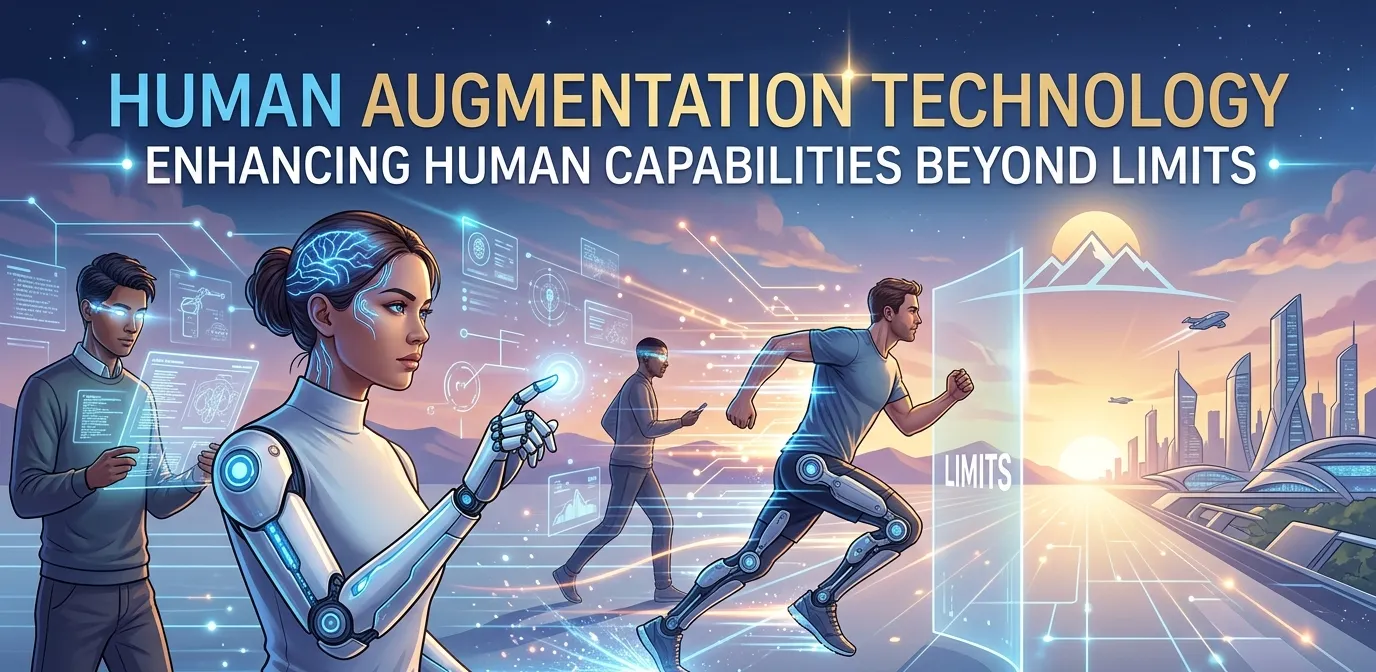
Human Augmentation Technology is one of the most futuristic and transformative innovations of the modern era. It focuses on enhancing human physical and cognitive abilities using advanced technology. From wearable devices and prosthetics to brain-computer interfaces and genetic enhancements, this field is pushing the boundaries of what humans can achieve.
As technology evolves, human augmentation is no longer science fiction — it is becoming a reality that is improving health, productivity, and overall quality of life.
What Is Human Augmentation Technology?
Human augmentation refers to the use of technology to improve or extend human capabilities. These enhancements can be physical, sensory, or cognitive. Physical augmentation includes prosthetics and exoskeletons. Sensory augmentation covers vision and hearing devices. Cognitive augmentation involves brain enhancement tools. The goal is to enhance human performance, restore lost abilities, and create new possibilities.
Physical Augmentation and Prosthetics
Advanced prosthetics are helping individuals regain mobility and independence. Key innovations include smart prosthetic limbs with sensors, robotic exoskeletons for movement support, and strength-enhancing wearable devices. These technologies allow users to perform tasks that were once difficult or impossible.
Advanced prosthetics are helping individuals regain mobility and independence.
On physical augmentation
Sensory Augmentation
Sensory augmentation improves or restores human senses. Examples include advanced hearing aids, vision enhancement devices, and augmented reality glasses. These tools help people interact better with their surroundings and experience the world more fully.
Brain-Computer Interfaces
Brain-computer interfaces (BCI) are among the most advanced forms of human augmentation. They connect the brain directly to computers, allow control of devices using thoughts, and enable communication for individuals with disabilities. BCI technology has the potential to revolutionize both healthcare and communication.
BCI technology has the potential to revolutionize healthcare and communication.
Human Augmentation in Healthcare
Healthcare is the biggest beneficiary of human augmentation technology. Medical applications include rehabilitation devices, neural implants, assistive technologies, and chronic disease management tools. Patients can recover faster and live more independent lives as a result.
Wearable Technology and Performance Enhancement
Wearable devices play a major role in human augmentation. They offer fitness tracking, health monitoring, performance analysis, and real-time feedback. Athletes and professionals use wearables to improve performance and make data-driven decisions about their health and training.
Genetic Engineering and Bio-Enhancement
Genetic technology is opening new doors for human augmentation. Potential uses include disease prevention, improved immunity, and enhanced physical traits. Although the possibilities are promising, this area raises important ethical questions that must be carefully considered.
Although promising, genetic enhancement raises ethical questions that society must address responsibly.
On bio-enhancement
Human Augmentation in the Workplace
Workplaces are using augmentation technology to improve productivity and safety. Applications include exoskeletons for heavy lifting, AR-based training systems, and cognitive enhancement tools. Employees can work more efficiently with reduced physical strain and improved accuracy.
Human Augmentation in Gaming and Entertainment
Gaming and entertainment are becoming more immersive with augmentation technology. Innovations such as motion tracking systems, VR and AR integration, and brain-controlled gaming are creating interactive and deeply engaging experiences for users worldwide.
Ethical and Privacy Concerns
Human augmentation raises important ethical questions. Key issues include data privacy, human identity concerns, accessibility inequality, and long-term health risks. Responsible development is essential to balance innovation with ethics and ensure these technologies benefit everyone fairly.
Responsible development is essential to balance innovation and ethics.
On the future of augmentation
Challenges in Human Augmentation
Despite rapid progress, significant challenges remain. The high cost of technology, limited accessibility, technical complexity, and regulatory concerns all slow wider adoption. Making these technologies more affordable and establishing proper regulations are critical next steps.
The Future of Human Augmentation
The future of human augmentation is highly advanced and transformative. Emerging trends include AI-powered brain enhancements, advanced prosthetics with full mobility, integration with nanotechnology, and smart implants for health monitoring. Human capabilities may expand far beyond natural limits in the decades ahead.
Human capabilities may expand far beyond natural limits.
Conclusion
Human Augmentation Technology is redefining what it means to be human. By combining biology with advanced technology, it is enhancing physical strength, improving health, and expanding cognitive abilities. From medical recovery to performance enhancement, this field is unlocking new possibilities for individuals and society.
As innovation continues, human augmentation will play a key role in shaping a smarter, stronger, and more capable future.
Human Augmentation Technology is redefining what it means to be human.
Subscribe Now For More articles.
