
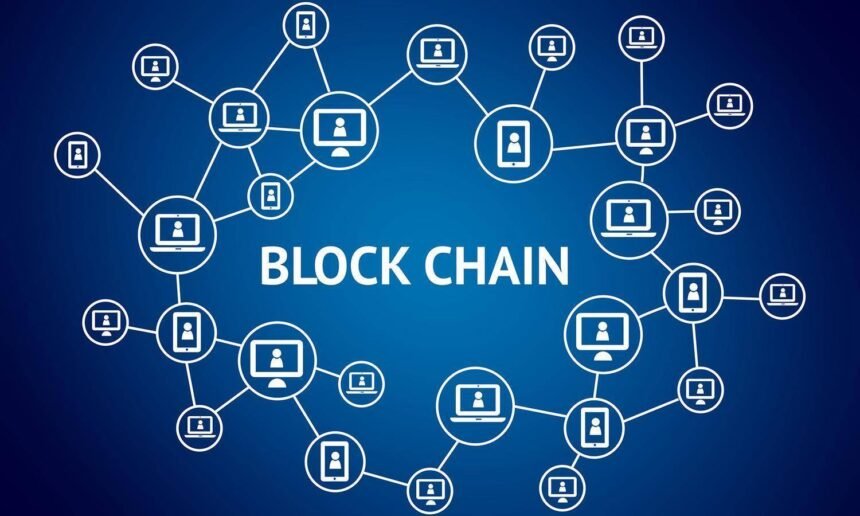
When people hear the word blockchain, they often think immediately of Bitcoin and cryptocurrency. However, blockchain technology has applications that go far beyond digital currencies. From tracking products in supply chains to verifying digital documents and improving business records, blockchain is creating new possibilities for storing and sharing information. As businesses become increasingly digital, trust, transparency, and data security are becoming essential. Blockchain offers a different way to maintain records by distributing information across a network instead of depending entirely on one central database. But how does this technology work, and could it change everyday services in the future? Let us explore.
What Is Blockchain Technology?
Blockchain is a type of distributed digital ledger that stores information in groups called blocks. These blocks are connected through cryptographic techniques, creating a chain of records. In many blockchain networks, multiple participants maintain copies of the ledger, and new transactions are added according to agreed-upon rules, often through a consensus mechanism. Once information has been added and confirmed, changing historical records can be difficult, particularly in networks designed to resist tampering. This structure can help participants maintain a shared record without relying entirely on one organisation to control the information. However, blockchain does not automatically make every record accurate or every system secure. Its value depends on how the network is designed and managed.
1. Blockchain in Supply Chain Management
One promising application of blockchain is supply chain tracking. Products often pass through several stages before reaching customers. Food items, for example, may move from farms to processing facilities, warehouses, distributors, and retail stores, and keeping reliable records across these stages can be challenging. Blockchain-based systems can help participating organisations share information about product movement and transactions. Potential benefits include better product traceability, shared transaction records, improved supply chain visibility, easier verification of selected product information, and more transparent coordination between participants. A food company could use a blockchain-supported system to record where a product was sourced and how it moved through the supply chain. The accuracy of the information still depends on the people and systems entering the data.
2. Digital Identity and Document Verification
Digital identity is becoming increasingly important as people use online platforms for banking, education, employment, and government services. Blockchain technology may support systems that allow individuals to verify selected identity information without repeatedly sharing unnecessary personal details. A digital credential system could help an educational institution issue a certificate that another organisation can independently verify. Potential applications include educational certificates, professional qualifications, employment credentials, digital identity verification, and selected business documents. Such systems could reduce certain verification challenges, but they must follow privacy laws and provide ways to manage lost credentials, corrections, and access.
3. Smart Contracts: Automating Digital Agreements
Smart contracts are programmes stored and executed on a blockchain network when predefined conditions are met. They can automate certain processes without requiring every step to be handled manually. For example, a smart contract could release a digital payment when an agreed delivery confirmation is recorded. Other possible applications include automated business payments, digital licensing agreements, supply chain settlements, insurance claim workflows, and token-based service agreements. Smart contracts can reduce manual processing in suitable situations, but they are not automatically equivalent to legally enforceable contracts. Their reliability depends on the quality of the code, the accuracy of external information, and the applicable legal framework.
4. Blockchain in Banking and Financial Services
Financial institutions process large numbers of transactions and maintain records across different systems. Blockchain and related distributed ledger technologies could help certain institutions coordinate transaction records and settlements. Possible applications include faster reconciliation between organisations, digital asset settlement, shared transaction records, cross-border payment infrastructure, and trade finance documentation. The Reserve Bank of India has been actively studying distributed ledger technology in the context of digital payments and finance. Not every banking transaction needs a blockchain, and traditional databases may be more efficient for many financial applications. The technology is most relevant when multiple independent organisations need to maintain a shared and trusted record.
5. Blockchain in Healthcare
Healthcare organisations manage sensitive information, including patient records, medical reports, and treatment histories. Blockchain may support selected systems for verifying data access, sharing records, and maintaining audit trails. A patient could potentially authorise different healthcare providers to access specific verified information through a controlled digital system. Potential advantages include better record verification, improved auditability, more controlled information sharing, and easier tracking of certain data exchanges. However, sensitive medical information should not simply be placed on a public blockchain. Privacy, consent, security, and healthcare regulations must guide implementation.
6. Blockchain in Real Estate and Property Management
Property transactions often involve multiple parties, including buyers, sellers, banks, developers, lawyers, and government authorities. Blockchain could support digital records for selected property-related processes, such as verification of property-related documents, digital transaction records, smart contract-based workflows, tokenisation of eligible assets, and transparent records of selected ownership changes. A digital property record system could help authorised participants verify the history of a document. However, blockchain records alone cannot establish legal ownership. Official land records, registration procedures, and applicable property laws remain essential.
7. Blockchain and Digital Ownership
The concept of digital ownership is another area connected to blockchain. Digital tokens can represent ownership or access rights associated with certain digital or physical assets, which has led to applications involving digital collectibles, event tickets, intellectual property records, digital memberships, and tokenised financial or real-world assets. An event organiser, for example, could issue blockchain-based tickets that are easier to verify and track. However, owning a token does not automatically mean owning the copyright or legal rights to the content or asset it represents. The terms governing ownership must be clearly defined.
8. Blockchain in Government and Public Services
Government departments manage large amounts of information related to public records, licences, certificates, and administrative services. Blockchain could help selected departments maintain shared records and create verifiable transaction histories, with potential applications in certificate verification, public procurement records, supply distribution tracking, document authentication, and administrative audit trails. In India, NITI Aayog and the Ministry of Electronics and Information Technology have both published policy thinking on how blockchain could complement existing digital public infrastructure where there is a clear need for shared verification between multiple organisations. The technology should be adopted only where it improves transparency, efficiency, or accountability compared with simpler alternatives.
9. How Blockchain Could Benefit Indian Businesses
India has a growing digital economy, with businesses operating across manufacturing, finance, agriculture, logistics, education, and technology. Blockchain-based solutions could help organisations improve coordination where several independent parties need access to common records. For businesses in Gujarat, potential use cases may include tracking industrial supply chains, recording selected export documentation, verifying product movement, managing digital business agreements, and improving traceability in agricultural markets. Manufacturers, exporters, logistics companies, and technology startups could explore blockchain where traditional systems create verification or reconciliation difficulties.
10. Challenges of Blockchain Technology
Despite its potential, blockchain has several limitations. Scalability is one, since some networks face limits on transaction speed and processing capacity. Energy consumption is another, because certain consensus mechanisms require substantial computing resources, although other designs use considerably less energy. Implementation cost matters too, as developing and maintaining blockchain solutions can require specialised expertise. Regulatory uncertainty remains a factor, since rules for digital assets and blockchain applications differ across countries and use cases. Privacy is a concern because public blockchains can expose transaction information, which makes privacy-focused design important. And data accuracy is a limit that no design removes: blockchain can make recorded information difficult to alter, but it cannot guarantee that the original information was correct.
What Is the Future of Blockchain Technology?
The future of blockchain may be less about cryptocurrency alone and more about specialised digital infrastructure. Businesses may use distributed ledgers to coordinate records, verify documents, and automate selected transactions. Smart contracts could become part of business software, while digital credentials may make certain verification processes easier. Blockchain may also work alongside artificial intelligence, cloud computing, and the Internet of Things to support connected digital services. The World Economic Forum has repeatedly noted that the most successful applications will likely be those that solve real problems rather than using blockchain simply because it is a popular technology.
Conclusion: Digital Trust Where It Is Genuinely Needed
Blockchain technology is much more than the foundation of cryptocurrency. It offers a different approach to maintaining shared digital records, verifying information, and automating selected business processes. From supply chains and banking to healthcare, education, and real estate, blockchain could support greater transparency in situations where multiple organisations need to trust the same information. However, it is not a universal solution. Privacy, cost, regulation, scalability, and data accuracy must all be considered before implementation. The future of blockchain will depend on its ability to deliver practical value, earn genuine trust, and solve real problems for businesses and the people they serve.
Stay updated with the latest news and articles. Subscribe Now for more articles.
