Diwali is not about lighting diyas wearing new clothes enjoying sweets and celebrating with family. Every day of this festival carries a story, a spiritual message and a connection with Hindu traditions.
For millions of families Diwali represents the victory of light over darkness, knowledge over ignorance and good over evil. In Gujarat the celebrations have an identity that starts with Vagh Baras and continues through Dhanteras, Kali Chaudas, Diwali, Bestu Varas, Bhai Bij and Labh Pancham.
Have you ever wondered why each day is celebrated? Which gods and goddesses are worshipped? What are the stories behind these traditions?
Let us explore the significance of the days.
1. Vagh Baras: Respect for Cows and the Gift of Nourishment
Vagh Baras is observed as a day in the Gujarati calendar just before Dhanteras.
In communities cows are worshipped and honoured for their contribution to agriculture, nourishment and everyday life. In Hindu tradition the cow is. Associated with motherhood, generosity and nourishment.
The spiritual message of this day is gratitude. It reminds people to respect animals, nature and the resources that support life.
For farming communities cattle have traditionally been essential to livelihood. Vagh Baras therefore reflects the connection between devotion and rural life.
2. Dhanteras: The Divine Appearance of Lord Dhanvantari
Dhanteras also known as Dhan Trayodashi is associated with wealth, health and auspicious beginnings.
According to Hindu mythology during Samudra Manthan, the churning of the ocean by the devas and asuras Lord Dhanvantari emerged carrying a pot of Amrit, the nectar of immortality.
Lord Dhanvantari is worshipped as the physician. Is linked to Ayurveda and health.
This story gives Dhanteras meaning: true wealth is not limited to money, gold or possessions. Good health, peace of mind and a healthy family are also forms of prosperity.
That is why many families worship Dhanvantari and Goddess Lakshmi and traditionally purchase gold, silver or new utensils on this occasion.
message: Wealth becomes meaningful when accompanied by health, wisdom and gratitude.
3. Kali Chaudas: The Victory Over Darkness and Negative Forces
Kali Chaudas also known in traditions as Naraka Chaturdashi is associated with the victory of Lord Krishna over the demon Narakasura.
According to the Bhagavata Purana tradition Narakasura became a ruler who imprisoned many women. Lord Krishna defeated him. Freed those held captive.
This victory is remembered as a triumph of righteousness over cruelty and arrogance.
In Gujarat Kali Chaudas is also associated with the worship of Goddess Kali and Lord Hanuman in traditions. Some families perform prayers to seek protection and the removal of negativity.
The day reminds devotees that the greatest darkness is not always outside us. Anger, ego, greed and cruelty can also become darkness within the heart.
Devotional message: True victory begins when we overcome qualities within ourselves.
4. Diwali: The Return of Lord Rama and the Worship of Goddess Lakshmi
Diwali is the celebration of the festival of lights.
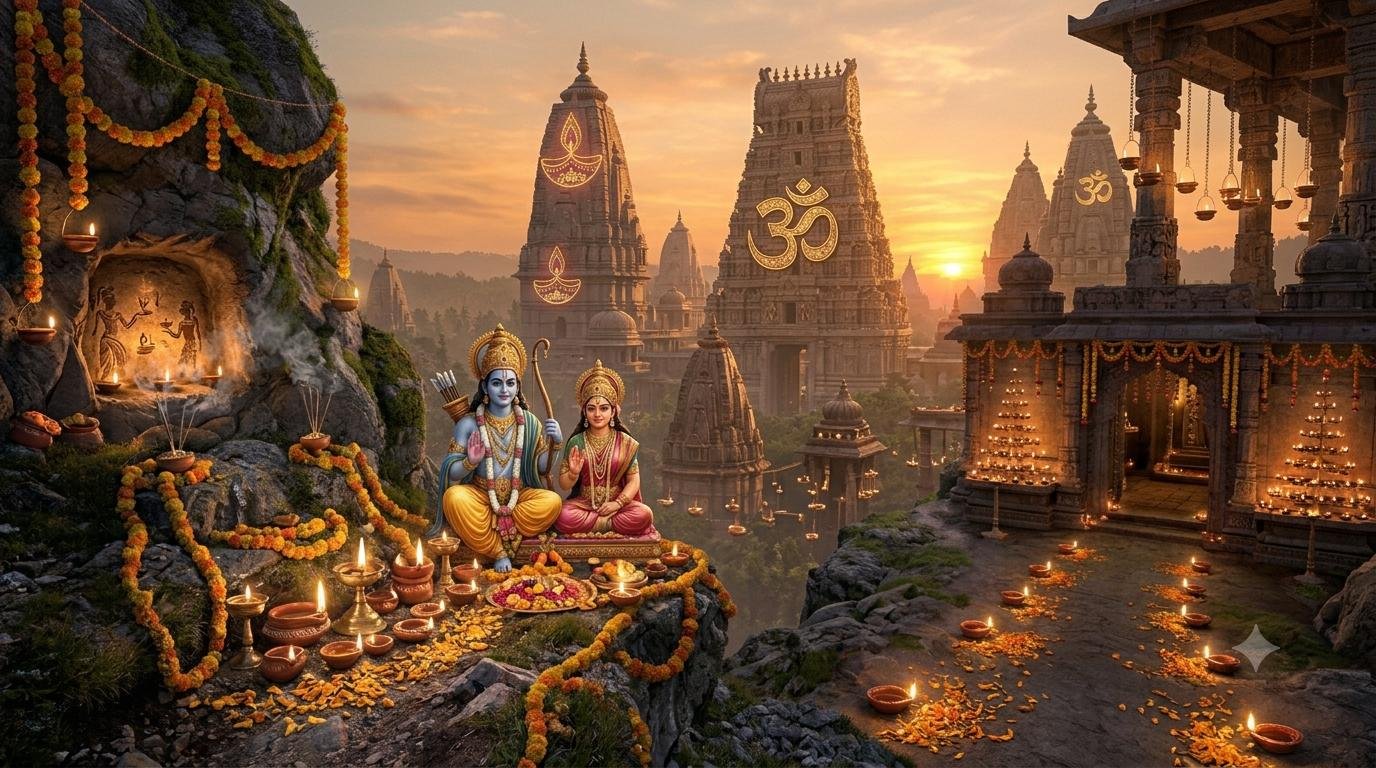
One of the known stories associated with Diwali is the return of Lord Rama, Goddess Sita and Lakshmana to Ayodhya, after fourteen years of exile and the defeat of Ravana.
According to the Ramayana tradition the people of Ayodhya welcomed their king by illuminating their homes and streets with rows of lamps.
The diyas became a symbol of happiness, hope and the victory of righteousness.
Diwali is an occasion for worshipping Goddess Lakshmi, who represents wealth, prosperity and abundance. Goddess Lakshmi represents wealth, prosperity and abundance. Lord Ganesha is worshipped alongside Goddess Lakshmi as Lord Ganesha is associated with wisdom and the removal of obstacles.
In Gujarat business families also perform Chopda Pujan worshipping their account books. The ritual honours Goddess Lakshmi for prosperity Goddess Saraswati or Sharda for knowledge and Lord Ganesha for beginnings.
For Jain communities Diwali also commemorates the nirvana of Lord Mahavira.
Devotional message: Let the light of truth, wisdom and goodness illuminate homes and hearts.
5. Bestu Varas: A New Beginning and the Blessings of King Bali
Bestu Varas marks the Gujarati New Year and the beginning of a Vikram Samvat year.
Families wear clothes visit relatives exchange greetings and seek blessings from elders. The traditional greeting “Saal Mubarak” expresses wishes for happiness and prosperity in the coming year.
One important story associated with this period is that of King Mahabali and Lord Vishnus Vamana avatar.
According to the Bhagavata Purana Vishnu appeared as a Brahmin boy named Vamana. Asked King Bali for three steps of land. Vamana then expanded into a form that covered the heavens and earth in two steps. King Bali offered his head for the step.
The story is associated with humility, devotion, generosity and the power of grace. Bali Pratipada, observed in Hindu traditions around this period remembers this story.
In Gujarat Bestu Varas is also connected with the worship of Govardhan and Annakut in Vaishnav and Swaminarayan temples.
Devotional message: A new year is an opportunity to leave behind mistakes practice humility and begin with intentions.
6. Govardhan. Annakut: Lord Krishnas Protection of Nature
The story of Govardhan Puja comes from the childhood pastimes of Lord Krishna in Vrindavan.
According to the Bhagavata Purana the people of Vrindavan traditionally performed a ritual in honour of Indra, the god associated with rain. Krishna encouraged them to recognise the importance of Govardhan Hill, the land, cattle and nature that sustained their lives.
Indra became angry. Sent heavy rain upon the village. To protect people and animals Krishna lifted Govardhan Hill on his finger. Provided shelter beneath it.
The villagers remained safe under the hill.
This story is remembered through Govardhan Puja and Annakut where devotees prepare and offer a variety of food items to the Lord.
The mountain‑like arrangement of food represents gratitude, for natures gifts and the nourishment that sustains life.
Devotional message: Respect nature. Protect the environment. Remain grateful for the food and resources we receive. Respect nature. Protect the environment. Remain grateful for the food and resources we receive.
7. Bhai Bij: The Divine Bond Between Lord Yama and Goddess Yamuna
Bhai Bij also called Bhai Dooj or Yama Dwitiya is a celebration that honours the bond between brothers and sisters. Bhai Bij, also called Bhai Dooj or Yama Dwitiya honours the bond between brothers and sisters.
In a well‑known story Goddess Yamuna invited her brother Yama, the god of death to her home. In a well‑known story Goddess Yamuna invited her brother Yama, the god of death to her home. She welcomed him with affection performed a tilak ceremony and offered him a meal. She welcomed him with affection performed a tilak ceremony and offered him a meal.
Yama was pleased by her love and hospitality. Yama was pleased by her love and hospitality. He blessed her. The tradition says that brothers who visit their sisters and receive their blessings on this day will be blessed with well‑being. He blessed her. The tradition says that brothers who visit their sisters and receive their blessings on this day will be blessed with well‑being.
Today sisters apply tilak to their brothers pray for their happiness and long life and share a meal. Today sisters apply tilak to their brothers pray for their happiness and long life. Share a meal. Brothers also express their affection and blessings. Brothers also express their affection and blessings.
Devotional message: Family relationships are gifts. Love, respect and care should be protected. Family relationships are gifts. Love, respect and care should be protected.
8. Labh Pancham: An Auspicious Return to Work
Labh Pancham is especially significant in Gujarat. Labh Pancham is especially significant, in Gujarat.
After the New Year holidays many business owners reopen their shops.
This tradition helps connect generations through faith and culture.
Perhaps the real meaning of Diwali is not simply to decorate our homes with lights but to remove the darkness of hatred, greed, ego and ignorance from our lives.
This Diwali, let us not light diyas outside our homes. Let us also light the diya of kindness, wisdom, devotion and humanity within our hearts.
Stay updated with the latest news and articles. Subscribe Now
