
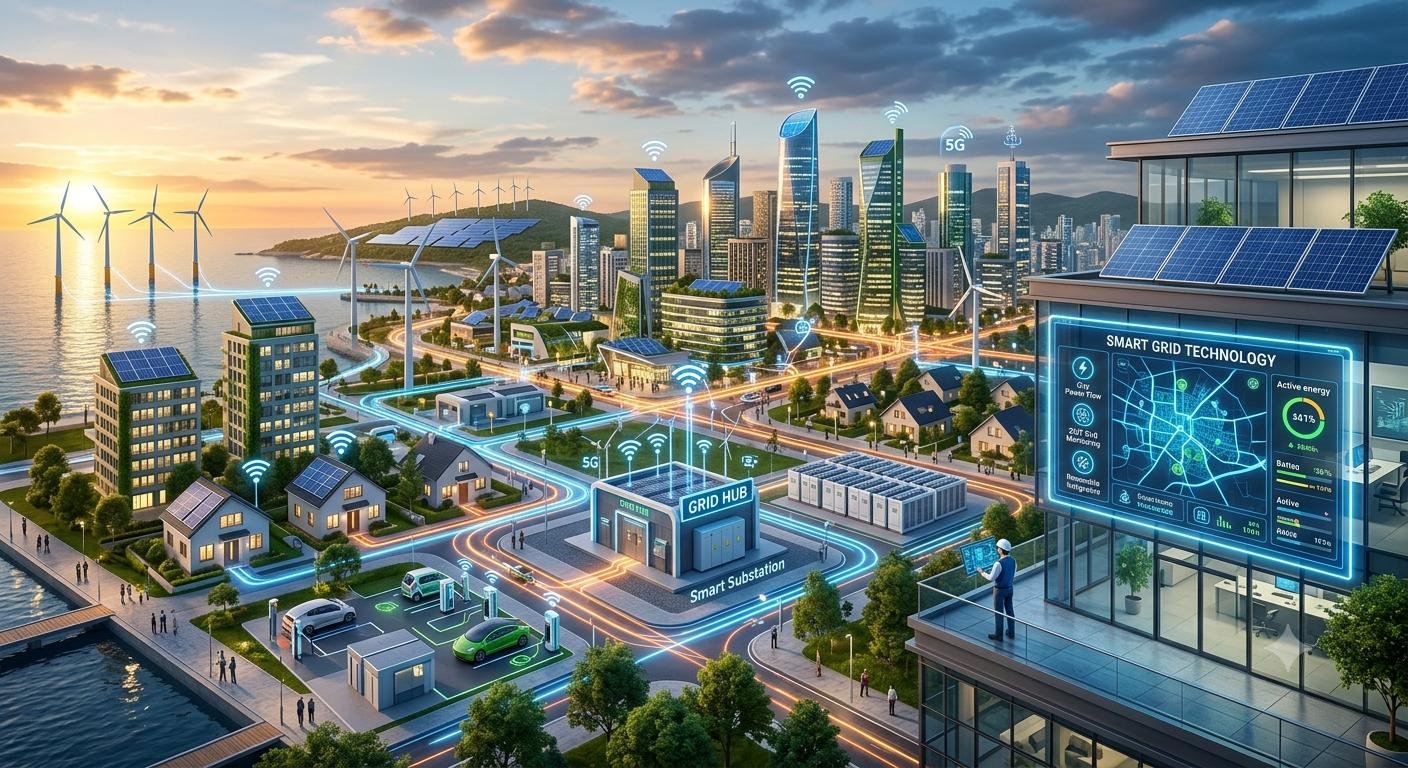
Imagine an electricity network that can detect faults monitor power consumption in real time integrate solar energy and help restore electricity more efficiently when something goes wrong.
This is the vision behind Smart Grid Technology.
Traditional electricity networks were primarily designed to deliver power from generating stations to homes, offices and factories. Modern energy systems are becoming more complex as solar panels, electric vehicles, battery storage and connected devices become increasingly common.
A smart grid combines electricity infrastructure with ** communication, sensors, automation and data analytics** to help manage the flow of electricity more intelligently.
The result could be a flexible and efficient energy system that benefits households, businesses and entire communities.
What Is Smart Grid Technology?
A smart grid is an electricity network that uses technologies to monitor conditions exchange information and coordinate different parts of the power system.
It connects electricity generation, transmission, distribution and consumption through technologies that help operators understand what is happening across the network.
A smart grid may use:
- Smart electricity meters
- Sensors and monitoring devices
- Automated control systems
- Digital communication networks
- Artificial intelligence and data analytics
- energy integration
- Battery energy storage
- Demand-response systems
The main objective is to improve how electricity is monitored, distributed and managed.
How Does a Smart Grid Work?
Smart grids combine technologies to make electricity networks more responsive.
1. Smart Electricity Meters
Smart meters can record electricity consumption at intervals and communicate readings to the utility depending on the meter and network configuration.
This can reduce dependence on manual meter readings. Provide consumers with more detailed information about their electricity use.
2. Sensors and Monitoring Systems
Sensors monitor conditions across parts of the electricity network including voltage, current and equipment status.
This information can help operators identify conditions and investigate potential faults.
3. Automated Controls
Some smart-grid systems can automatically adjust equipment. Isolate affected sections when a fault occurs.
This may help limit the impact of disruptions and support faster restoration.
4. Data Analytics
Software can analyze information from meters, sensors and other systems to help utilities forecast demand identify patterns and plan maintenance.
Together these technologies help electricity providers make informed decisions.
How Smart Grids Could Help Households
Smart grids can make electricity consumption easier to understand and manage.
For example a household with a smart meter may be able to review its electricity usage through a utility portal or application.
This information can help people identify appliances or periods associated with consumption.
In areas where time-based electricity tariffsre available consumers may also be able to shift certain activities to cheaper periods.
For example a household could schedule an appliance to run when electricity rates are lower.
However these features depend on the electricity provider, meter capabilities and tariff arrangements.
Smart Grids and Solar Energy
Solar energy is becoming a part of electricity generation in many regions.
Solar power depends on sunlight meaning generation can change throughout the day and with weather conditions.
Smart-grid technologies can help utilities monitor changing electricity flows as rooftop and large-scale solar systems connect to the network.
For example when many homes generate power during the afternoon electricity may flow back toward the distribution network if local production exceeds local demand.
Smart-grid monitoring can help operators understand these conditions and manage the network appropriately.
This becomes especially important as electricity systems move toward distributed renewable generation.
Connecting Batteries to the Electricity Network
Energy storage can help balance electricity supply and demand.
A battery system can store electricity when it is available and deliver it later subject to its capacity operating settings and connection arrangements.
Smart grids can help coordinate battery storage with parts of the electricity system.
Potential applications include:
- Storing solar generation
- Supporting the grid during periods of high demand
- Helping manage fluctuations in renewable generation
- Providing backup power in appropriately designed systems
- Supporting electricity supply in selected locations
Batteries are not the only form of energy storage but they are an increasingly important option for certain applications.
Smart Grids and Electric Vehicles
Electric vehicles add electricity demand because their batteries need to be charged.
If many vehicles charge at the time local electricity networks may experience additional pressure.
Smart-grid technologies could help manage this demand through coordinated charging.
For example a compatible charging system might schedule charging during periods of demand or when more electricity is available.
Some systems may also support vehicle-to-grid technology, which allows suitable vehicles to send electricity back to the grid under conditions.
However vehicle-to-grid services require vehicles, chargers, regulations and utility arrangements. They are not universally available.
Can Artificial Intelligence Improve Electricity Networks?
Artificial intelligence can help analyze quantities of energy-system data.
Depending on the application AI-assisted tools may support:
Demand forecasting: Estimating how much electricity consumers may need.
Fault detection: Identifying patterns that deserve investigation.
Predictive maintenance: Helping operators identify equipment that may require attention.
Renewable energy planning: Improving forecasts of wind generation.
Energy optimization: Supporting decisions about how electricity resourcesre coordinated.
AI does not eliminate the need for engineering expertise. Its usefulness depends on data, carefully designed systems and human oversight.
Can Smart Grids Reduce Power Cuts?
Smart-grid technology can help improve the detection and management of electricity faults.
For example monitoring systems may identify a problem in a section of the network more quickly than systems relying only on manual reports.
Automated equipment may also isolate some faults. Help restore electricity to unaffected areas.
These capabilities can potentially improve reliability. They cannot prevent every outage.
Severe weather, equipment damage, generation shortages and other problems can still disrupt electricity supply.
Smart Grids and Environmental Benefits
Smart grids can support electricity systems by helping integrate renewable energy and manage demand more effectively.
Potential benefits include:
- Better coordination of electricity
- Reduced unnecessary energy losses in suitable applications
- Improved visibility into network performance
- More flexible use of energy storage
- Better management of electricity demand
- Support for electric vehicle charging
The environmental impact depends on how the technology is implemented and the energy sources used.
A smart grid does not automatically make electricity renewable. It provides tools that can help the wider electricity system operate efficiently and accommodate cleaner generation.
Why Smart Grids Matter for India
India has an diverse electricity system serving households, industries, commercial buildings and agricultural users.
As electricity demand grows and renewable energy expands, digital monitoring and better demand management can become increasingly important.
Smart-grid development in India may support areas such as:
- Modernization of electricity distribution
- Improved meter reading and billing
- energy integration
- Better monitoring of electricity losses
- Demand management
- Electric vehicle charging infrastructure
- More informed network planning
The impact will vary across regions depending on infrastructure, investment, implementation and consumer access to digital services.
Cybersecurity and Privacy Challenges
Smart grids rely on communication networks, software and connected equipment. This creates cybersecurity responsibilities.
Potential risks include access, disruption of control systems and misuse of energy-consumption data.
Electricity providers need security practices, including access controls, system monitoring, secure software updates and protection of sensitive information.
Consumers should also understand how their meter data is collected, stored and used.
Because electricity networks support services cybersecurity must be considered a core part of smart-grid design rather than an optional feature.
Challenges in Smart Grid Adoption
Although smart grids offer potential implementation can be difficult.
High initial investment: Modernizing meters, substations, communication networks and control systems requires funding.
Legacy infrastructure: Older equipment may not easily integrate with technologies.
Interoperability: Devices and systems from manufacturers need to work together.
Connectivity: Reliable communications are essential for smart-grid functions.
Data protection: Consumption information must be handled responsibly.
Technical skills: Utilities need trained professionals to operate and maintain systems.
Successful deployment requires long-term planning, technical standards and investment in both digital infrastructure.
What Is the Future of Smart Grid Technology?
Future electricity networks may combine meters, AI-assisted forecasting distributed solar generation, energy storage and connected electric vehicles.
Homes and businesses could become active participants, in the energy system by generating, storing and managing electricity.
Utilities may also gain visibility into demand patterns and equipment performance.
The long-term goal is to create an electricity network that’s more adaptable to changing energy needs.
However progress will depend on affordability, infrastructure development, regulations and how effectively new technologies are integrated.
Final Thoughts
Smart grid technology is helping transform electricity networks from traditional systems into more connected and data-driven infrastructure.
By combining sensors, communication systems, automation and analytics smart grids can help utilities monitor electricity flows respond to faults and integrate renewable energy more effectively.
For households the benefits may include access to consumption information and new ways to manage electricity use. For businesses and communities smarter networks can support energy needs.
The future of electricity is not about generating more power.
It is also about delivering, monitoring and managing that power intelligently.
As renewable energy, battery storage and electric vehicles become more widespread smart grids could become an important foundation of everyday life.
Stay updated with the latest news and articles. Subscribe Now for more articles.
