Across Rajasthan and Gujarat, the name Ramdev Pir carries a special emotional and spiritual significance. For countless devotees, Ramdev Pir—also lovingly called Ramapir, Baba Ramdevji and Runicha Ramdev—represents faith, equality, service and hope.
The devotional period associated with Ramdev Pir is particularly important in the folk traditions of Gujarat and Rajasthan. Devotees gather for bhajans, prayers, fairs and religious activities, remembering the life and teachings of Ramdev Pir.
Although it is sometimes popularly referred to as Ramdev Pir Navratri, it should not be confused with the major nine-night Navratri festivals dedicated to Goddess Durga. The Ramdev Pir devotional period belongs to a different regional and spiritual tradition, and rituals can vary among communities and families.
But what makes Ramdev Pir so special? Why do devotees across western India continue to remember him with such deep faith?
The answer lies not only in the stories associated with him but also in the values he represents.
Who Was Ramdev Pir?
Ramdev Pir is traditionally remembered as a medieval-era saint and spiritual figure associated particularly with Rajasthan. His devotion and teachings became deeply connected with ordinary people, especially communities that valued equality, compassion and service.
He is popularly associated with Ramdevra in Rajasthan, which became an important pilgrimage destination.
In Gujarati and Rajasthani devotional culture, Ramdev Pir is often remembered as a compassionate spiritual figure who stood with the poor and marginalized.
His devotees believe that sincere prayer to Ramapir brings courage, protection and inner strength.
More importantly, his legacy emphasizes a powerful idea:
God does not belong to one caste, community or social class.
This message of equality continues to be an important part of Ramdev Pir’s spiritual legacy.
The Birth and Divine Story of Ramdev Pir
Traditional devotional accounts describe Ramdev Pir’s birth as extraordinary and spiritually significant.
Different folk traditions narrate his life in different ways, and details can vary between communities. According to popular belief, he was born into a royal family but chose a path devoted to humanity rather than worldly power.
From childhood, stories about Ramdev Pir portray him as spiritually gifted and deeply compassionate.
Rather than using his position for personal comfort, he became associated with helping people in need.
His life gradually became an example of how spirituality can be connected with service to humanity.
For readers interested in India’s diverse spiritual traditions, Ramdev Pir’s story is also a reminder of the rich heritage of Indian culture and traditions.
Ramdev Pir and the Message of Equality
One of the strongest aspects of Ramdev Pir’s devotional tradition is the message of equality.
Indian society historically contained many social divisions. Folk traditions surrounding Ramdev Pir remember him as someone who welcomed people beyond rigid social boundaries.
This is one reason his popularity crossed community and regional lines.
For devotees, Ramdev Pir’s message can be understood in a simple way:
A person’s value is determined by their actions and devotion, not by their birth.
This message remains highly relevant today.
In a world where people can still be divided by wealth, status, religion and social identity, Ramdev Pir’s legacy encourages people to see humanity before differences.
What Is Ramdev Pir Navratri?
The phrase Ramdev Pir Navratri is used in some regional devotional contexts to describe a period of intense worship and remembrance of Ramdev Pir.
However, it is important to understand that this is different from Sharadiya Navratri, the nine-night festival dedicated primarily to Goddess Durga and her forms.
Ramdev Pir’s major devotional celebrations are especially associated with Ramdevra and the Bhadarva/Bhadrapada period in the traditional lunar calendar.
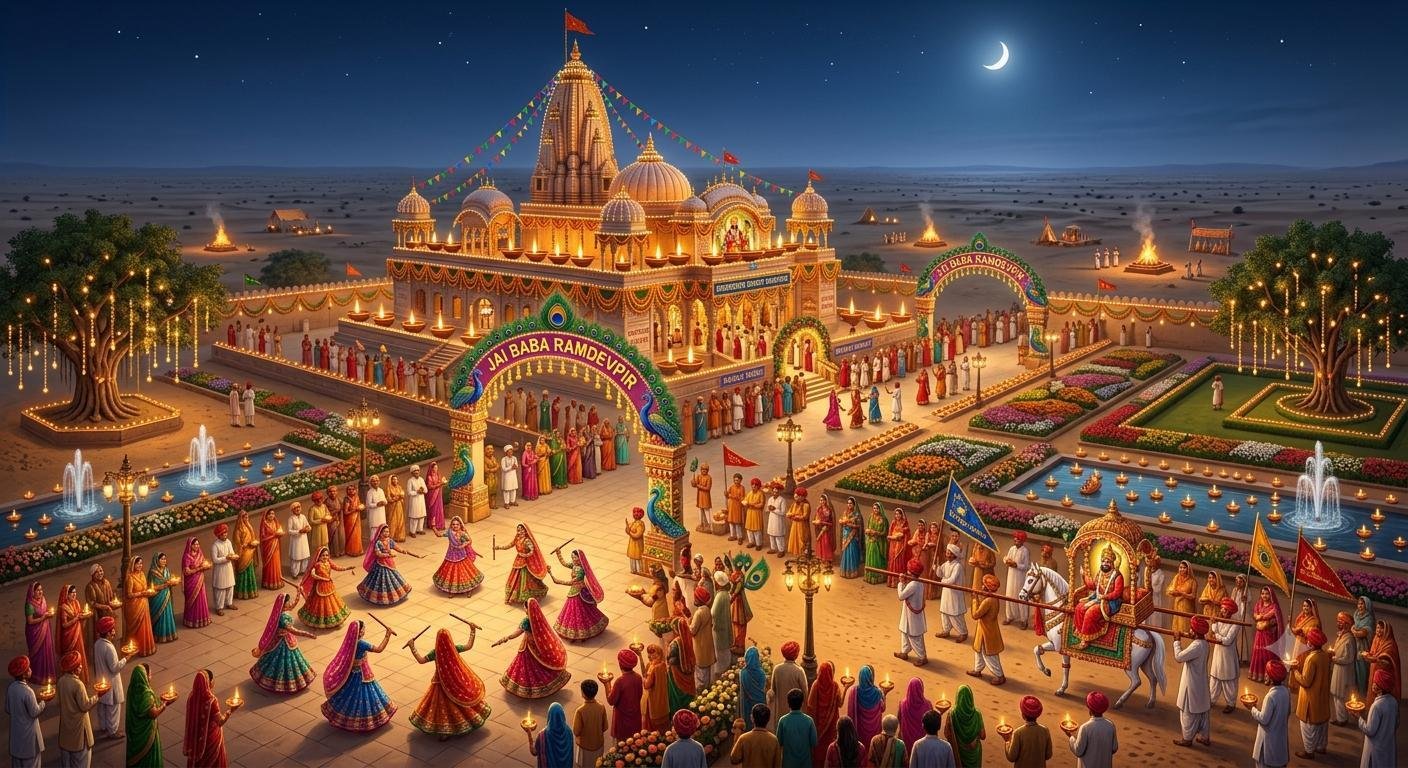
In Gujarat and Rajasthan, devotees may participate in:
- Ramdev Pir bhajans
- Devotional gatherings
- Temple visits
- Fairs and melas
- Processions
- Offerings
- Community meals
- Folk devotional music
- Pilgrimage
- Service activities
Local customs differ, so families and communities may follow their own traditions.
For information about the broader Navratri tradition, devotees can also explore the Ministry of Culture, Government of India resources on India’s cultural heritage.
The Importance of Ramdevra
For devotees of Ramdev Pir, Ramdevra holds extraordinary importance.
Located in Rajasthan, Ramdevra is associated with the samadhi of Baba Ramdevji and attracts large numbers of devotees.
The annual Ramdevra fair is one of the major expressions of this devotion.
People travel long distances to remember Ramapir, participate in devotional activities and seek spiritual blessings.
For many pilgrims, the journey itself becomes an act of devotion.
Walking long distances, singing bhajans and remembering the name of Ramapir can become a deeply emotional spiritual experience.
Those planning a visit can refer to official Rajasthan tourism resources for information about destinations and cultural attractions across the state. Rajasthan Tourism
Why Do Devotees Chant “Ramapir”?
The name Ramapir is deeply embedded in folk devotional culture.
Devotees chant his name during prayers and bhajans as an expression of faith.
The spiritual idea behind chanting is simple: when the mind repeatedly focuses on a sacred name, it can become calmer and more concentrated.
For believers, the name of Ramapir is also a symbol of protection and hope.
During difficult times, devotional chanting can provide emotional strength.
That is why many devotees believe that remembering Ramapir is not merely a ritual—it is a way of strengthening one’s connection with faith.
Ramdev Pir and the Power of Service
One of the most meaningful lessons associated with Ramdev Pir is seva, or selfless service.
Indian spiritual traditions repeatedly emphasize that serving people is a form of serving God.
The Ramdev Pir tradition strongly reflects this philosophy.
Helping a hungry person, supporting someone in difficulty, treating people respectfully and sharing whatever one has can all become forms of spiritual practice.
This makes Ramapir’s teachings relevant beyond temples and religious festivals.
A person does not need to perform a complicated ritual to practice compassion.
Sometimes, a small act of kindness can become the most meaningful prayer.
For more reflection on compassion and positive values in everyday life, you can also read our article on the power of forgiveness and inner peace.
Why Ramdev Pir Is Loved in Gujarat
Ramdev Pir has a particularly strong cultural and devotional presence in Gujarat.
His songs, bhajans and stories are familiar in many Gujarati communities.
During religious gatherings, devotees often sing folk bhajans dedicated to Ramapir.
The devotional atmosphere combines spirituality with Gujarati folk culture.
For many families, Ramdev Pir is not simply a historical or religious figure. He is a deeply personal symbol of faith.
Some devotees keep his image in their homes, visit temples and participate in annual religious gatherings.
The devotion has also travelled across generations, with grandparents introducing children to Ramapir’s stories and bhajans.
This connection between spirituality, family and cultural heritage is one reason regional devotional traditions continue to remain meaningful.
Ramdev Pir’s Spiritual Message for Modern Life
The biggest reason ancient saints remain relevant is that their teachings can still answer modern problems.
Ramdev Pir’s devotional legacy offers several lessons for today’s generation.
1. Stay Humble
Status, money and power can change quickly.
Humility keeps a person connected to humanity.
2. Help People in Need
Spirituality should not remain limited to prayer.
Helping another person is also a powerful form of devotion.
3. Respect Everyone
Ramapir’s association with equality reminds us that social differences should never become an excuse for disrespect.
4. Have Faith During Difficult Times
Life brings uncertainty.
Faith can give people the emotional strength to continue moving forward.
5. Choose Service Over Ego
A meaningful life is not measured only by personal success.
It is also measured by how much positivity we bring into the lives of others.
Ramdev Pir Navratri and the Meaning of Devotion
The deepest meaning of any devotional festival is not simply the number of rituals performed.
It is the transformation that happens within a person.
If prayer makes someone kinder, the prayer has meaning.
If devotion teaches someone to help others, the devotion has meaning.
If remembering Ramapir gives someone courage to face difficult circumstances, that remembrance becomes spiritually valuable.
This is why Ramdev Pir’s legacy continues to survive through generations.
A Simple Ramapir Devotional Practice
Devotees who wish to remember Ramdev Pir during this sacred period can follow a simple routine according to their family tradition.
- Begin the day with cleanliness and a peaceful mind.
- Light a diya before the image or symbol of Ramapir.
- Offer flowers or other traditional offerings according to your custom.
- Spend a few minutes chanting Ramapir’s name.
- Listen to or sing a Ramdev Pir bhajan.
- Most importantly, perform at least one act of kindness.
You might:
- Feed someone who needs food.
- Help an elderly person.
- Support a struggling family.
- Donate according to your ability.
- Speak kindly to someone going through a difficult time.
This turns devotion into action.
Ramapir’s Message: Humanity Above Division
Perhaps the most powerful lesson from the Ramdev Pir tradition is the idea that spirituality should unite people.
Religion can have different forms.
People can have different traditions.
Languages can be different.
But compassion remains universal.
Ramdev Pir’s popularity across Gujarat, Rajasthan and other regions demonstrates how a spiritual tradition can cross geographical and social boundaries.
His name continues to live through temples, folk songs, pilgrimage, stories and family traditions.
The broader idea of respecting India’s diverse traditions is also reflected in the country’s rich cultural heritage. Incredible India provides information about cultural destinations and traditions across the country.
Conclusion
Ramdev Pir Navratri represents a beautiful regional expression of faith, remembrance and devotion associated with Ramapir.
While it should not be confused with the nine-night Navratri dedicated to Goddess Durga, the devotional traditions surrounding Ramdev Pir carry their own importance, especially across Gujarat and Rajasthan.
The story of Ramdev Pir is ultimately more than a collection of miraculous folk narratives.
It is a reminder of faith, equality, compassion, service and humanity.
For devotees, remembering Ramapir is a source of spiritual strength.
And perhaps the most beautiful way to honor his legacy is not only by chanting his name, but by living the values associated with him:
Help others. Respect everyone. Stay humble. Keep faith. Serve humanity.
That is the true spirit of Ramapir devotion.
Stay Updated With the Latest Articles
Stay updated with the latest news, Gujarati culture, spirituality, and articles.
Subscribe Now for more articles and updates.
