
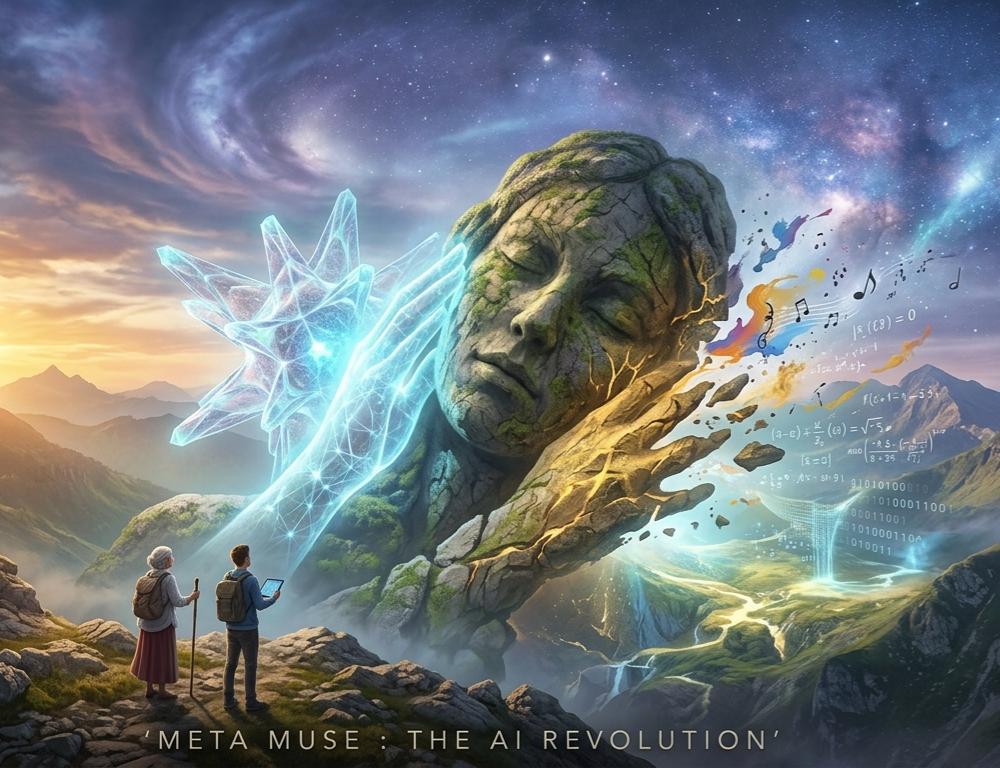
Artificial intelligence is reshaping how people write, design, communicate, and build online experiences — and Meta’s AI ecosystem is at the forefront of this transformation. From Meta AI, the intelligent assistant integrated across Facebook, Instagram, WhatsApp, and Messenger, to Llama, Meta’s powerful open-source large language model, the company is making serious and sustained investments in generative AI, intelligent assistants, and multimodal technology capable of understanding text, images, voice, and video simultaneously. Whether you are a content creator, entrepreneur, student, or digital marketer, understanding where Meta’s AI tools are heading can help you stay meaningfully ahead in the rapidly evolving AI landscape of 2026.
What Is Meta AI and Why Is It Gaining Attention?
Meta AI is Meta’s vision for AI-powered creative and practical assistance — an intelligent system that helps users generate ideas, write content, create visuals, improve productivity, and enhance their digital interactions across Meta’s family of platforms. Rather than replacing human creativity, Meta AI is designed to act as an intelligent creative partner that assists users throughout the creative process, handling repetitive and time-consuming tasks so that human energy can be directed toward originality, strategy, and meaningful expression. Artificial intelligence has moved far beyond simple chatbots — today’s users expect AI to help brainstorm ideas, write engaging captions, generate marketing campaigns, edit images, summarize information, and answer complex questions instantly. As creators compete for attention on Facebook, Instagram, WhatsApp, and Threads, AI tools are rapidly becoming essential rather than optional.
Smart Content Generation
One of the most immediately valuable capabilities in Meta’s growing AI toolkit is the ability to generate high-quality written content in seconds. Meta AI can assist with blog writing, product descriptions, social media captions, marketing copy, email drafts, business proposals, creative storytelling, and educational content across a wide range of formats and tones. Rather than starting from a blank page — one of the most creatively draining experiences any writer faces — users can receive intelligent, contextually relevant suggestions that dramatically speed up the writing process while still leaving the final voice, judgment, and quality control in human hands.
Creative Brainstorming at Scale
Every creator experiences creative blocks, and the pressure to produce consistent, high-quality content across multiple platforms makes those blocks more costly than ever. Meta’s AI tools help users generate fresh and varied ideas by suggesting video topics, blog headlines, campaign concepts, brand slogans, story ideas, Instagram Reel scripts, and YouTube content plans — giving creators a structured starting point that they can then shape with their own expertise, personality, and audience knowledge. This makes the technology particularly valuable for influencers, agencies, startups, and individual creators who need to maintain consistent creative output without burning out.
Personalised AI Assistance That Improves Over Time
Unlike traditional search engines that return the same results for the same query regardless of who is asking, modern AI assistants learn from user interactions and preferences to provide increasingly relevant and personalised suggestions over time. This personalisation improves both productivity and the quality of the creative output produced, while making the interaction feel more natural and less mechanical. Meta’s AI research division has placed significant emphasis on developing models that can engage in genuinely contextual, multi-turn conversations rather than simply responding to isolated prompts — a capability that makes AI increasingly useful as a genuine creative collaborator rather than a basic lookup tool.
Visual Creativity and Multimodal AI
Modern AI is no longer limited to text, and Meta’s AI ecosystem is expanding rapidly into visual creativity. AI-powered tools within Meta’s platforms increasingly support image generation, photo editing assistance, background replacement, graphic design guidance, and visual storytelling — enabling creators to produce engaging multimedia content with less effort and fewer specialist tools. This multimodal capability, combining understanding of text, images, and eventually video and audio together, represents the frontier of where AI creativity is heading and where Meta is investing most aggressively for the years ahead.
Multilingual Support for Global Audiences
Businesses today serve genuinely global audiences, and language barriers remain one of the most significant practical obstacles to reaching them effectively. AI-powered language support within Meta’s tools enables users to translate content accurately, rewrite articles for different cultural contexts, improve grammar and tone across languages, and create multilingual marketing campaigns that maintain consistency and quality across markets. For businesses in India in particular, where audiences span dozens of languages and dialects, this capability has the potential to dramatically extend both reach and relevance.
How Businesses Can Benefit from Meta’s AI Tools
Businesses of every size are exploring AI as a way to improve efficiency and output without proportionally increasing costs. Meta’s AI capabilities can assist with customer communication, social media management, marketing campaign creation, content planning, product promotion, brand storytelling, and internal documentation. Small businesses benefit particularly significantly because AI reduces the need for large creative teams while maintaining and in some cases improving the quality and consistency of output. McKinsey research on generative AI estimates that AI tools of this kind could generate trillions of dollars in economic value globally by automating and augmenting creative and knowledge work — with small and medium businesses among the primary beneficiaries if they adopt these tools effectively.
Benefits for Content Creators
Content creators often spend hours planning, writing, editing, researching, and managing the administrative side of content production before a single piece reaches their audience. AI assistance can meaningfully simplify this workflow by helping creators generate daily content ideas, write SEO-friendly articles, create engaging captions, develop video scripts, produce marketing content, and organise publishing calendars. Critically, rather than replacing the creator’s voice and perspective, AI handles the repetitive and time-consuming elements of the process, freeing creative energy for the originality, storytelling, and genuine audience connection that no algorithm can replicate.
Impact on Digital Marketing
AI is changing digital marketing at a pace that is challenging even well-resourced teams to keep up with. Meta’s AI tools support marketers through audience-focused messaging that resonates more precisely with specific segments, faster ad copy creation that reduces the time from brief to live campaign, personalised recommendations that improve relevance and conversion, trend-based content planning that keeps brands timely and contextually appropriate, and performance insights that make campaign optimisation more data-driven and less intuitive. Brands that use AI effectively in this context can produce more content of higher quality while maintaining the consistency that builds brand recognition over time.
AI and Social Media Content Creation
Social media platforms consistently reward engaging, consistent, and high-quality content — and producing that at scale is one of the most demanding challenges facing any creator or brand today. Meta’s AI tools help users create Facebook posts, Instagram captions, Threads updates, Messenger responses, community engagement ideas, and promotional campaigns with significantly less manual effort than traditional content production requires. This enables creators to maintain an active and coherent online presence without the exhaustion and creative depletion that comes from trying to generate everything from scratch every single day.
Ethical Use of AI in Creative Work
As AI becomes more capable, responsible use becomes increasingly important and increasingly the responsibility of the individual using the tools. Creators and businesses using AI assistance should consistently verify important factual information before publishing, respect copyrights and intellectual property in all AI-assisted work, maintain appropriate transparency with audiences about AI involvement where relevant, protect user privacy when working with customer data, and always add genuine human creativity, judgment, and originality to AI-assisted output. The best results consistently come from combining AI efficiency with human expertise and ethical responsibility — not from treating AI output as finished work that requires no further scrutiny or improvement.
The Future of Meta’s AI Creative Tools
The future of AI creativity within Meta’s ecosystem looks genuinely ambitious. Industry analysts expect future AI systems to become significantly better at understanding emotional nuance, supporting real-time collaboration between teams, conducting natural voice conversations, generating video content, personalising educational experiences, automating complex business workflows, and delivering immersive digital experiences across Meta’s expanding platforms. World Economic Forum analysis consistently highlights generative AI as one of the defining technological developments of the coming decade, with creative industries among those most significantly affected by its continued advancement.
Tips to Get the Best Results from AI Creative Tools
To maximise the value of AI assistance in creative work, the most experienced users consistently recommend giving clear and specific instructions that leave as little ambiguity as possible, providing sufficient context for the AI to understand the purpose, audience, and tone required, reviewing all generated content critically before use, adding personal expertise and original insight that the AI cannot supply, verifying facts before publishing, optimising for your specific target audience rather than accepting generic output, and maintaining your unique brand voice throughout rather than allowing AI’s default register to override your own. Human creativity combined with AI intelligence almost always produces stronger and more authentic results than either alone.
Final Thoughts: AI as a Creative Partner, Not a Replacement
Meta’s investment in AI-powered creative tools represents a significant step toward a future in which artificial intelligence is a genuine and valuable partner in the creative process. From writing assistance and idea generation to marketing campaign support and multilingual content creation, intelligent AI tools are becoming valuable assets for businesses and creators who learn to use them well. Rather than viewing AI as a replacement for human talent — a concern that is both understandable and worth taking seriously — it is more accurate and more productive to understand it as a powerful productivity tool that removes repetitive work while allowing people to focus on the innovation, storytelling, and meaningful human connection that remain irreducibly their own. As artificial intelligence continues to evolve, those who learn to work alongside it skillfully will be better positioned to create engaging content, grow their brands, and succeed in the digital economy of 2026 and beyond.
Stay updated with the latest news and articles. Subscribe Now for more articles.
