
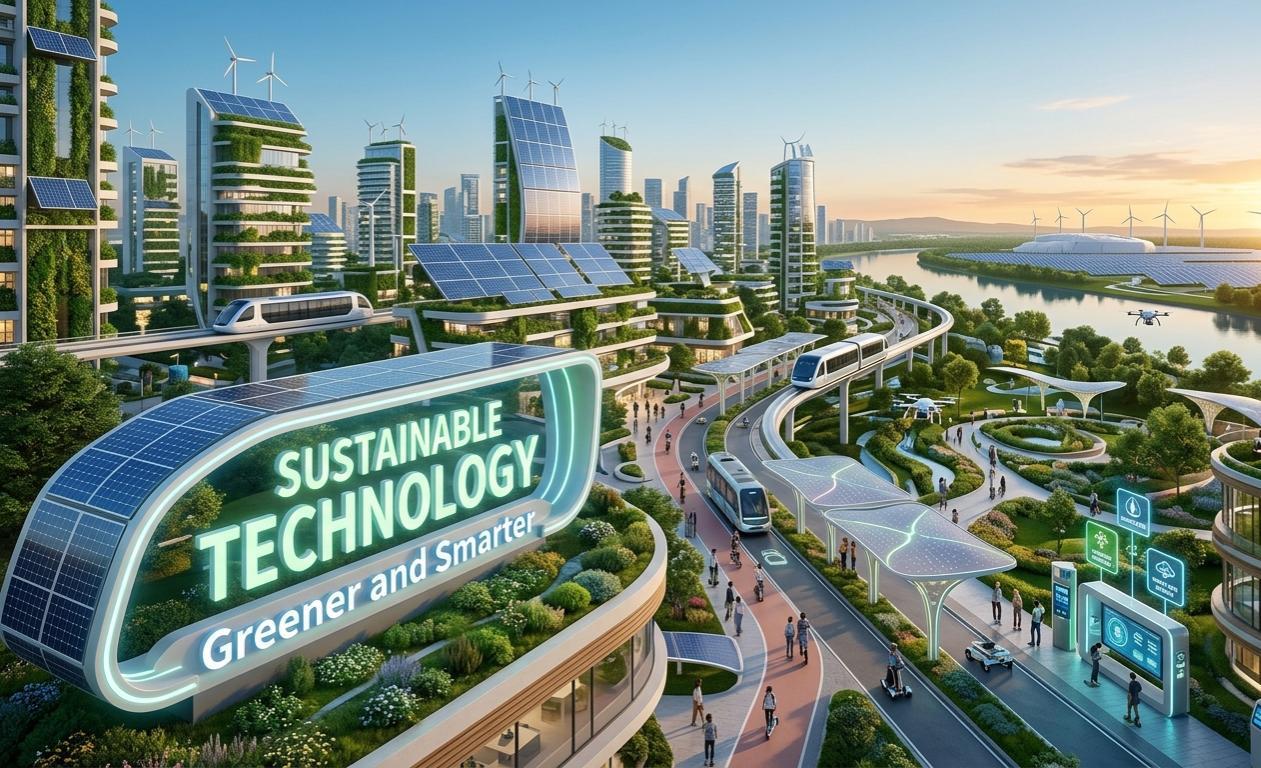
As the world faces challenges such as climate change, resource depletion, pollution, and rising energy demands, sustainable technology has emerged as one of the most powerful and urgent solutions available. Sustainable technology focuses on creating innovative systems, products, and processes that meet present needs without compromising the ability of future generations to meet their own. From renewable energy and electric vehicles to smart cities and eco-friendly manufacturing, sustainable technology is transforming industries while protecting the environment. Governments, businesses, and consumers are increasingly embracing sustainable solutions to create a cleaner, healthier, and more resilient future for everyone.
What Is Sustainable Technology?
Sustainable technology refers to innovations specifically designed to reduce environmental impact, conserve natural resources, and promote long-term ecological balance. Its key objectives include reducing carbon emissions, improving energy efficiency, minimising waste generation, promoting renewable resources, and supporting environmental conservation across industries and communities. The overarching goal is to balance economic growth with environmental responsibility — demonstrating that prosperity and planetary health are not in conflict but can, with the right technologies and policies, genuinely reinforce each other.
Renewable Energy Technologies
Renewable energy is one of the most important pillars of sustainable technology. Solar power, wind energy, hydropower, geothermal energy, and biomass energy are collectively transforming how the world generates and consumes electricity. These sources help reduce dependence on fossil fuels and significantly lower greenhouse gas emissions that drive climate change. The International Energy Agency reports that renewable energy capacity additions are accelerating faster than at any point in history, with solar and wind leading a global transition that is reshaping energy systems on every continent.
Electric Vehicles and Sustainable Transportation
Transportation contributes significantly to global carbon emissions, making sustainable mobility one of the most critical frontiers for environmental progress. Electric vehicles, smart public transportation systems, hydrogen-powered vehicles, and shared mobility platforms are among the key innovations reducing the sector’s environmental footprint. These technologies improve air quality in urban areas, reduce fuel consumption, and lower the long-term cost of transportation for individuals and businesses alike. As charging infrastructure expands and battery technology continues to improve, electric vehicles in particular are becoming an increasingly mainstream and accessible choice for consumers worldwide.
Smart Cities and Sustainable Urban Development
Modern cities are adopting technology at scale to become more efficient, liveable, and environmentally responsible. Smart city solutions include intelligent traffic management systems that reduce congestion and emissions, energy-efficient buildings designed to minimise power consumption, smart waste management that optimises collection and recycling, and water conservation systems that reduce unnecessary usage. Smart cities use data, automation, and connected infrastructure to improve the quality of life for residents while simultaneously reducing the resource consumption that urban growth has historically required.
Green Building Technology
The construction industry is one of the world’s largest consumers of energy and materials, making the embrace of sustainable building practices a significant environmental opportunity. Green buildings incorporate energy-efficient lighting, solar energy integration, water-saving systems, and sustainable construction materials to dramatically reduce their environmental footprint compared to conventional structures. Beyond environmental benefits, green buildings consistently demonstrate lower long-term operating costs, making them financially attractive as well as ecologically responsible. The growth of green building certification standards globally is accelerating the adoption of these practices across both commercial and residential construction.
Sustainable Water Management
Water conservation is becoming increasingly critical as freshwater resources face growing pressure from population growth, agricultural demand, and climate-driven scarcity. Sustainable water technologies — including smart irrigation systems, rainwater harvesting, water recycling and reuse programmes, and advanced leak detection — are helping communities and industries preserve one of Earth’s most essential and irreplaceable resources. The World Health Organization highlights that access to clean water is a foundational health and development issue, making water-focused sustainable technologies among the most impactful investments any society can make.
Waste Management and Recycling Technologies
Effective waste management is critical for environmental sustainability as global consumption continues to grow. Modern waste solutions include automated recycling systems, waste-to-energy technologies that convert refuse into usable power, biodegradable materials designed to break down safely, and circular economy models that keep resources in productive use for as long as possible. These approaches collectively reduce landfill waste, recover valuable materials, and improve resource efficiency in ways that benefit both the environment and the economy. The shift from a linear take-make-dispose model to a circular one represents one of the most transformative changes sustainable technology is enabling across industries.
Sustainable Manufacturing
Industries around the world are adopting environmentally responsible production methods that reduce waste, lower energy consumption, and minimise the ecological footprint of manufacturing operations. Key practices include energy-efficient production processes, reduced material waste through better design and process control, green supply chains that consider environmental impact at every stage, and eco-friendly packaging that reduces plastic and non-recyclable waste. Sustainable manufacturing helps businesses simultaneously reduce operational costs and environmental impact — demonstrating that responsible production and strong financial performance are entirely compatible goals.
Sustainable Agriculture Technology
Agriculture is evolving rapidly through technology-driven sustainability innovations that improve productivity while conserving the natural resources that farming depends on. Precision farming uses data and sensors to apply water, fertiliser, and pesticides exactly where and when they are needed, dramatically reducing waste. Smart irrigation systems optimise water use in water-scarce environments. Organic farming technologies reduce chemical dependency. Drone-based crop monitoring provides farmers with real-time insights that improve decision-making and reduce losses. Together, these methods are helping feed a growing global population more sustainably and efficiently than conventional agricultural practices alone could achieve.
The Role of Artificial Intelligence in Sustainability
Artificial intelligence is rapidly becoming one of the most powerful tools available for environmental management and sustainable decision-making. AI applications in sustainability include energy optimisation systems that reduce waste in power grids and buildings, climate modelling that helps scientists and policymakers understand and respond to environmental change, waste reduction strategies informed by consumption data, and smart resource management across cities and industries. As AI capabilities continue to advance, its ability to process complex environmental data and identify optimisation opportunities that humans alone could not find is becoming an increasingly essential component of the global sustainability toolkit.
Challenges Facing Sustainable Technology Adoption
Despite its enormous promise, sustainable technology faces real and significant challenges on the path to widespread adoption. High initial investment costs remain a barrier for many businesses and governments, particularly in developing economies where capital is constrained. Technology adoption barriers slow the uptake of new systems even when their long-term value is clear. Infrastructure limitations prevent the full deployment of solutions like EV charging networks or smart grid technology. And regulatory complexities can delay or distort implementation in ways that slow progress. Governments and industries must collaborate with genuine commitment and coordination to accelerate the implementation of sustainable technologies at the scale and speed the environmental situation demands.
The Future of Sustainable Technology
Sustainability will remain one of the defining drivers of technological innovation throughout the coming decades. Emerging trends include carbon-neutral technologies designed to achieve net-zero emissions, advanced renewable energy systems with higher efficiency and lower cost, sustainable AI solutions that minimise the environmental footprint of computing itself, green hydrogen production as a clean fuel for heavy industry and transport, and climate-resilient infrastructure built to withstand the environmental changes already locked in by past emissions. According to World Economic Forum analysis, these innovations will be central to achieving long-term environmental and economic stability for both developed and emerging economies.
Conclusion: Sustainable Technology Is the Foundation of a Better Future
Sustainable technology is playing an increasingly critical role in addressing some of the world’s most pressing environmental challenges. By promoting renewable energy, efficient resource management, green transportation, and smart urban development, sustainable innovations are helping create a healthier and more resilient future for people and planet alike. As awareness grows and technological capabilities continue to advance, sustainable technology will become a cornerstone of global progress — ensuring that economic development and environmental protection move forward together rather than in opposition. The future being built today is one where innovation serves not just the present, but every generation that follows.
Stay updated with the latest news and articles. Subscribe Now for more articles.
