
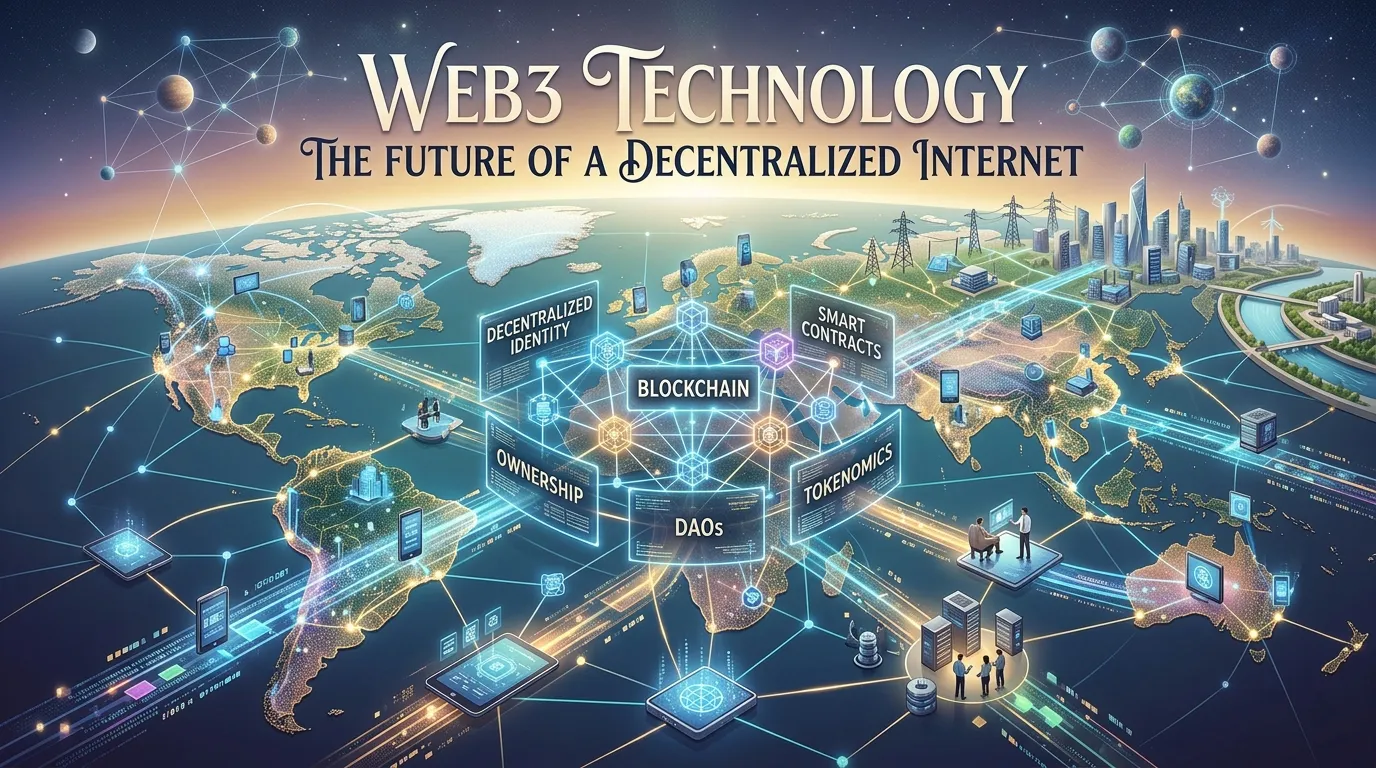
The internet is constantly evolving, and the next major phase is known as Web3 Technology. After the rise of static websites in Web1 and interactive social platforms in Web2, Web3 aims to create a decentralized, transparent, and user-controlled digital ecosystem powered by blockchain technology.
Web3 is designed to give users more ownership over their data, digital identity, and online interactions. By combining blockchain, smart contracts, cryptocurrencies, and decentralized applications, Web3 could reshape industries such as finance, gaming, social media, and digital commerce.
What Is Web3 Technology?
Web3 refers to the next generation of the internet built on decentralized technologies. Unlike traditional internet platforms controlled by large corporations, Web3 platforms operate on blockchain networks where users have more control and ownership.
Core features of Web3 include:
- Decentralization
- Blockchain-based systems
- User data ownership
- Smart contracts
- Cryptocurrency integration
Web3 focuses on transparency, privacy, and digital freedom.
Role of Blockchain in Web3
Blockchain is the foundation of Web3 technology. Its key benefits include secure and transparent transactions, decentralized data storage, reduced dependency on intermediaries, and enhanced trust and security. Every transaction is recorded on a distributed ledger, making systems more reliable and tamper-resistant.
Cryptocurrencies and Digital Payments
Cryptocurrencies play a major role in the Web3 ecosystem. Popular uses include peer-to-peer payments, digital asset ownership, cross-border transactions, and decentralized finance (DeFi). Web3 enables users to transfer value without traditional banking systems.
Smart Contracts and Automation
Smart contracts are self-executing agreements stored on blockchain networks. Their advantages include automated transactions, reduced paperwork, increased transparency, and faster business operations. These digital contracts remove the need for many intermediaries.
Web3 in Gaming and Virtual Economies
Gaming is one of the fastest-growing sectors in Web3. Key features include ownership of in-game assets, play-to-earn gaming models, NFT-based collectibles, and decentralized virtual economies. Players can buy, sell, and trade digital assets securely.
NFTs and Digital Ownership
Non-Fungible Tokens (NFTs) represent unique digital assets on blockchain networks. NFT applications include digital art ownership, music and entertainment assets, virtual land and collectibles, and brand engagement experiences. NFTs provide proof of authenticity and ownership.
Decentralized Finance (DeFi)
DeFi is transforming financial systems through decentralized platforms. Services include crypto lending and borrowing, decentralized exchanges, yield farming, and digital savings systems. Users can access financial services without traditional banks.
Decentralized Applications (dApps)
Web3 applications operate without centralized control. Benefits of dApps include better privacy, reduced censorship, enhanced user control, and improved transparency. These applications are used in finance, gaming, social media, and more.
Privacy and Security in Web3
Web3 aims to improve digital privacy and security through encrypted blockchain systems, user-controlled identities, and reduced data exploitation. Users have greater control over personal information.
Challenges of Web3 Technology
Despite its potential, Web3 faces several challenges:
- Scalability limitations
- Regulatory uncertainty
- High energy consumption in some blockchains
- Complexity for new users
Improving usability and infrastructure is essential for mass adoption.
Future of Web3 Technology
Web3 is expected to play a major role in the future digital economy. Emerging trends include decentralized social media platforms, blockchain-based identity systems, Web3-powered metaverse experiences, and tokenized digital economies. The future internet may become more open and community-driven.
Conclusion
Web3 Technology represents a major shift toward a decentralized and user-controlled internet. By combining blockchain, cryptocurrencies, smart contracts, and decentralized applications, Web3 aims to create a more transparent, secure, and fair digital ecosystem.
Although challenges remain, Web3 has the potential to redefine online ownership, financial systems, digital communication, and the future of the internet itself.
Stay updated with the latest news and articles. Subscribe Now for more articles.
