
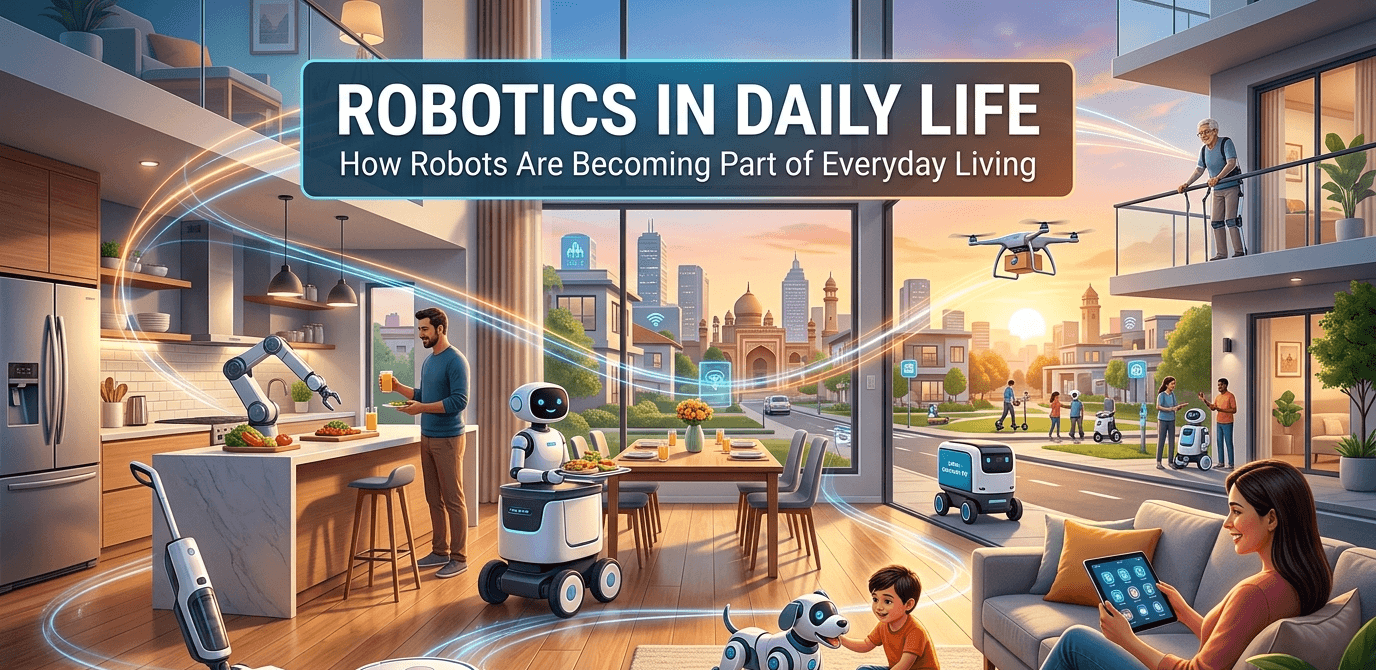
Robotics is no longer limited to factories and science fiction — it is now becoming a part of everyday human life. From home cleaning robots and virtual assistants to advanced medical robots and delivery systems, robotics technology is transforming how people live, work, and interact with the world.
As artificial intelligence and automation continue to evolve, robots are becoming smarter, more efficient, and more accessible. Robotics in daily life is improving convenience, productivity, and safety across multiple sectors.
What Is Robotics ?
Robotics is a field of technology that involves designing, building, and operating machines (robots) that can perform tasks automatically or with minimal human intervention. Robots use a combination of:
- Sensors
- Artificial Intelligence (AI)
- Machine learning
- Mechanical systems
These components allow robots to interact with their environment and make decisions.
Robots in Smart Homes
Home automation has made robots a part of everyday living. Common household robots include:
- Robotic vacuum cleaners
- Smart kitchen assistants
- Automated lawn mowers
- Personal assistant devices
These robots save time and effort, improve home efficiency, and enhance comfort and convenience — helping manage daily tasks with minimal human involvement.
Robotics in Healthcare
Healthcare is one of the most advanced areas using robotics technology. Key medical applications include:
- Robot-assisted surgeries
- Patient care robots
- Rehabilitation robots
- Pharmacy automation
Robots improve precision in surgeries and assist healthcare workers in providing better care.
Robotics in Transportation
Robotics is transforming transportation systems. Key examples include:
- Self-driving vehicles
- Delivery robots
- Automated drones
These technologies improve efficiency and reduce human error in transportation.
Robotics in Workplace and Industry
Industries have been using robots for decades, but their capabilities are now expanding. Key industrial uses include:
- Assembly line automation
- Packaging and sorting
- Quality control
- Warehouse management
Robots increase productivity and reduce operational costs.
Robotics in Retail and E-commerce
Retail businesses are adopting robotics to enhance customer experience. Key applications include:
- Automated checkout systems
- Warehouse robots
- Inventory tracking
- Delivery automation
Robotics helps businesses operate faster and more efficiently.
Robotics in Education
Educational institutions are using robotics to enhance learning. Key benefits include:
- Hands-on learning experiences
- Development of technical skills
- STEM education support
- Interactive teaching methods
Students learn problem-solving and innovation through robotics.
Robotics in Cleaning and Maintenance
Cleaning robots are becoming common in homes and public spaces. Examples include:
- Floor-cleaning robots
- Window-cleaning robots
- Industrial cleaning machines
These robots ensure cleanliness with minimal effort.
Robotics in Security and Safety
Robots are playing a vital role in security systems. Key security applications include:
- Surveillance robots
- Bomb disposal robots
- Disaster response robots
They help reduce risks in dangerous situations.
Social and Companion Robots
Robots are also being designed for emotional and social interaction. Key use cases include:
- Elderly care companions
- Child education assistants
- Therapy robots
These robots improve quality of life and emotional well-being.
Challenges of Robotics in Daily Life
Despite many benefits, robotics faces challenges:
- High development and maintenance cost
- Job displacement concerns
- Ethical and privacy issues
- Dependence on technology
Balancing innovation with responsibility is essential.
The Future of Robotics
The future of robotics is highly advanced and exciting. Emerging trends include:
- AI-powered intelligent robots
- Human-like robots
- Robotics in space exploration
- Smart service robots
Robots will become more adaptive and capable of complex tasks.
Conclusion
Robotics in daily life is transforming how humans interact with technology. From simplifying household tasks to advancing healthcare and industry, robots are making life easier, safer, and more efficient.
As technology continues to evolve, robotics will become an even more integral part of everyday living, shaping a smarter and more automated future.
Subscribe Now For More articles.
