
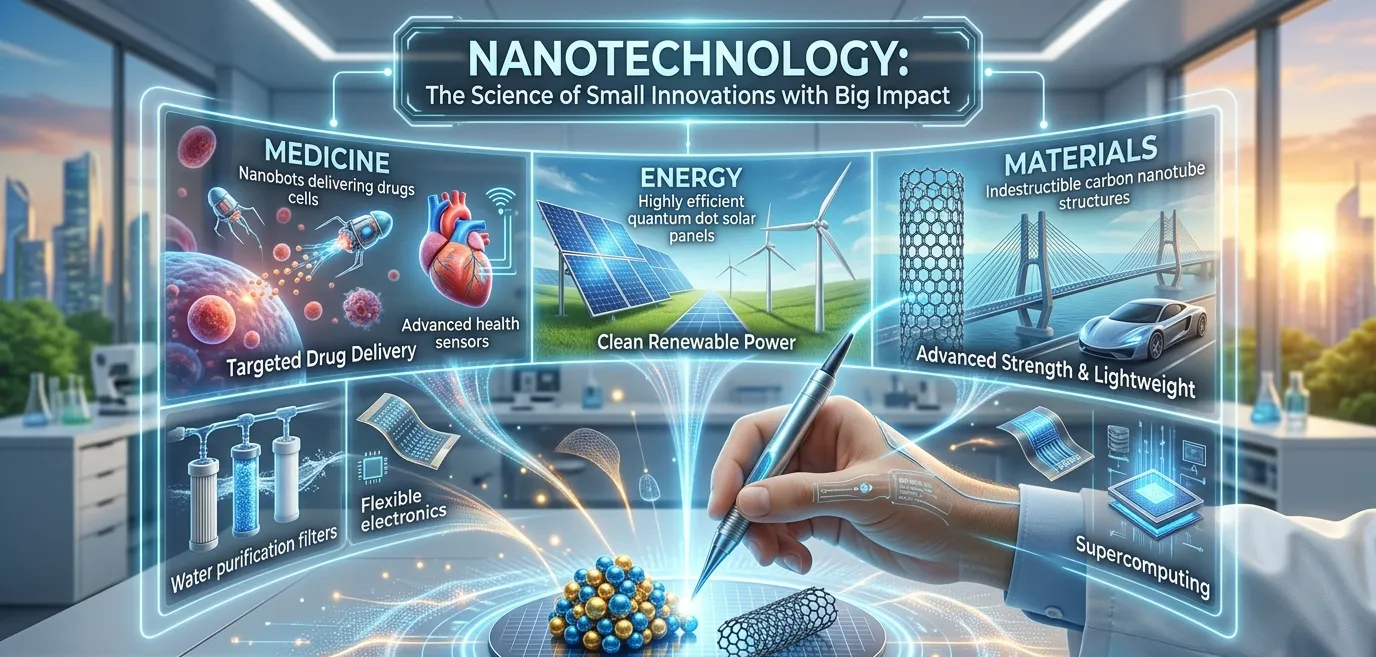
Nanotechnology is one of the most fascinating and powerful fields in modern science. It focuses on working with materials at an extremely small scale — at the level of atoms and molecules. Despite its tiny size, nanotechnology has the potential to create massive changes across industries such as healthcare, electronics, energy, and environmental protection.
From advanced medicines and smart materials to high-performance electronics, nanotechnology is shaping the future in ways that were once unimaginable.
What Is Nanotechnology?
Nanotechnology is the science and engineering of manipulating matter at the nanoscale, typically between 1 and 100 nanometers. At this scale, materials behave differently and often show unique physical and chemical properties.
Key Features of Nanotechnology:
- Works at atomic and molecular levels
- Creates stronger, lighter, and more efficient materials
- Enhances performance of existing technologies
- Enables new innovations
This field combines physics, chemistry, biology, and engineering.
Nanotechnology in Healthcare
Healthcare is one of the most important areas benefiting from nanotechnology.
Medical Applications:
- Targeted drug delivery
- Early disease detection
- Cancer treatment using nanoparticles
- Regenerative medicine
Nanotechnology allows medicines to reach specific cells, improving effectiveness and reducing side effects.
Targeted Drug Delivery Systems
One of the biggest breakthroughs in nanotechnology is precise drug delivery.
Benefits:
- Direct treatment to affected areas
- Reduced damage to healthy cells
- Improved patient outcomes
- Lower medication dosage
This technology is especially useful in treating complex diseases like cancer.
Nanotechnology in Electronics
Nanotechnology is revolutionizing the electronics industry.
Key Innovations:
- Smaller and faster processors
- High-capacity storage devices
- Energy-efficient components
- Flexible electronic devices
Modern smartphones and computers rely on nanoscale technology for better performance.
Nanotechnology in Energy Sector
Energy production and storage are being improved with nanotechnology.
Applications:
- High-efficiency solar panels
- Advanced batteries
- Energy storage systems
- Fuel cells
Nanotechnology helps create cleaner and more sustainable energy solutions.
Environmental Applications of Nanotechnology
Nanotechnology plays a major role in environmental protection.
Environmental Benefits:
- Water purification systems
- Air pollution control
- Waste treatment solutions
- Oil spill cleanup
These technologies help maintain ecological balance and reduce environmental damage.
Nanotechnology in Industry
Industries are using nanotechnology to improve materials and processes.
Industrial Uses:
- Stronger and lighter construction materials
- Anti-corrosion coatings
- Self-cleaning surfaces
- Improved manufacturing efficiency
Nanomaterials enhance durability and performance.
Nanotechnology in Textiles and Fashion
Fashion and textile industries are also adopting nanotechnology.
Innovations:
- Stain-resistant fabrics
- Waterproof clothing
- Temperature-regulating materials
- Anti-bacterial textiles
These features improve comfort and usability.
Nanotechnology in Automotive Industry
Automotive manufacturers use nanotechnology for better performance and safety.
Key Uses:
- Lightweight vehicle components
- Scratch-resistant coatings
- Improved fuel efficiency
- Enhanced battery performance
Nanotechnology contributes to eco-friendly transportation.
Advantages of Nanotechnology
- High precision and efficiency
- Improved product performance
- Reduced material usage
- Enhanced durability
- Innovative solutions across industries
Nanotechnology enables breakthroughs that traditional methods cannot achieve.
Challenges and Risks
Despite its benefits, nanotechnology has challenges:
- High research and development costs
- Potential health risks of nanoparticles
- Environmental concerns
- Lack of global regulations
Responsible development is essential to ensure safety.
Future of Nanotechnology
The future of nanotechnology is full of possibilities.
Emerging Trends:
- Nano-robots in medicine
- Advanced nanomaterials
- Smart drug systems
- Sustainable nanotechnology solutions
Nanotechnology will continue to drive innovation in science and technology.
Conclusion
Nanotechnology proves that small changes can create a big impact. By working at the atomic level, scientists are developing advanced solutions that improve healthcare, energy, environment, and industry. As research continues, nanotechnology will play a crucial role in shaping a smarter, more efficient, and sustainable future.
Subscribe Now For More articles.

3 comments
The best thing about fun clicker version 4 is how quickly you can start playing. Good page for testing a new clicker game.
purrgatory has a nice balance of simple controls and quick progress. It fits the Fun Clicker style well.
Anyone into browser clicker games should give Fun Clicker Game UPD a look. It has a casual style that fits short play sessions.