
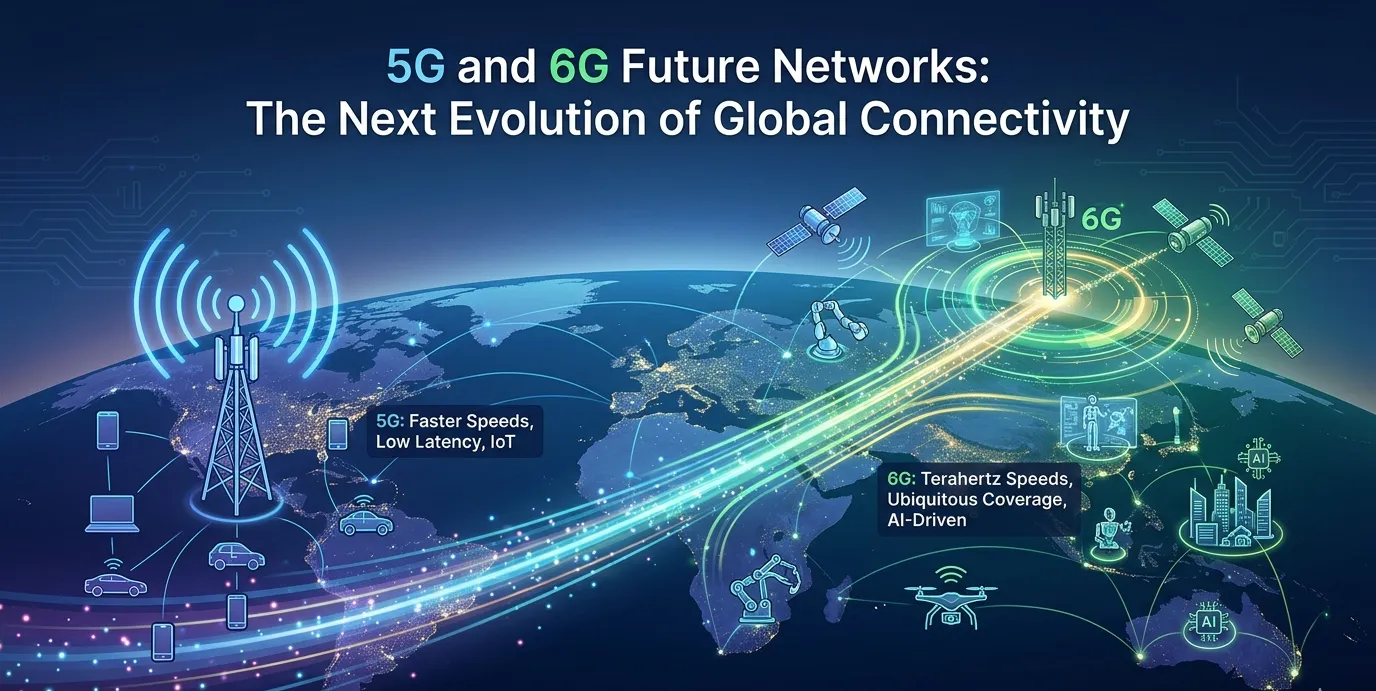
The world is becoming more connected than ever, and communication technology is evolving rapidly to support this demand. After the success of 4G, the rollout of 5G networks has already begun transforming industries, while 6G technology is on the horizon, promising even faster speeds and revolutionary capabilities.
From smart cities and autonomous vehicles to immersive digital experiences and real-time communication, 5G and future 6G networks are set to redefine how humans connect, communicate, and interact with technology.
What Is 5G Technology?
5G, or the fifth generation of mobile networks, is designed to deliver faster internet speeds, lower latency, and greater connectivity compared to previous generations. Key features of 5G include:
- Ultra-fast download and upload speeds
- Low latency (near real-time response)
- Ability to connect millions of devices
- Improved network reliability
5G is not just about speed — it is about enabling a new digital ecosystem.
Benefits of 5G Networks
5G technology is already transforming multiple industries and everyday experiences. Major advantages include:
- Faster streaming and downloads
- Enhanced online gaming
- Real-time communication
- Better connectivity in crowded areas
- Support for smart devices and IoT
5G provides a foundation for advanced digital services.
5G in Smart Cities
Smart cities rely heavily on fast and reliable connectivity. Key applications include:
- Smart traffic management
- Intelligent energy systems
- Public safety monitoring
- Connected infrastructure
5G enables real-time data sharing between devices and systems.
5G in Transportation and Autonomous Vehicles
Autonomous vehicles require instant communication to operate safely. Key uses include:
- Vehicle-to-vehicle communication
- Real-time navigation updates
- Traffic coordination systems
5G ensures faster decision-making for safer transportation.
5G in Healthcare
Healthcare systems benefit greatly from high-speed connectivity. Key innovations include:
- Remote surgery
- Telemedicine
- Real-time patient monitoring
- Fast medical data transfer
Doctors can provide better care with instant access to information.
5G in Gaming and Entertainment
Entertainment is becoming more immersive with 5G. Key benefits include:
- Cloud gaming without lag
- High-definition streaming
- Virtual and augmented reality experiences
Users enjoy smoother and more engaging digital content.
What Is 6G Technology?
6G is the next generation of wireless communication, expected to be available in the next decade. It will go beyond 5G by offering extremely high speeds and intelligent connectivity. Expected features of 6G include:
- Speeds up to 100 times faster than 5G
- Ultra-low latency
- AI-driven networks
- Advanced holographic communication
- Global connectivity including remote areas
6G will enable futuristic applications that are currently not possible.
Future Applications of 6G
6G technology will unlock new possibilities across industries. Potential uses include:
- Holographic video calls
- Fully immersive metaverse experiences
- Smart healthcare systems
- Advanced robotics and automation
- Space communication networks
6G will connect not just devices, but entire ecosystems.
Role of AI in 5G and 6G Networks
Artificial Intelligence will play a crucial role in managing next-generation networks. Key AI benefits include:
- Network optimization
- Predictive maintenance
- Traffic management
- Improved security
AI will make networks smarter and more efficient.
Security Challenges in Advanced Networks
As connectivity increases, so do cybersecurity risks. Key challenges include:
- Data privacy concerns
- Network vulnerabilities
- Increased attack surfaces
Strong encryption and advanced security frameworks will be essential.
Challenges in 5G and 6G Adoption
Despite their benefits, these technologies face significant challenges:
- High infrastructure cost
- Spectrum availability
- Device compatibility
- Regulatory issues
Global collaboration is required for successful implementation.
The Future of Global Connectivity
The future of communication networks is fast, intelligent, and highly connected. Emerging trends include:
- Integration with IoT and smart devices
- Edge computing support
- Satellite-based internet
- Global digital inclusion
5G and 6G will drive the next wave of digital transformation.
Conclusion
5G and upcoming 6G technologies are shaping the future of global connectivity. While 5G is already transforming industries with faster and more reliable networks, 6G promises to take innovation to the next level with intelligent and immersive communication systems.
The journey from 5G to 6G marks a major step toward a smarter and more advanced digital future — one that will unlock new opportunities, improve quality of life, and create a more connected world.
Subscribe Now For More articles.
