
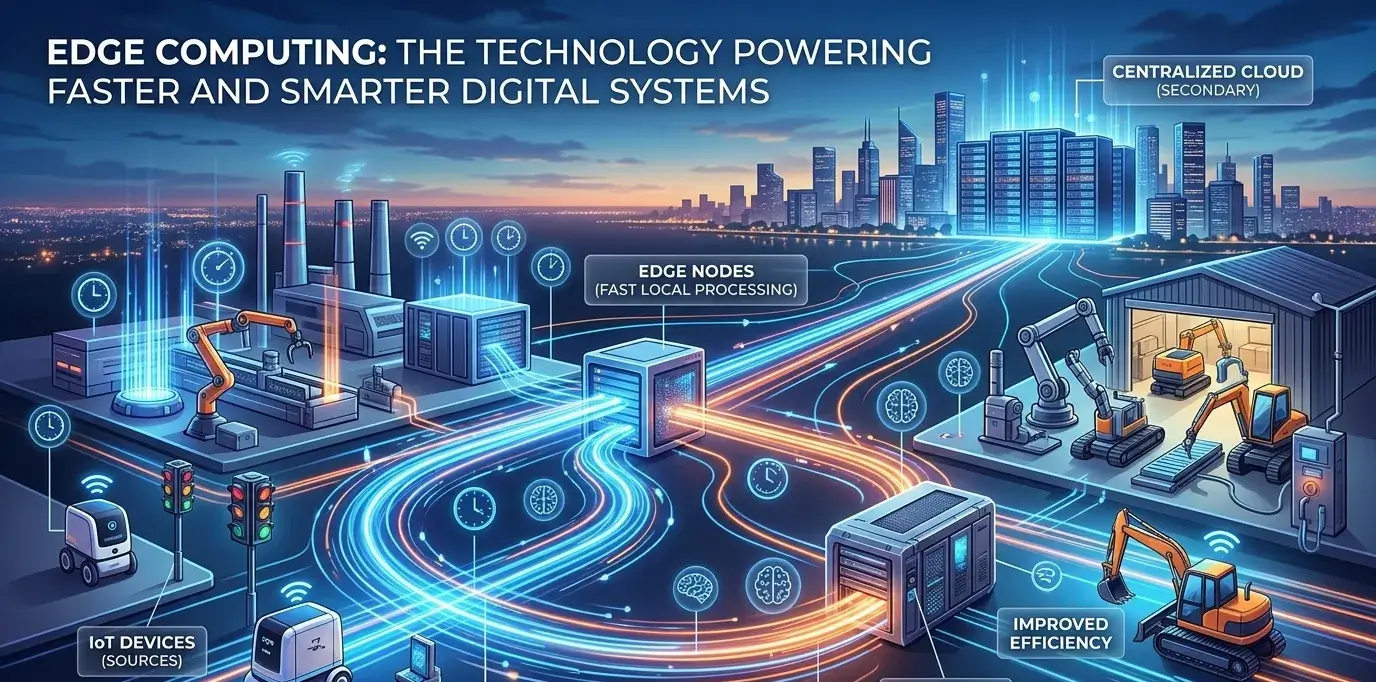
As digital technologies continue to grow, the demand for faster data processing and real-time responses is increasing rapidly. Traditional cloud computing systems sometimes struggle with delays because data must travel long distances to centralized data centers. This challenge has led to the rise of edge computing, a technology designed to process data closer to where it is generated.
Edge computing is transforming industries such as healthcare, transportation, manufacturing, and smart cities by enabling faster decision-making and reducing network delays. With the growth of Internet of Things (IoT) devices and 5G networks, edge computing is becoming a critical part of the modern digital infrastructure.
What Is Edge Computing?
Edge computing is a distributed computing model where data processing occurs near the source of data generation instead of relying entirely on centralized cloud servers. In simple terms, it brings computing power closer to devices like sensors, smartphones, machines, and smart appliances.
Key characteristics of edge computing include:
- Local data processing
- Reduced latency (faster response time)
- Lower bandwidth usage
- Real-time analytics
- Improved system reliability
This approach ensures faster and more efficient data handling.
Edge Computing vs Cloud Computing
Cloud computing stores and processes data in large centralized data centers. While this model is powerful, it can create delays when huge amounts of data need to travel across networks.
Cloud Computing
- Centralized processing
- Higher latency for distant devices
- Heavy internet dependency
Edge Computing
- Decentralized processing
- Faster response times
- Reduced data transfer
Both technologies often work together in modern systems.
Role of Edge Computing in IoT
The rapid expansion of Internet of Things (IoT) devices is one of the main reasons edge computing is becoming essential. IoT devices such as smart thermostats, industrial sensors, and wearable devices generate massive amounts of data.
Edge computing benefits for IoT include:
- Real-time device monitoring
- Faster automation decisions
- Reduced network congestion
- Improved system efficiency
Processing data locally ensures immediate responses for connected devices.
Edge Computing in Smart Transportation
Transportation systems rely heavily on real-time data to operate safely and efficiently. Key applications include:
- Autonomous vehicle navigation
- Traffic monitoring systems
- Smart traffic signals
- Vehicle-to-vehicle communication
Edge computing allows vehicles and traffic systems to process data instantly, improving road safety and efficiency.
Edge Computing in Healthcare
Healthcare systems increasingly depend on connected devices and digital monitoring tools. Edge computing delivers key advantages including:
- Real-time patient monitoring
- Faster medical data analysis
- Reduced hospital system delays
- Secure health data processing
Wearable medical devices can send critical health information to nearby edge servers for immediate analysis.
Edge Computing in Manufacturing
Industrial sectors are adopting Industrial IoT (IIoT) and smart factory technologies. Edge computing brings significant manufacturing benefits:
- Predictive maintenance of machines
- Real-time production monitoring
- Automated quality control
- Reduced downtime
Edge computing enables factories to make instant operational decisions.
Edge Computing in Smart Cities
Smart cities rely on real-time data from thousands of sensors and devices. Edge computing powers a wide range of smart city applications:
- Traffic management systems
- Smart lighting networks
- Environmental monitoring
- Public safety systems
Edge computing helps city infrastructure respond quickly to changing conditions.
Edge Computing in Gaming and Streaming
Online gaming and video streaming require extremely fast response times. Edge computing delivers key benefits for the entertainment industry:
- Reduced latency in online games
- Faster video streaming
- Improved user experience
- Better cloud gaming performance
Edge servers placed closer to users ensure smoother digital entertainment.
Security Benefits of Edge Computing
Edge computing can improve cybersecurity by limiting the movement of sensitive data across networks. Security advantages include:
- Local data storage and processing
- Reduced risk of large-scale data breaches
- Faster threat detection
- Improved privacy protection
Security systems can respond instantly to suspicious activities.
Challenges of Edge Computing
Although edge computing offers many benefits, it also comes with challenges that organizations must address:
- Infrastructure cost
- Managing multiple distributed devices
- Security of edge devices
- Standardization issues
Organizations must develop proper management strategies to overcome these issues.
The Future of Edge Computing
Edge computing will become even more important as digital technologies continue to expand. Key emerging trends include:
- Integration with 5G networks
- AI-powered edge devices
- Edge data centers in smart cities
- Advanced industrial automation
As billions of connected devices come online, edge computing will play a major role in managing data efficiently.
Conclusion
Edge computing is revolutionizing how data is processed in the digital age. By bringing computing power closer to the source of data, this technology enables faster responses, reduces network congestion, and supports real-time decision-making.
From smart cities and healthcare systems to autonomous vehicles and online gaming, edge computing is becoming a key driver of technological innovation. As industries continue to adopt digital transformation, edge computing will play a crucial role in building faster, smarter, and more connected systems.
Subscribe Now For More articles.
