
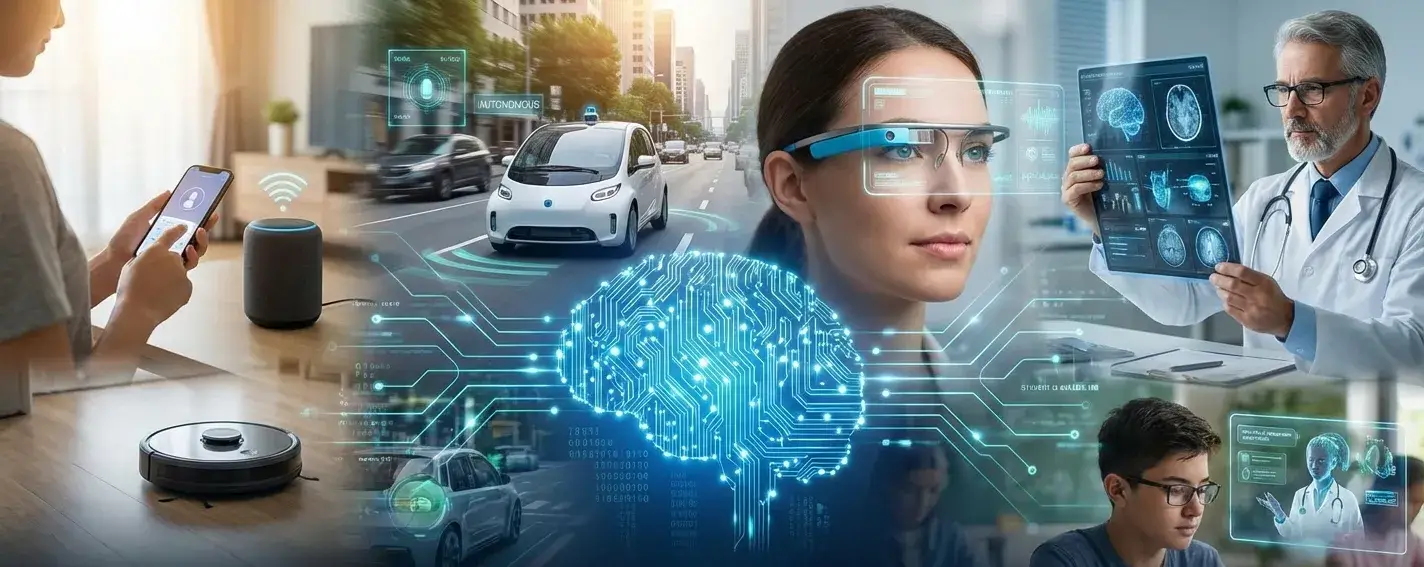
Artificial Intelligence (AI) is no longer a futuristic concept — it is already a part of our daily lives. From voice assistants and personalized recommendations to smart cars and digital banking, AI is quietly working behind the scenes to make life easier, faster, and more efficient.
As technology evolves, AI continues to reshape industries, homes, workplaces, and even personal habits. The integration of artificial intelligence into everyday life is one of the most significant technological revolutions of the 21st century.
What Is Artificial Intelligence?
Artificial Intelligence refers to computer systems that can perform tasks normally requiring human intelligence. These tasks include learning, reasoning, problem-solving, decision-making, and language understanding.
AI systems use:
- Machine learning algorithms
- Big data analysis
- Natural language processing
- Computer vision
These technologies allow machines to analyze information and improve performance over time.
AI in Smartphones and Personal Assistants
Smartphones are one of the most common examples of AI in daily life.
How AI Works in Phones:
- Voice assistants like Siri and Google Assistant
- Face recognition unlock
- Predictive text and autocorrect
- Smart photo enhancement
- Personalized app suggestions
AI improves user experience by learning habits and preferences.
AI in Online Shopping
E-commerce platforms use AI to personalize shopping experiences.
AI-Powered Features:
- Product recommendations
- Price prediction
- Customer support chatbots
- Fraud detection
AI analyzes browsing behavior to suggest relevant products, increasing customer satisfaction.
AI in Healthcare
Healthcare is one of the most impactful sectors using AI technology.
Applications:
- Disease detection
- Medical image analysis
- Personalized treatment plans
- Virtual health assistants
AI helps doctors diagnose diseases faster and more accurately.
AI in Transportation
Artificial intelligence is transforming transportation systems.
Key Examples:
- Self-driving car technology
- Traffic prediction systems
- Ride-sharing algorithms
- Smart navigation apps
AI reduces traffic congestion and improves road safety.
AI in Smart Homes
Smart homes rely heavily on AI-driven automation.
Smart Home Applications:
- Voice-controlled lights and appliances
- Smart thermostats
- Home security cameras
- Energy usage optimization
AI makes homes more energy-efficient and convenient.
AI in Digital Payments and Banking
Banks and fintech companies use AI for secure financial services.
Financial AI Uses:
- Fraud detection
- Credit scoring
- Automated trading
- Customer service chatbots
AI ensures faster and safer transactions.
AI in Education
AI is changing how students learn and teachers teach.
Educational Benefits:
- Personalized learning plans
- AI tutors
- Automated grading
- Learning analytics
Students receive customized support based on performance.
AI and Content Recommendations
Streaming platforms and social media rely on AI algorithms.
AI Content Features:
- Video recommendations
- News feed personalization
- Targeted advertising
- Content moderation
AI keeps users engaged by showing relevant content.
AI in Workplace Productivity
Businesses use AI tools to improve efficiency.
Workplace Applications:
- Data analysis
- Automated scheduling
- Email filtering
- Virtual meeting assistants
AI reduces manual work and increases productivity.
AI in Cyber Security
AI helps detect and prevent cyber threats.
Security Benefits:
- Real-time threat detection
- Suspicious activity monitoring
- Automated response systems
AI strengthens digital safety in an increasingly connected world.
Challenges of AI in Daily Life
Despite its benefits, AI also presents challenges:
- Data privacy concerns
- Job displacement fears
- Ethical issues
- Algorithm bias
Responsible development and regulations are essential.
Future of AI in Everyday Life
The future of AI is even more integrated and intelligent.
Emerging Trends:
- AI-powered wearable devices
- Advanced robotics
- Emotion recognition systems
- Smart cities driven by AI
- AI-based healthcare monitoring
Artificial Intelligence will continue shaping human experiences.
Conclusion
Artificial Intelligence in daily life is transforming how people communicate, shop, travel, work, and manage health. What once seemed like science fiction is now a reality. AI-driven systems improve efficiency, save time, and enhance decision-making.
As innovation accelerates, AI will become even more personalized and powerful — making the future smarter and more connected than ever before.
Subscribe Now For More articles.
