
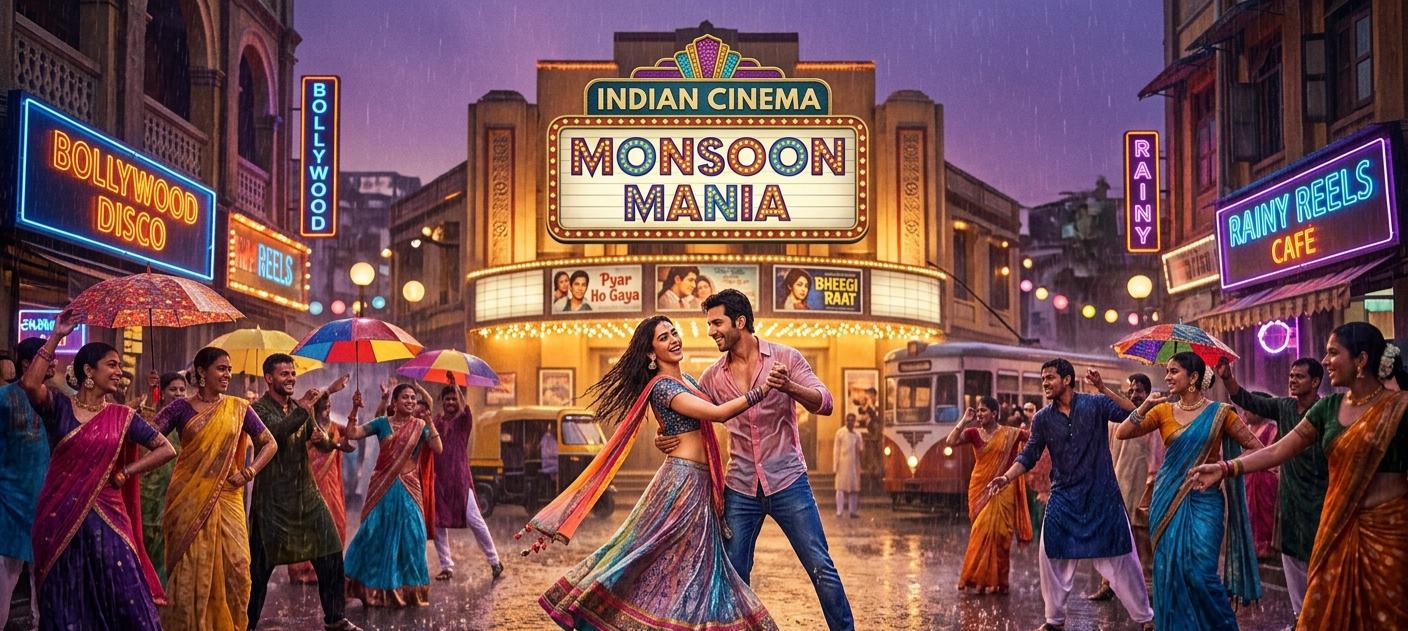
The arrival of the monsoon is more than a change in weather — it is an emotion in India. From romance and heartbreak to hope, celebration, and suspense, rain has played a memorable and deeply meaningful role in Indian cinema for decades. Whether it is Bollywood or regional films, filmmakers have used the monsoon as a powerful visual and emotional storytelling tool that consistently connects with audiences across every generation and every linguistic community in the country.
Why Monsoon Is So Special in Indian Cinema
Rain in Indian cinema is never simply a backdrop or a weather condition — it is an active participant in the storytelling. Filmmakers have used it across decades to symbolise new beginnings and the fresh start that follows a period of hardship, the heat of romance and the ache of love, the pain of separation and the longing that comes with it, hope returning after struggle, the overwhelming beauty of nature, and the kind of dramatic tension that no artificial set design can replicate. For generations, directors and cinematographers have understood that placing a scene in the rain instantly raises its emotional register, making moments more vivid, more affecting, and more unforgettable in the viewer’s memory.
Iconic Monsoon Songs That Became Timeless
Indian cinema has gifted its audiences some of the most unforgettable rain songs ever created in any film tradition. Pyaar Hua Ikraar Hua from Shree 420, Rimjhim Gire Saawan from Manzil, Tip Tip Barsa Pani from Mohra, Barso Re from Guru, and Ghanan Ghanan from Lagaan are all songs that have transcended their films to become part of India’s collective cultural memory. Each of these compositions captures a different facet of the monsoon experience — tenderness, longing, joy, sensuality, and the primal relief of rain after drought — and together they represent some of the finest examples of how Indian film music has always been inseparable from the visual and emotional language of cinema itself.
Films That Beautifully Captured the Monsoon
Several Indian films have used monsoon sequences with such artistry that the rain itself becomes as memorable as any character. Shree 420’s iconic rain sequence during Pyaar Hua Ikraar Hua remains one of the most celebrated romantic moments in the entire history of Indian cinema — two people sharing an umbrella in the rain, a scene so simple and so perfectly observed that it has never been surpassed. Manzil transformed Mumbai’s rain-drenched streets into cinematic poetry through Rimjhim Gire Saawan, capturing the dreamlike quality of the city during the monsoon in a way that still resonates with audiences decades later. Guru’s Barso Re celebrated the pure joy and physical freedom of dancing in the rain with an exuberance that matched the season’s own energy. Lagaan’s Ghanan Ghanan captured something rarer and more complex — the desperate, collective hope of a farming community watching the sky for signs of the rain that will determine their survival. And Mohra’s Tip Tip Barsa Pani became one of the most iconic and widely remembered rain sequences in Hindi film history, demonstrating rain’s capacity to serve sensuality and spectacle equally well.
Monsoon Across Regional Indian Cinema
The monsoon’s cinematic power is not confined to Bollywood — it is a universal language across all of India’s rich and diverse regional film traditions. Malayalam cinema frequently uses Kerala’s extraordinarily lush monsoon landscapes to deepen realism and amplify emotional authenticity, making the rain almost a character in its own right. Tamil cinema features memorable rain sequences in both romantic narratives and dramatic confrontations, using the weather to intensify psychological and emotional stakes. Telugu and Kannada films regularly deploy rain as the visual trigger for emotional turning points and kinetic action sequences. Marathi, Bengali, and Assamese cinema often portray the monsoon as a rich symbol of rural life, collective memory, nostalgia, and the profound relationship between Indian communities and the natural world that sustains them. Across all these traditions, the monsoon has become a genuinely universal cinematic language — one that every Indian audience understands instinctively regardless of which language the film is spoken in.
The Different Emotions Rain Creates on Screen
What makes rain such an enduringly powerful device in Indian filmmaking is its extraordinary emotional versatility. The same visual element — water falling from the sky — can be used by a skilled director to convey the giddy elation of falling in love, the desolate ache of heartbreak and separation, the fragile tenderness of hope returning after a period of deep struggle, the crackling charge of suspense and danger, the collective abandon of celebration and joy, or the humbling sense of nature’s blessing and largesse. Very few elements in a filmmaker’s visual vocabulary carry such breadth of emotional range, and Indian cinema has explored almost every point on that spectrum across its long and extraordinarily productive history with the monsoon.
Why Audiences Love Rain Scenes in Indian Movies
The enduring appeal of monsoon scenes for Indian film audiences runs deeper than mere aesthetic pleasure. Rain sequences consistently create beautiful and memorable visuals that linger in the mind long after a film has ended. They add emotional depth and a kind of atmospheric authenticity that no studio setting can replicate. They provide the ideal environment for the kind of soaring, emotionally charged music that Indian cinema has always excelled at creating. They carry a powerful romantic appeal rooted in the lived experience of the monsoon that every Indian viewer shares. And they create a nostalgic connection with Indian life itself — with childhood memories, with the smell of the first rains on hot earth, with the shared cultural experience of a country that has organised its agriculture, its festivals, and its emotional calendar around the arrival of the rains for thousands of years. India Meteorological Department data shows that the monsoon affects every part of the country between June and September — making it the single most universally shared seasonal experience across India’s vast and diverse population, which may explain why monsoon cinema resonates so deeply with such a wide audience.
Final Verdict: The Monsoon as India’s Greatest Cinematic Storyteller
The monsoon is more than a season in Indian cinema — it is a storyteller in its own right. From timeless romantic songs that defined generations to emotionally charged family dramas and thrilling action sequences, rain has enriched Indian films consistently and profoundly for as long as the industry has existed. As the clouds gather each year and the first rains break across the subcontinent, audiences everywhere continue to rediscover the timeless magic that the monsoon brings to the silver screen — a magic that, like the rains themselves, returns faithfully each year and never quite loses the power to move us.
Stay updated with the latest news and articles. Subscribe Now for more articles.
