
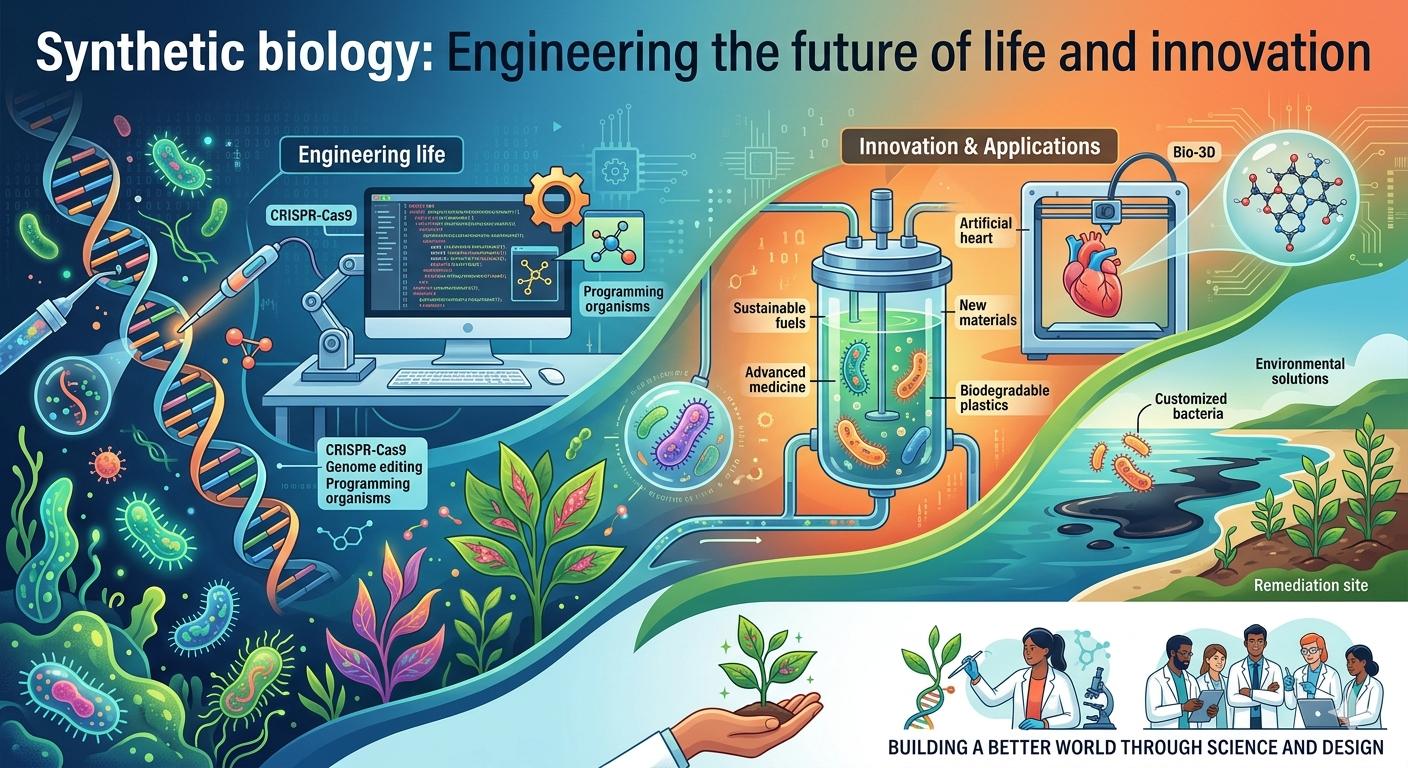
Synthetic biology is one of the most advanced and exciting fields in modern science. It combines biology, engineering, genetics, and computer science to design and create new biological systems or modify existing organisms for useful purposes. From creating sustainable fuels and advanced medicines to improving agriculture and environmental protection, synthetic biology is transforming industries across the world. This rapidly growing technology is helping scientists solve global challenges related to healthcare, food production, climate change, and energy. As research continues to evolve, synthetic biology is expected to play a major role in shaping the future of humanity.
What Is Synthetic Biology?
Synthetic biology is a scientific field focused on redesigning living organisms by modifying their genetic material. Unlike traditional biotechnology, synthetic biology goes beyond studying natural systems — it aims to engineer biological systems with entirely new capabilities. The field draws on genetic engineering, DNA synthesis, bioengineering, computational biology, and the creation of artificial biological systems to achieve this. In practical terms, scientists can program cells in a manner similar to how software developers program computers, writing biological code that instructs living organisms to perform specific and useful functions.
How Synthetic Biology Works
Synthetic biology uses DNA as a biological code. Researchers design genetic sequences and insert them into microorganisms, plants, or cells to create desired functions. The process typically begins with analysing existing biological systems, followed by designing the required genetic modifications, creating synthetic DNA sequences, and then testing and optimising performance in laboratory conditions. This iterative process enables the development of custom biological solutions tailored to specific real-world challenges — from producing life-saving medicines to breaking down environmental pollutants.
Synthetic Biology in Healthcare
Healthcare is one of the biggest beneficiaries of synthetic biology. The field is enabling the development of advanced vaccines, personalised medicine tailored to individual patients, engineered bacteria designed to treat specific diseases, and synthetic organs and tissues for transplantation. Synthetic biology is also improving diagnostics, allowing earlier and more accurate detection of illness. Its ability to precisely engineer biological responses makes it one of the most promising frontiers in modern medicine, with applications that range from rare genetic conditions to widespread infectious diseases.
Accelerating Drug Development and Vaccine Innovation
Synthetic biology is fundamentally changing the speed and precision of pharmaceutical research. It enables faster vaccine production, more precise drug design, lower manufacturing costs, and improved disease response systems. The technology demonstrated its importance during global health crises, where the ability to rapidly engineer and produce biological solutions proved invaluable. Global health organisations increasingly recognise synthetic biology as a critical tool in pandemic preparedness and response strategies for the decades ahead.
Transforming Agriculture Through Engineered Biological Systems
Agriculture is being transformed through the application of synthetic biology to crop science and food production. Scientists are developing pest-resistant crops, drought-tolerant plants capable of surviving in challenging climates, bio-fertilisers that reduce dependence on chemical inputs, and more sustainable food production systems overall. These innovations help increase food production while simultaneously reducing environmental impact — a critical combination as the global population continues to grow and arable land faces increasing pressure from climate change.
Environmental Applications of Synthetic Biology
Scientists are increasingly deploying synthetic biology to address some of the world’s most pressing environmental challenges. Engineered microorganisms are being developed that can degrade plastics, break down pollutants, and assist in carbon capture. Biodegradable materials designed through synthetic biology offer sustainable alternatives to conventional plastics. Environmental organisations are closely watching these developments as potential game-changers in the global effort to reduce pollution and restore ecological balance.
Synthetic Biology in Energy Production
The energy sector is actively exploring biological alternatives to fossil fuels as part of the broader transition toward cleaner energy systems. Synthetic biology is enabling biofuel production, renewable biological energy systems, and more sustainable industrial processes. By engineering microorganisms to produce energy-rich compounds from renewable inputs, researchers are creating pathways to cleaner and greener energy solutions that could meaningfully reduce global dependence on carbon-intensive fuels over the coming decades.
Lab-Grown Food and Alternative Proteins
Synthetic biology is changing the way food itself is produced. Emerging technologies include cultured meat grown from animal cells without slaughter, plant-based protein engineering that improves the nutritional profile and taste of alternative proteins, and nutrient-enhanced foods designed to address specific dietary deficiencies. These innovations represent a potential solution to future food security challenges, offering ways to feed a growing global population more sustainably and efficiently than conventional agriculture alone can achieve.
How Artificial Intelligence Is Accelerating Synthetic Biology
Artificial intelligence is significantly improving both the speed and accuracy of synthetic biology research. AI tools are being applied to DNA sequence analysis, drug discovery, biological modelling, and automated laboratory systems, enabling researchers to process complex biological data at a scale and pace that would be impossible manually. The combination of AI and synthetic biology is emerging as one of the most powerful scientific partnerships of the 21st century, dramatically shortening the time from initial research concept to real-world application.
Ethical and Safety Concerns Around Synthetic Biology
Alongside its extraordinary promise, synthetic biology raises important ethical and safety questions that demand serious attention. Concerns include the potential misuse of genetic engineering for harmful purposes, unintended environmental risks from releasing engineered organisms, biosecurity threats, and the challenge of regulating a field that is advancing faster than existing frameworks can accommodate. International biosafety organisations emphasise that responsible innovation, transparent research practices, and robust global regulation are essential to ensuring that synthetic biology’s benefits are realised without creating new categories of risk.
Challenges Facing the Field Today
Despite rapid progress, synthetic biology continues to face significant challenges on its path to broader impact. High research costs, technical complexity, lengthy regulatory approval processes, and public acceptance issues all slow the translation of laboratory breakthroughs into real-world applications. Continued investment in research infrastructure, public education about the science and its safeguards, and the development of clear and consistent regulatory frameworks are all needed to support the field’s growth and ensure its benefits are widely shared.
The Future of Synthetic Biology
The future of synthetic biology is genuinely extraordinary in its potential scope. Emerging trends include the development of artificial cells and entirely new organisms, advanced regenerative medicine that could repair or replace damaged tissues and organs, sustainable manufacturing systems that use biological processes instead of chemical ones, and even space biotechnology designed to support human missions beyond Earth. Across these applications, synthetic biology carries the potential to revolutionise multiple industries simultaneously in the decades ahead.
Conclusion: Engineering a Smarter and More Sustainable Future
Synthetic biology is redefining the relationship between technology and life sciences. By engineering biological systems for beneficial purposes, scientists are creating innovative solutions for healthcare, agriculture, energy, and environmental sustainability. As research and technology continue to advance, synthetic biology has the genuine potential to solve some of humanity’s biggest challenges and create a smarter, healthier, and more sustainable future for generations to come. The field is no longer a distant scientific frontier — it is already reshaping the world, one engineered cell at a time.
Stay updated with the latest news and articles. Subscribe Now for more articles.
