
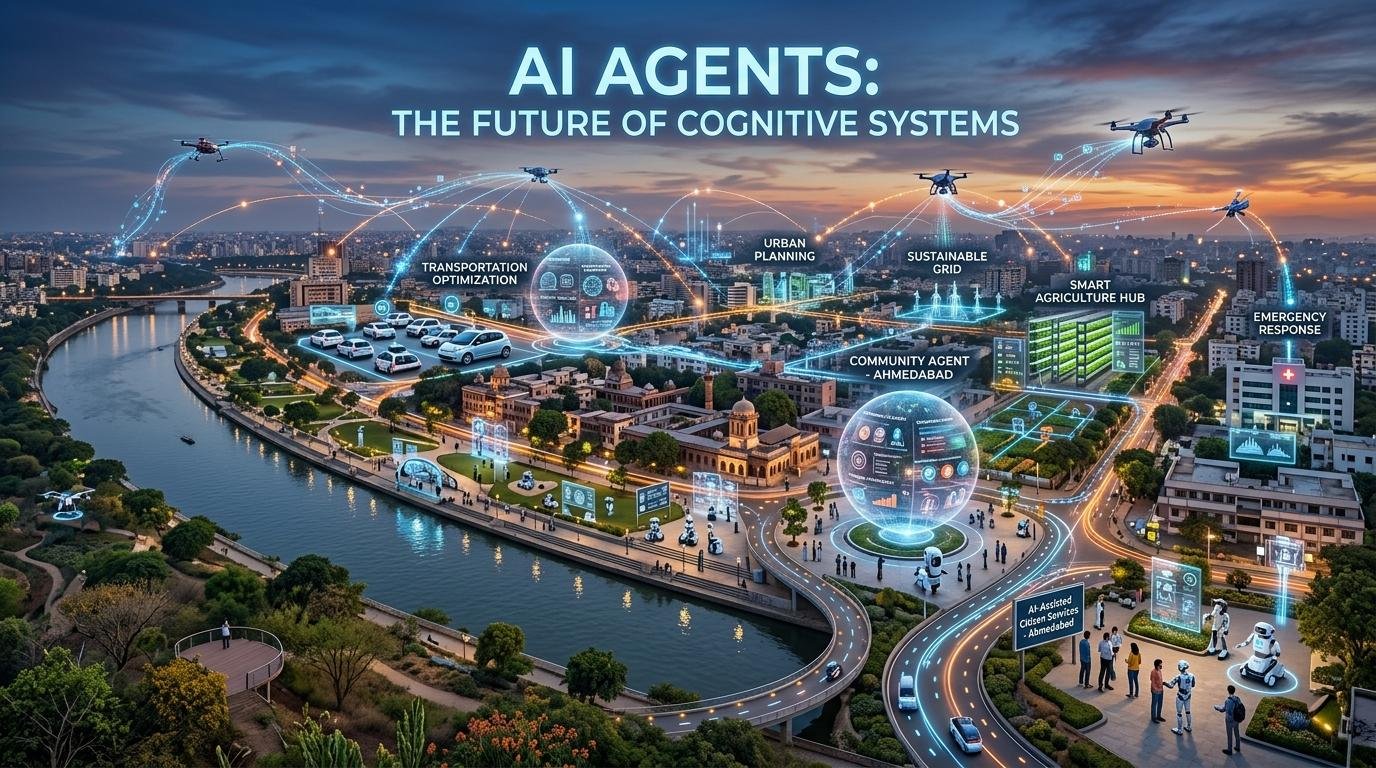
Imagine having a digital assistant that does not simply answer your questions but actually understands your goal, plans the steps, uses different tools and completes tasks for you.
This is the idea behind AI Agents — one of the most important emerging developments in artificial intelligence.
Traditional AI usually responds when a person gives it a command. AI agents aim to go one step further. They can analyze a situation, decide what needs to be done, perform multiple actions and adjust their approach when circumstances change.
From managing schedules and organizing information to helping businesses automate repetitive work, AI agents could become an important part of everyday digital life.
What Are AI Agents?
An AI agent is a software system designed to pursue a particular goal with a certain level of autonomy.
Instead of requiring a user to provide instructions for every individual step, an AI agent can break a larger objective into smaller tasks.
For example, instead of saying:
«“Search for three hotels.”»
A user might say:
«“Plan a weekend trip within my budget and find a suitable hotel.”»
An AI agent could potentially identify requirements, compare options, organize information and present a recommendation.
The key difference is goal-oriented action rather than simple question-and-answer interaction.
How Do AI Agents Work?
AI agents generally combine several technologies to complete tasks.
1. Understanding the Goal
The system first interprets what the user wants to accomplish.
For example:
Goal: Organize a business meeting.
The agent may identify requirements such as participants, availability, location and timing.
2. Planning
The AI can divide the objective into smaller steps.
For example:
– Check calendars
– Find suitable time slots
– Prepare an agenda
– Send invitations
– Create reminders
3. Using Digital Tools
Depending on the system and permissions available, an AI agent can interact with software, databases, websites or business applications.
This makes agents potentially much more useful than a chatbot that only generates text.
4. Evaluating Results
After performing an action, the system can check whether the result matches the intended goal.
If something fails, an agent may attempt another approach or ask the user for clarification.
AI Agents in Everyday Life
One of the biggest opportunities for AI agents is personal productivity.
Imagine telling an AI:
“Help me organize my week.”
Instead of simply creating a list, an AI agent could potentially analyze your tasks, identify priorities, organize meetings and suggest time for important activities.
Other possible applications include:
– Managing reminders
– Organizing emails
– Creating travel plans
– Comparing products
– Preparing shopping lists
– Managing appointments
– Summarizing documents
– Researching topics
– Planning personal projects
The goal is to reduce the amount of digital busywork people have to perform manually.
AI Agents Could Transform Businesses
Businesses perform thousands of repetitive digital tasks every day.
AI agents could assist with areas such as:
Customer Support
Agents could understand customer questions, retrieve relevant information and provide responses.
Sales
AI systems could help research prospects, organize customer information and prepare personalized communication.
Marketing
Agents could assist with content research, campaign planning, analytics and reporting.
Software Development
AI agents can potentially help developers understand requirements, generate code, test changes and investigate technical problems.
Human Resources
Agents could help organize candidate information, schedule interviews and answer common employee questions.
This does not necessarily mean every task will become fully automated. In many cases, the more realistic future is AI working alongside people.
AI Agents in Healthcare
Healthcare is another area where intelligent automation could become valuable.
AI systems may assist with:
– Appointment coordination
– Medical administration
– Patient reminders
– Information organization
– Research assistance
– Healthcare documentation
However, healthcare applications require particularly strong safeguards.
AI should not independently make high-risk medical decisions simply because it can process information quickly. Human professionals and appropriate oversight remain essential.
AI Agents for Students
Students could also benefit from goal-oriented AI.
Instead of simply asking:
“Explain this topic.”
A student could ask:
“Create a two-week study plan for my upcoming examination.”
An AI agent could potentially organize subjects, create revision schedules, generate practice questions and track progress.
This could make digital learning more personalized and accessible.
AI Agents and Smart Homes
AI agents could eventually connect different smart devices around a home.
Imagine saying:
“I’m leaving for work.”
A connected system could potentially:
– Turn off selected lights
– Adjust the thermostat
– Check security devices
– Lock connected doors
– Set reminders
– Prepare appliances according to predefined preferences
The important development is not simply having smart devices.
It is having an intelligent system that can coordinate multiple devices around a user’s goal.
The Biggest Challenge: Trust
The more autonomous an AI becomes, the more important trust becomes.
If an AI only answers a question incorrectly, the problem may be relatively small.
But if an AI can perform actions, mistakes could have greater consequences.
Important concerns include:
– Privacy
– Cybersecurity
– Incorrect decisions
– Unauthorized actions
– Data access
– Financial risks
– Lack of transparency
– Overdependence on AI
For this reason, future AI-agent systems will need strong permission controls, activity logs, security measures and clear boundaries.
Will AI Agents Replace Human Jobs?
This is one of the biggest questions surrounding the technology.
AI agents may automate certain repetitive tasks, but work is more complicated than individual tasks.
Instead of simply asking whether AI will replace jobs, it may be more useful to ask:
Which parts of a job can AI perform, and which parts still require human judgment?
People who learn to use AI effectively could become more productive.
The future workplace may increasingly involve humans setting goals and making decisions while AI systems handle portions of execution.
AI Agents and the Future of the Internet
The internet has traditionally required people to search, click, compare and complete actions manually.
AI agents could change that experience.
Instead of navigating through dozens of websites and applications, users may increasingly communicate their goals to intelligent systems.
For example:
“Find the best option according to my budget and preferences.”
The AI could potentially perform much of the research and organization before presenting the user with choices.
This could create a new generation of agent-powered digital experiences.
What Could AI Agents Look Like in the Future?
Future AI agents may become increasingly specialized.
We could see:
– Personal finance agents
– Travel agents
– Coding agents
– Business agents
– Education agents
– Shopping assistants
– Marketing agents
– Healthcare administration agents
– Smart-home agents
– Personal productivity agents
Multiple agents could potentially work together on larger objectives.
For example, a business owner might have separate AI systems handling research, marketing, customer communication and analytics while the human owner remains responsible for strategy and final decisions.
Final Thoughts
AI agents represent a shift from AI that simply responds to AI that can help accomplish goals.
The technology is still developing, and its capabilities, reliability and safety will vary significantly between systems.
But the underlying idea is powerful.
Instead of spending hours moving between applications, searching for information and completing repetitive digital tasks, people could increasingly tell intelligent software what they want to achieve.
The future of AI may therefore not be about having a smarter chatbot.
It could be about having a trusted digital partner that helps turn intentions into actions.
For individuals, businesses and organizations, learning how to work effectively with AI agents could become an important digital skill of the coming years.
Stay updated with the latest news and articles. Subscribe Now for more articles.
