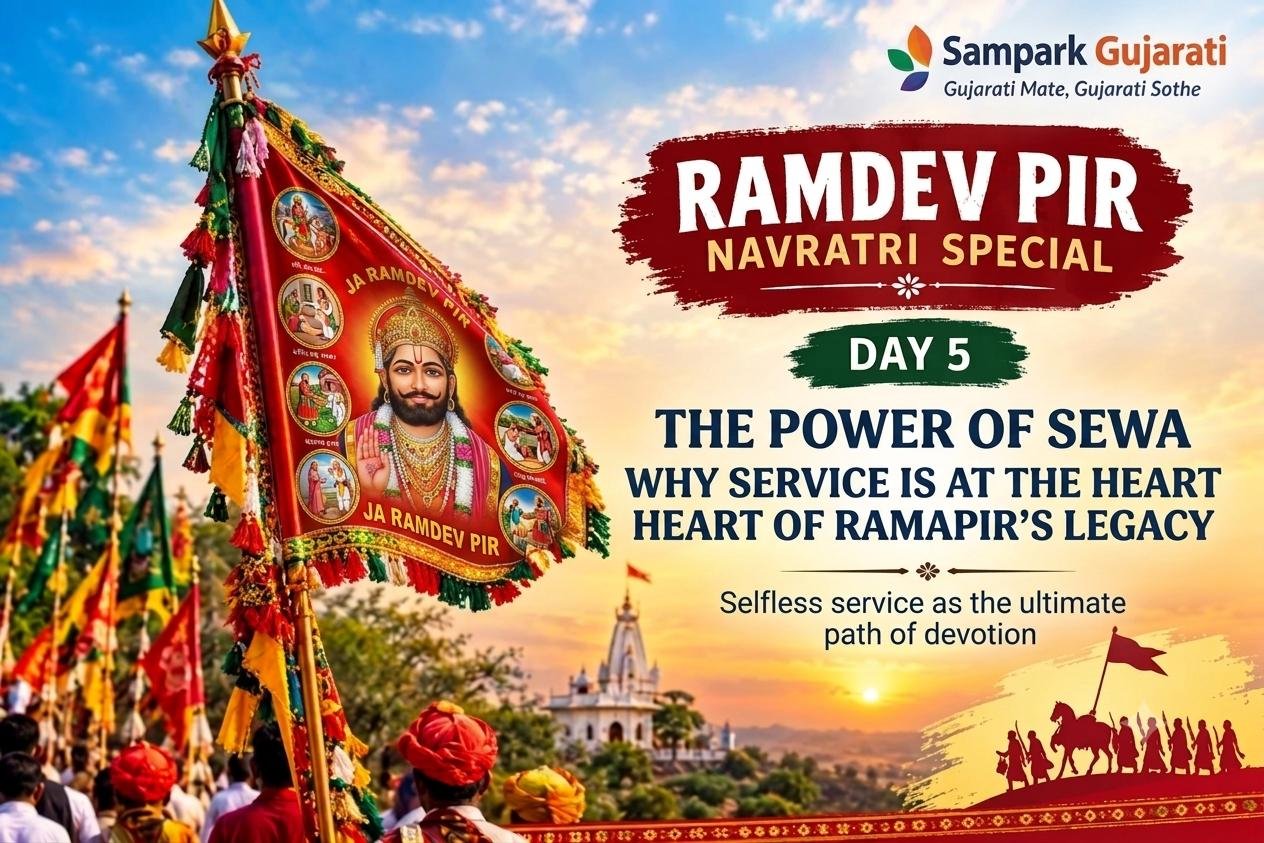
Ramdev Pir Navratri Special | Day 5
What if the simplest act of helping another person could become a form of devotion?
In a world where spirituality is often associated with temples, prayers, rituals and pilgrimages, the story of Ramdev Pir, also known as Ramapir or Baba Ramdevji, offers another powerful idea: devotion can also be expressed through service to people.
For generations, stories surrounding Ramdev Pir have connected his legacy with helping ordinary people, respecting human dignity and standing with those who were socially or economically disadvantaged.
A Rajasthan government document describing the historical and cultural significance of Ramdevji says that he dedicated his life to the people of his kingdom, undertook welfare measures and emphasized equality and the upliftment of poor and marginalized people.
As the Ramdev Pir Navratri Special reaches Day 5, the focus moves from stories and symbols to one of the most meaningful values associated with Ramapir: Seva — selfless service.
Who Was Ramdev Pir Beyond the Miracles?
Ramdev Pir is remembered as a major folk deity of Rajasthan and Gujarat, with a following that extends across communities.
Many stories about him include miraculous events. However, his cultural legacy is not limited to miracle narratives.
The Rajasthan government’s Ramdevra development document describes Baba Ramdevji as a saint and folk deity associated with welfare, equality and concern for disadvantaged people. It also states that he treated people of different religions equally.
This makes seva an important part of understanding why his name continues to resonate with devotees.
The deeper message is simple:
Faith should not remain inside a place of worship. It should become kindness in everyday life.
What Does Seva Mean in Ramapir’s Tradition?
The Sanskrit-derived word seva broadly refers to service offered without selfish expectation.
In devotional traditions, seva can take many forms:
– Helping someone who is struggling
– Offering food to someone in need
– Supporting travellers and pilgrims
– Caring for animals
– Helping the elderly
– Supporting one’s community
– Standing against discrimination
– Sharing knowledge or resources
– Volunteering during religious gatherings
– Treating every person with dignity
The form may change, but the underlying principle remains the same:
Serve people with respect, not superiority.
That idea is particularly relevant to the social message traditionally associated with Ramdev Pir.
Ramdev Pir and the Idea of Equality
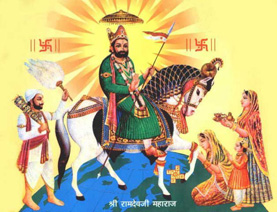
One of the strongest themes associated with Ramapir is social harmony.
The Rajasthan government’s cultural panorama on Ramdevji describes traditions in which he is remembered for challenging untouchability and promoting social harmony. It also records devotional traditions surrounding his relationship with members of communities that faced social exclusion.
These accounts are part of the cultural and devotional tradition surrounding Ramdevji, and individual legends should not automatically be treated as independently verified historical events.
But their message remains powerful.
A person’s social status should not determine whether they deserve respect.
A person’s wealth should not determine whether they deserve kindness.
And a person’s community should not determine whether they deserve compassion.
That is where seva becomes more than charity.
It becomes a way of recognizing human dignity.
Seva Is Not About Showing Off
There is an important difference between service and publicity.
Helping someone only to receive praise is different from helping because another person genuinely needs support.
The devotional ideal of seva emphasizes humility.
You don’t necessarily need:
– A large donation
– A big organization
– A social media campaign
– A public announcement
– A huge religious event
Sometimes seva can begin with something extremely small.
Give food to someone who is hungry.
Help an elderly person cross the road.
Support a struggling family.
Donate useful items instead of unnecessary ones.
Volunteer your time.
Listen to someone who feels alone.
Even a small act can have a meaningful impact.
Ramdevra: A Living Centre of Devotion and Community
The cultural importance of Ramdev Pir can also be seen at Ramdevra in Jaisalmer, Rajasthan.
Rajasthan Tourism identifies Ramdevra Temple as the shrine dedicated to Baba Ramdevji and describes it as the place associated with his final resting place. The site is visited by people of different faiths, and the annual Ramdevra Fair attracts large numbers of devotees.
During such gatherings, devotion becomes a community experience.
People travel long distances.
They meet fellow devotees.
They participate in devotional singing.
They offer prayers.
They help one another during the journey.
They share food and experiences.
This creates an important cultural dimension of pilgrimage:
People don’t simply travel toward a sacred place; they also create a temporary community along the way.
That spirit of community connects naturally with the idea of seva.
Seva During Festivals: A Tradition Worth Preserving
Religious festivals provide countless opportunities for service.
During Ramdev Pir celebrations, devotees and community groups may participate in activities such as food distribution, assisting pilgrims, organizing gatherings and supporting people travelling to sacred places.
The exact practices vary from place to place and from community to community.
But the principle remains relevant:
A celebration becomes more meaningful when it creates space for others to participate with dignity.
This is especially important for younger generations.
Instead of seeing tradition only as something inherited from the past, young people can understand it as an opportunity to create positive action in the present.
What Can Young People Learn From Ramapir’s Seva Message?
The story of Ramdev Pir can be interpreted in a modern way without losing its traditional character.
1. Help Before You Judge
You may never know what another person is going through.
Kindness begins where judgment ends.
2. Respect Everyone
Respect should not depend on someone’s job, income, caste, religion or social position.
3. Service Doesn’t Require Wealth
Your time, knowledge, skills and attention can also become forms of seva.
4. Use Technology for Good
Today, young people can use social media to spread awareness about blood donation, food drives, volunteering, education and community initiatives.
5. Make Faith Practical
Prayer can bring inner reflection, but compassionate action can bring change into the lives of others.
The Difference Between Charity and Seva
Charity and seva can overlap, but the mindset can be different.
Charity often focuses on giving something to someone in need.
Seva can go deeper by emphasizing humility, participation and respect.
For example, giving food is helpful.
But sitting beside someone, speaking respectfully and treating them as an equal can make the experience more human.
The real value is not only what we give.
It is also how we give.
A Simple Ramapir-Inspired Seva Challenge
This Navratri, instead of limiting devotion to prayer, try a simple 9-day seva challenge.
Day 1: Help someone with their work.
Day 2: Feed someone who needs a meal.
Day 3: Donate something genuinely useful.
Day 4: Spend time with an elderly person.
Day 5: Help an animal or support animal welfare.
Day 6: Share useful knowledge with someone.
Day 7: Help someone without telling others.
Day 8: Forgive someone or resolve an old disagreement.
Day 9: Make a personal commitment to continue one form of service beyond Navratri.
The goal isn’t to complete a checklist.
The goal is to turn devotion into everyday behavior.
Why Ramapir’s Message Still Matters Today
Centuries can change society, technology and lifestyles, but certain human needs remain constant.
People still need dignity.
People still need compassion.
People still need support.
People still experience inequality.
And communities still become stronger when people help one another.
That is why the traditional association of Ramdev Pir with seva, equality and social harmony continues to have cultural relevance.
The Rajasthan government itself describes Ramdevji’s legacy in terms of welfare, equality and concern for disadvantaged sections.
Whether someone approaches Ramapir as a devotee, a student of folk culture or someone interested in India’s spiritual traditions, the idea of service offers a message that remains remarkably universal.
The greatest devotion may not always be what we ask for. Sometimes it is what we are willing to do for someone else.
Day 5 Takeaway
Ramdev Pir’s legacy is not remembered only through temples, bhajans, stories and festivals.
It also lives through an idea:
Faith becomes meaningful when it inspires humanity.
Seva doesn’t always require extraordinary action.
Sometimes, it begins with one person helping another without expecting anything in return.
And perhaps that is why the message of Ramapir continues to travel from one generation to another.
🔔 Tomorrow: Ramdev Pir Navratri Special Day 6
Day 6 will explore the world of Ramapir Bhajans, Neja and folk culture.
Why does a devotional song sometimes become more powerful than a written story? How did Ramdev Pir’s name travel through folk music, gatherings and oral traditions across generations?
Day 6: Ramdev Pir Bhajans, Neja & Folk Culture — How Devotion Became a Living Tradition
Frequently Asked Questions
What is the main message of Ramdev Pir’s seva tradition?
The devotional and cultural tradition surrounding Ramdev Pir strongly emphasizes service, equality, compassion and concern for people facing hardship.
Is Ramdev Pir historically associated with social welfare?
A Rajasthan government document describes Baba Ramdevji as a saint who dedicated himself to his people, undertook welfare measures and worked for the upliftment of poor and disadvantaged people.
What does seva mean?
Seva generally means selfless service. It can include helping people, supporting communities, feeding those in need, volunteering and performing acts of kindness without seeking personal reward.
Where is the main Ramdev Pir shrine?
Ramdevra Temple in Jaisalmer district, Rajasthan, is dedicated to Baba Ramdevji and is associated with his final resting place. Rajasthan Tourism notes that it is visited by people of different faiths.
Can young people practice seva today?
Absolutely. Volunteering, helping people in need, supporting community initiatives, caring for animals and sharing useful knowledge are all practical ways to express the spirit of service.
Suggested Slug:
Suggested Featured Image Text:
RAMDEV PIR NAVRATRI SPECIAL
DAY 5
The Power of Seva
When Devotion Becomes Service
Tags:
Ramdev Pir, Ramapir, Baba Ramdevji, Ramdev Pir Seva, Ramdev Pir Navratri, Ramdevra, Ramdevra Temple, Seva, Devotion, Equality, Social Harmony, Gujarati Culture, Gujarati Devotional, Rajasthan Folk Deity
Hashtags:
#RamdevPir #Ramapir #BabaRamdevji #RamdevPirNavratri #Seva #Ramdevra #Devotion #GujaratiCulture #RajasthanCulture #SamparkGujarati
Internal Linking:
Day 1: Who Was Ramdev Pir?
Day 2: What Is Ramapir Neja?
Day 3: Ramapir and Equality
Day 4: Stories and Legends of Ramapir
Day 6: Ramdev Pir Bhajans & Folk Culture
Series Branding:
Sampark Gujarati — Gujarati Mate, Gujarati Sathe
Stay updated with the latest news and articles. Subscribe Now
