
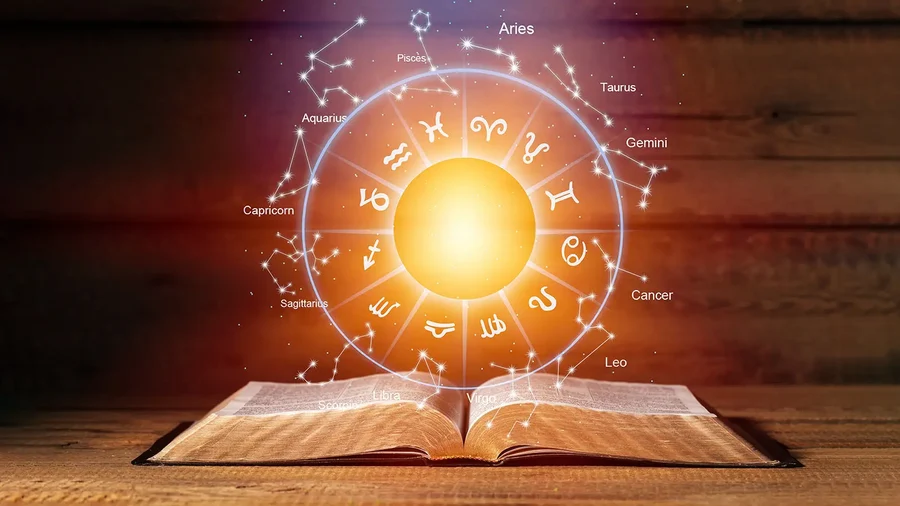
Why do people check their horoscope before starting something new? Why do some individuals consult astrologers before marriage, business investments, buying property, or choosing an auspicious date? Can the position of planets influence human behaviour, relationships, career, and destiny? For centuries, astrology has occupied an important place in Indian culture and spiritual traditions. From checking a newborn baby’s birth chart to selecting a marriage muhurat, astrology has been used as a traditional guide to understanding different phases of human life. In India, particularly in Gujarat, astrology is closely connected with festivals, religious practices, family traditions, business beginnings, and personal milestones. But what makes astrology meaningful to so many people? Is it only about predicting the future, or does it offer a broader way to understand personality, challenges, relationships, and personal growth? Let us explore the importance of astrology in human life through the principles of Vedic astrology, the Navgrah, the twelve zodiac signs, and everyday experiences.
1. Astrology Helps People Understand Their Personality
One of the most popular reasons people explore astrology is to understand their personality. In Vedic astrology, a birth chart, also known as Janam Kundli, is prepared using the date, time, and place of birth. It represents the positions of celestial bodies at the time of birth according to traditional astronomical calculations. The chart includes several important elements. The Lagna, or ascendant, is traditionally associated with personality, appearance, and the way an individual approaches life. The Janma Rashi, or Moon sign, is associated with the mind, emotional nature, and inner responses. The Surya Rashi, or Sun sign, is associated with identity, confidence, and individuality. The Nakshatra is one of the 27 lunar constellations used in Vedic astrology, and the Navgrah are the nine planetary influences considered in traditional interpretation. Aries, for example, is traditionally associated with courage and initiative, Taurus with stability, Gemini with communication, and Leo with leadership. These zodiac descriptions can provide interesting prompts for self-reflection. However, they should not be treated as fixed personality labels or scientifically proven descriptions of every individual.
2. Astrology and Career: Understanding Professional Strengths
Career is one of the most common subjects people discuss with astrologers. Questions often arise about which profession is suitable, whether to choose a job or start a business, when a promotion might come, whether this is a suitable period for changing careers, and whether to explore opportunities abroad. In Vedic astrology, different houses and planetary combinations are traditionally associated with professional life. The first house relates to personality and self-identity, the second to wealth, speech, and family resources, the sixth to employment, service, and competition, the seventh to partnerships and business relationships, the tenth to career, profession, and public reputation, and the eleventh to income, achievements, and networks. The planets also have traditional professional associations. The Sun is linked with leadership, administration, and authority. Mercury is linked with communication, commerce, technology, and analytical work. Jupiter is linked with education, teaching, finance, and guidance. Mars is linked with engineering, action, machinery, and courage. Saturn is linked with discipline, responsibility, labour, and structured work, and Venus with arts, design, entertainment, and luxury industries. Astrology may offer a traditional framework for reflecting on professional interests, but career choices should also consider education, skills, experience, market demand, and personal circumstances.
3. Astrology and Financial Life: Wealth, Savings and Business Growth
Money is an important part of everyday life, and people often consult astrology to understand their financial prospects, business opportunities, and long-term stability. In Vedic astrology, the second, fifth, ninth, tenth, and eleventh houses are among the factors considered in traditional wealth-related interpretations. Among the planets, Jupiter, or Guru, is traditionally associated with wisdom, knowledge, expansion, and prosperity. Venus, or Shukra, is associated with comfort, luxury, enjoyment, and material resources. Mercury, or Budh, is connected with trade, business, calculation, and communication, while Saturn, or Shani, is associated with discipline, patience, responsibility, and long-term effort. Astrologers may study these planetary positions along with planetary periods, known as Dasha, and relevant transits. However, astrology cannot guarantee wealth or predict investment returns reliably. Financial decisions should be based on research, risk assessment, savings habits, and professional financial guidance, and the Securities and Exchange Board of India offers investor education resources for exactly this purpose.
4. Astrology and Marriage: Compatibility and Relationships
Marriage is another area where astrology has a strong cultural presence, particularly in Indian families. Before marriage, many families traditionally compare the birth charts of prospective partners through Kundli Milan or Guna Milan. The purpose is to examine traditional compatibility factors and identify areas that may require attention. The commonly used Ashtakoota matching system considers Varna, Vashya, Tara, Yoni, Graha Maitri, Gana, Bhakoot, and Nadi. Astrologers may also examine the seventh house, Venus, Jupiter, Mars, and other chart factors while interpreting marriage and relationships. But a successful relationship depends on much more than horoscope matching. Communication, emotional maturity, mutual respect, trust, financial understanding, and shared values are essential. Kundli matching is a cultural and traditional practice, not a scientifically validated method for predicting marital happiness.
5. Astrology and Health: Understanding Traditional Planetary Associations
Health is one of the most sensitive areas in astrology. Traditional Vedic astrology associates different houses and planets with various aspects of physical and mental well-being. The Sun is associated with vitality, the Moon with the mind and emotions, Mars with energy and physical strength, Mercury with communication and nervous-system symbolism, Jupiter with growth and traditional ideas of well-being, and Saturn with endurance and chronicity in traditional interpretations. Astrologers may examine the first, sixth, eighth, and twelfth houses when discussing health-related themes. However, a horoscope cannot diagnose a medical condition, predict illness reliably, or replace medical treatment. People should consult qualified healthcare professionals, and the World Health Organization is a reliable source for general health guidance. Traditional prayer and spiritual practices may provide personal comfort, but they should not be used as substitutes for medical care.
6. Astrology and Timing: Why Are Muhurat and Auspicious Dates Important?
Have you noticed that many Indian families consult a Panchang before performing important activities? From weddings and housewarming ceremonies to business openings, vehicle purchases, and religious functions, choosing an auspicious time is an established cultural practice known as Muhurat selection. Traditional Panchang calculations consider several factors. The tithi is the lunar day, the vaar is the weekday, and the nakshatra is the lunar constellation. The yoga is a specific Panchang combination, the karana is half of a lunar tithi, and the lagna is the rising zodiac sign at a particular time. Astrologers may also consider the nature of the activity and other relevant astrological factors. People believe in auspicious timings because choosing a muhurat can provide a sense of spiritual confidence, continuity with family traditions, and a meaningful beginning. However, a favourable muhurat cannot guarantee success. Preparation, planning, safety, and execution remain important.
7. Astrology and the Navgrah: Understanding Nine Planetary Influences
One of the central concepts of Vedic astrology is the Navgrah, or nine planetary influences. The Navgrah consists of the Sun, Moon, Mars, Mercury, Jupiter, Venus, Saturn, Rahu, and Ketu, and each is traditionally associated with different qualities and experiences. Surya is linked with confidence, leadership, and identity. Chandra is linked with the mind, emotions, and peace. Mangal is linked with courage, action, and determination, and Budh with intelligence, communication, and business. Guru is linked with wisdom, education, and guidance, and Shukra with love, comfort, and creativity. Shani is linked with discipline, responsibility, and patience, Rahu with ambition, desires, and unconventional paths, and Ketu with detachment, introspection, and spirituality. In traditional astrology, astrologers study these influences to interpret different aspects of an individual’s life. The deeper spiritual lesson is that human life involves many dimensions. Confidence must be balanced with humility, ambition with discipline, and material growth with wisdom.
8. Astrology and Difficult Phases: Understanding Shani Sade Sati and Rahu-Ketu
Many people become interested in astrology during challenging periods. Terms such as Shani Sade Sati, Dhaiya, Rahu Mahadasha, and Ketu Mahadasha are frequently discussed in Indian astrology. Shani Sade Sati traditionally refers to a period of approximately seven and a half years during which Saturn transits through the sign before a person’s Moon sign, the Moon sign itself, and the sign following it. Some traditions interpret this period as one of responsibility, patience, discipline, and significant life lessons. Rahu and Ketu are mathematical shadow points in Vedic astrology rather than physical planets. Their planetary periods are interpreted differently by astrologers and may be associated with ambition, change, detachment, and introspection. Importantly, these periods should not automatically be considered unlucky. A difficult experience should not be attributed to planetary positions without considering real-life circumstances, and astrology should never create unnecessary fear or encourage expensive remedies.
9. Astrology and Spirituality: A Connection Beyond Material Success
Astrology is not limited to money, career, or relationships. For many people, its importance is also connected with spirituality and religious traditions. In India, planetary worship is associated with different deities and devotional practices. Surya worship is linked with vitality and confidence, Shiva worship with spiritual awareness and transformation, Hanuman devotion with courage and protection, and Vishnu worship with preservation and balance. Guru and teacher worship is associated with knowledge and guidance. Festivals such as Mahashivratri, Navratri, Janmashtami, Diwali, Kartik Purnima, and Makar Sankranti also provide opportunities for spiritual reflection. People may follow mantras, prayers, charity, fasting, and temple visits according to their family traditions, and these practices can offer a sense of purpose, community, and emotional comfort.
10. Astrology and Human Behaviour: Can It Encourage Self-Improvement?
One useful way to approach astrology is as a tool for asking questions about oneself. Am I patient when facing difficulties? Do I make financial decisions impulsively? Do I communicate openly with family members? Am I balancing ambition with personal well-being? Am I taking responsibility for my decisions? Traditional planetary symbolism can provide a language for reflecting on such questions. Saturn can remind us of discipline, Mercury can inspire learning, Jupiter can represent wisdom, Venus can encourage harmony, and the Moon can prompt emotional reflection. The real value of such reflection comes from translating positive intentions into everyday action.
11. Can Astrology Predict the Entire Future of a Person?
One of the biggest misconceptions about astrology is that it can provide a completely fixed picture of the future. Traditional Vedic astrology uses birth charts, planetary periods, transits, and other methods to interpret possible life themes. However, even within astrology, interpretations can vary between practitioners and traditions. Human life is influenced by many factors, including personal decisions, education and opportunities, family and social environment, financial circumstances, health and lifestyle, effort and experience, and unexpected events. A horoscope should not be treated as an unchangeable verdict. Instead of asking only what will happen, a more constructive question is: what can I do to prepare for different possibilities?
12. Is Astrology Scientifically Proven?
Astrology has a long cultural and historical presence across different civilisations, and Vedic astrology in particular is an important part of India’s traditional knowledge systems. It uses celestial calculations and symbolic interpretations to understand personality and life events. However, modern scientific research has not established reliable evidence that astrological birth charts can consistently predict individual personality or future events. Astronomy and astrology are different disciplines: astronomy, as practised at institutions such as the Indian Institute of Astrophysics, is the scientific study of celestial objects, while astrology interprets their supposed relationship with human life. People may continue to value astrology as a cultural, spiritual, or reflective practice while making important life decisions using evidence, professional advice, and personal judgment.
Conclusion: Astrology Is a Traditional Guide to Reflection, Not a Replacement for Personal Effort
Astrology has remained important in human life because it connects people with tradition, spirituality, family customs, and the desire to understand life’s uncertainties. From career and business to marriage, financial planning, auspicious timings, and spiritual practices, Vedic astrology offers a traditional framework through which many people interpret different experiences. But the most important lesson is that no planetary position should become a reason to stop taking responsibility for life. Use knowledge to make better decisions, discipline to build a successful future, compassion to strengthen relationships, and faith to find inner peace. The stars may inspire reflection, but our choices, actions, and values shape the way we live.
Stay updated with the latest news and articles. Subscribe Now for more articles.
