
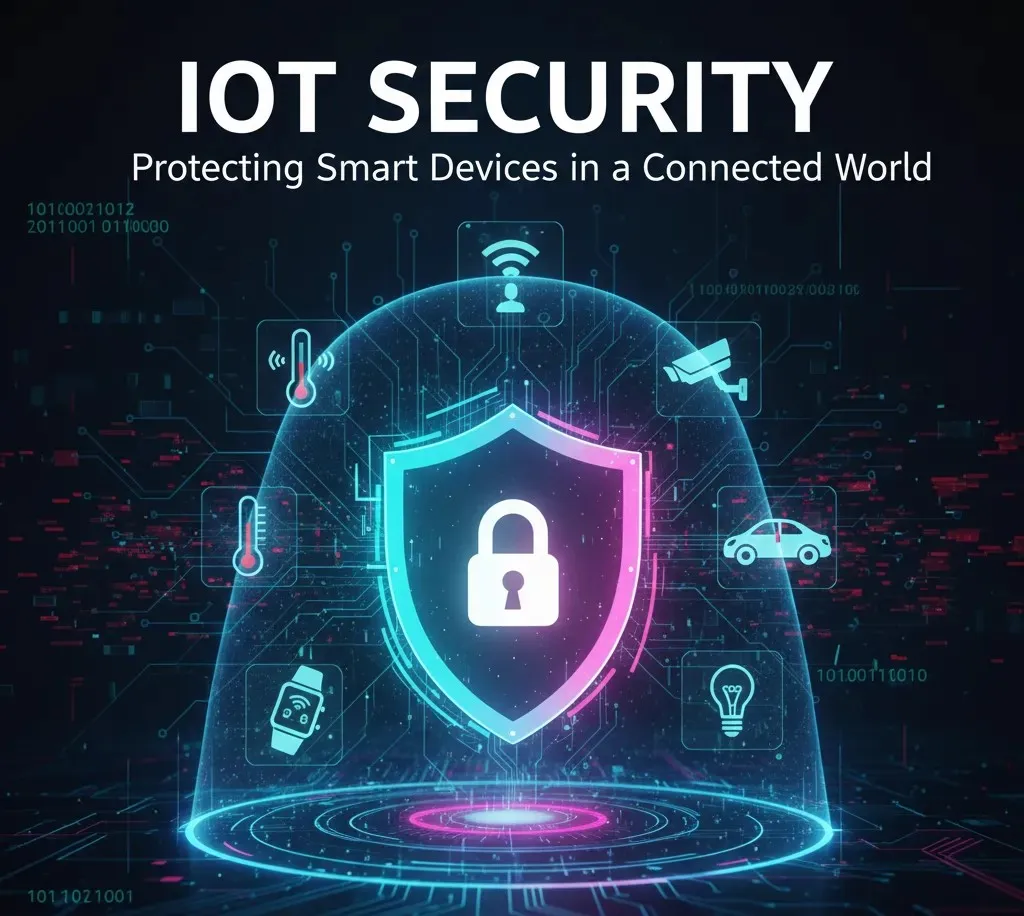
The Internet of Things (IoT) has transformed everyday life by connecting smart devices to the internet. From smart TVs and home assistants to industrial sensors and medical devices, IoT is everywhere. While this connectivity brings convenience and automation, it also introduces serious security risks. Every connected device becomes a potential entry point for cyber attackers.
IoT security focuses on protecting these smart devices, networks, and data from unauthorized access, misuse, and cyber threats.
What Is IoT Security?
It is the practice of safeguarding internet-connected devices and the networks they operate on. These devices collect, share, and process large amounts of data, making them attractive targets for hackers.
The goal of IoT security is to ensure:
- Device safety
- Network protection
- Data privacy
- Reliable performance
Without proper security, smart devices can be easily compromised.
Why IoT Devices Are Vulnerable
Many IoT devices are designed for convenience and low cost, often with minimal built-in security.
Common vulnerabilities include:
- Weak default passwords
- Lack of software updates
- Poor encryption
- Insecure Wi-Fi connections
- Limited user awareness
Hackers exploit these weaknesses to gain control over devices and networks.
IoT Security in Smart Homes
Smart homes use devices like smart locks, cameras, lights, thermostats, and voice assistants.
Security risks in smart homes:
- Unauthorized access to cameras
- Smart lock hacking
- Data spying through voice assistants
- Wi-Fi network breaches
Securing home IoT devices is essential to protect privacy and safety.
IoT Security in Healthcare
Healthcare devices such as heart monitors, insulin pumps, and patient tracking systems rely on IoT.
Potential risks:
- Tampering with medical data
- Device malfunction due to hacking
- Patient data theft
Strong IoT security ensures patient safety and data confidentiality.
Industrial IoT (IIoT) Security
Industries use IoT sensors for automation, monitoring, and predictive maintenance.
Industrial risks:
- Production shutdowns
- Data leaks
- Safety hazards
- Financial losses
Securing industrial IoT systems is critical for business continuity.
IoT Security in Smart Vehicles
Modern vehicles are connected through IoT for navigation, diagnostics, and automation.
Vehicle security concerns:
- Remote vehicle control by hackers
- Tracking vehicle location
- Software manipulation
Automotive security protects both drivers and passengers.
Key Elements of IoT Security
Effective security includes multiple layers of protection.
Essential measures:
Strong Authentication
Using unique passwords and multi-factor authentication prevents unauthorized access.
Regular Software Updates
Firmware and software updates fix security loopholes.
Data Encryption
Encrypting data ensures it cannot be read if intercepted.
Network Segmentation
Separating IoT devices from main networks reduces attack impact.
Device Monitoring
Continuous monitoring detects suspicious activity early.
IoT Security and Cloud Platforms
Many IoT devices rely on cloud services to store and process data.
Cloud security practices:
- Secure APIs
- Access control policies
- Encrypted communication
- Real-time threat detection
Cloud security plays a major role in protecting IoT ecosystems.
Role of AI in IoT Security
Artificial Intelligence helps detect unusual patterns and prevent attacks in real time.
AI benefits:
- Predictive threat detection
- Automated response
- Behavior analysis of devices
AI-powered systems strengthen IoT defenses significantly.
User Awareness and IoT Safety
Users play an important role in security.
Best practices for users:
- Change default passwords immediately
- Use secure Wi-Fi with strong encryption
- Disable unused features
- Buy devices from trusted brands
Awareness reduces the chances of cyber attacks.
Challenges in IoT Security
Despite advancements, security faces challenges:
- Billions of connected devices
- Lack of global security standards
- Limited device memory for security tools
- Complex device ecosystems
These challenges require continuous innovation and regulation.
Future of IoT Security
As IoT expands, security solutions will become smarter and more automated.
Future trends:
- Blockchain for device authentication
- AI-driven security frameworks
- Global IoT security standards
- Hardware-level security chips
It will evolve alongside the growth of smart technology.
Conclusion
IoT devices make life smarter, faster, and more convenient — but they must be secured properly. From homes and hospitals to factories and vehicles, IoT security is essential to protect data, privacy, and safety. As the number of connected devices grows, so does the responsibility to secure them.
Strong IoT security ensures that smart living remains safe living.
Subscribe Now For More articles.
