
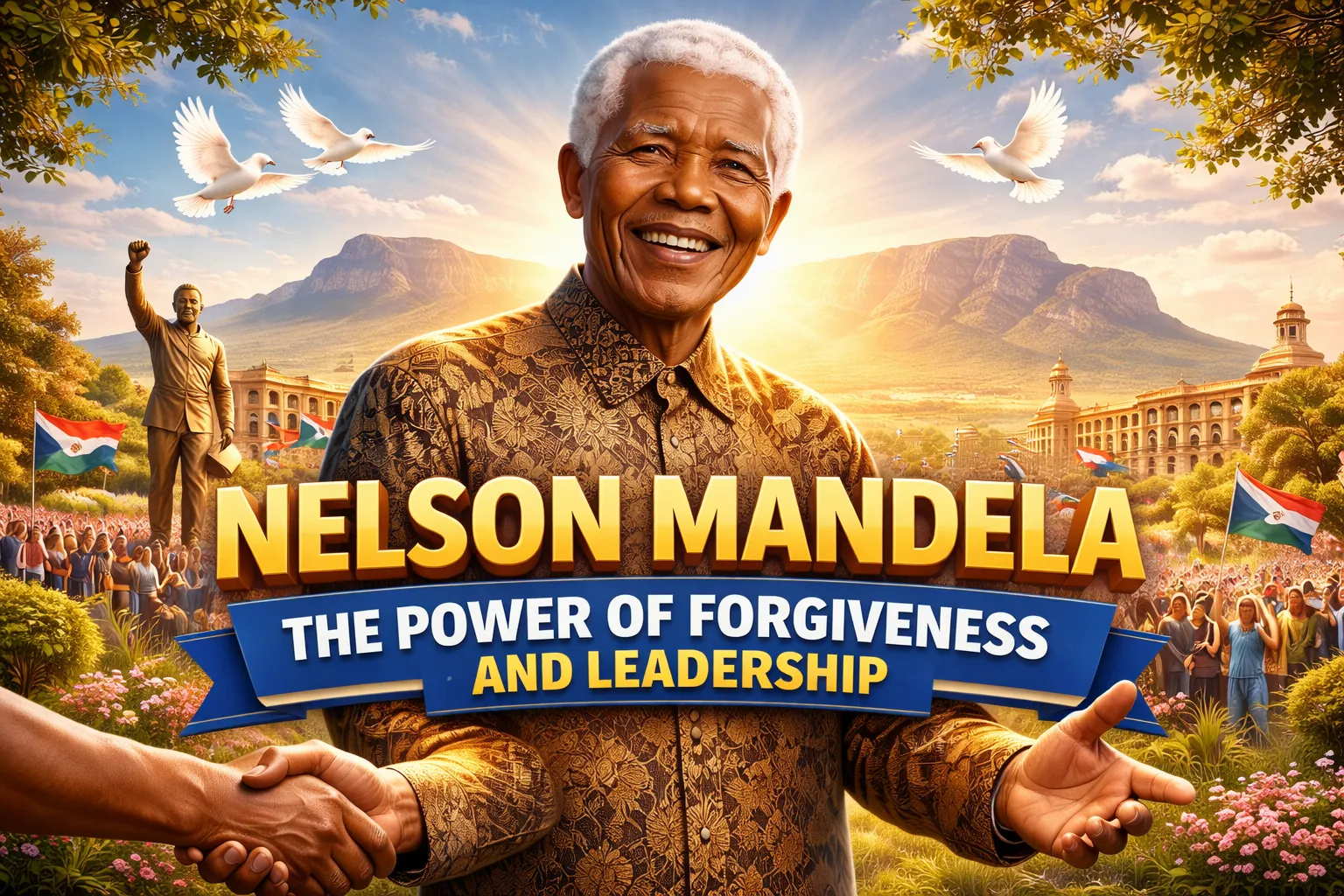
History remembers certain individuals not just for what they achieved but for the values they represented. One of the most remarkable examples of courage, resilience, and forgiveness is the life of Nelson Mandela.
His journey from a prisoner to a president became one of the most inspiring leadership stories in modern history. Mandela showed the world that true power is not about revenge or control—it is about unity, forgiveness, and justice.
Early Life and the Seeds of Leadership
Nelson Mandela was born in the rural village of Mvezo in South Africa. From a young age, he grew up hearing stories about African history, leadership, and resistance against injustice.
As he pursued education, he became deeply aware of the harsh system of racial discrimination called apartheid—a policy that separated people based on race and denied basic rights to Black citizens.
Mandela believed that freedom and equality were fundamental human rights. This belief led him to join political activism through the African National Congress, where he worked to challenge the oppressive system.
Standing Against Apartheid
During the mid-20th century, apartheid laws restricted nearly every aspect of life for non-white citizens in South Africa. People were segregated in schools, neighborhoods, transportation, and jobs.
Mandela became one of the most prominent voices opposing these policies. Through speeches, campaigns, and peaceful protests, he encouraged people to fight for equality and dignity.
However, activism came with serious risks. The government saw Mandela as a threat.
27 Years in Prison
In 1964, Mandela was arrested and sentenced to life imprisonment for his involvement in the anti-apartheid movement. He spent 27 years behind bars, most of it on Robben Island.
The conditions were harsh:
- Hard labor in limestone quarries
- Limited contact with family
- Restricted reading and writing
Despite these challenges, Mandela refused to lose hope. Instead of letting bitterness consume him, he used prison as a place for reflection, learning, and leadership development.
He continued studying law and discussing political ideas with fellow prisoners. His determination inspired many people around the world.
Freedom and a New Beginning
In 1990, after growing international pressure and internal change, Nelson Mandela was finally released from prison. Crowds celebrated his freedom. The world watched closely to see what he would do next.
Many expected anger or revenge. But Mandela chose reconciliation. He believed South Africa’s future depended on unity, not division.
As I walked out the door toward the gate that would lead to my freedom, I knew if I didn’t leave my bitterness and hatred behind, I’d still be in prison.
— Nelson Mandela
Becoming President
In 1994, South Africa held its first democratic election in which citizens of all races could vote. Nelson Mandela won the election and became the country’s first Black president.
His presidency marked the beginning of a new chapter for the nation. Instead of punishing former opponents, he worked to rebuild trust between communities. One of the most important initiatives during his leadership was the Truth and Reconciliation Commission, which aimed to heal the wounds of the past through dialogue and understanding.
Mandela proved that leadership is strongest when guided by empathy and forgiveness.
Leadership Lessons from Nelson Mandela
Forgiveness Is True Strength
Many people believe strength comes from revenge or domination. Mandela showed that real strength comes from forgiveness. Holding onto anger only prolongs conflict. Forgiveness allows progress.
Resilience Builds Great Leaders
Spending 27 years in prison would break most people. Mandela used those years to strengthen his vision and discipline. Challenges can either weaken us or prepare us for greater responsibilities.
Unity Creates Lasting Change
Mandela believed that a divided nation cannot succeed. His leadership focused on bringing people together rather than separating them. True leadership builds bridges instead of walls.
Patience Wins Long Battles
Major change rarely happens overnight. Mandela’s struggle for equality lasted decades. His story teaches that meaningful progress requires patience and persistence.
Global Impact
Nelson Mandela’s influence extended far beyond South Africa. He became a symbol of peace, justice, and human dignity worldwide. In recognition of his efforts, he received the Nobel Peace Prize in 1993.
Today, his life continues to inspire leaders, activists, and ordinary people who believe in fairness and equality.
Why Mandela’s Story Matters Today
In every country, including India, societies face challenges related to inequality, misunderstanding, and division. Mandela’s story reminds us that lasting solutions require:
- Dialogue
- Empathy
- Courage
- Vision
When leaders focus on unity rather than conflict, communities grow stronger.
Final Reflection
The life of Nelson Mandela proves that even in the darkest circumstances, hope can survive. He entered prison as a freedom fighter and emerged as a unifying leader.
True leadership is not about power—it is about purpose. And sometimes, the greatest victory is not defeating your enemies but turning them into partners for peace.
Subscribe Now For More articles.
