
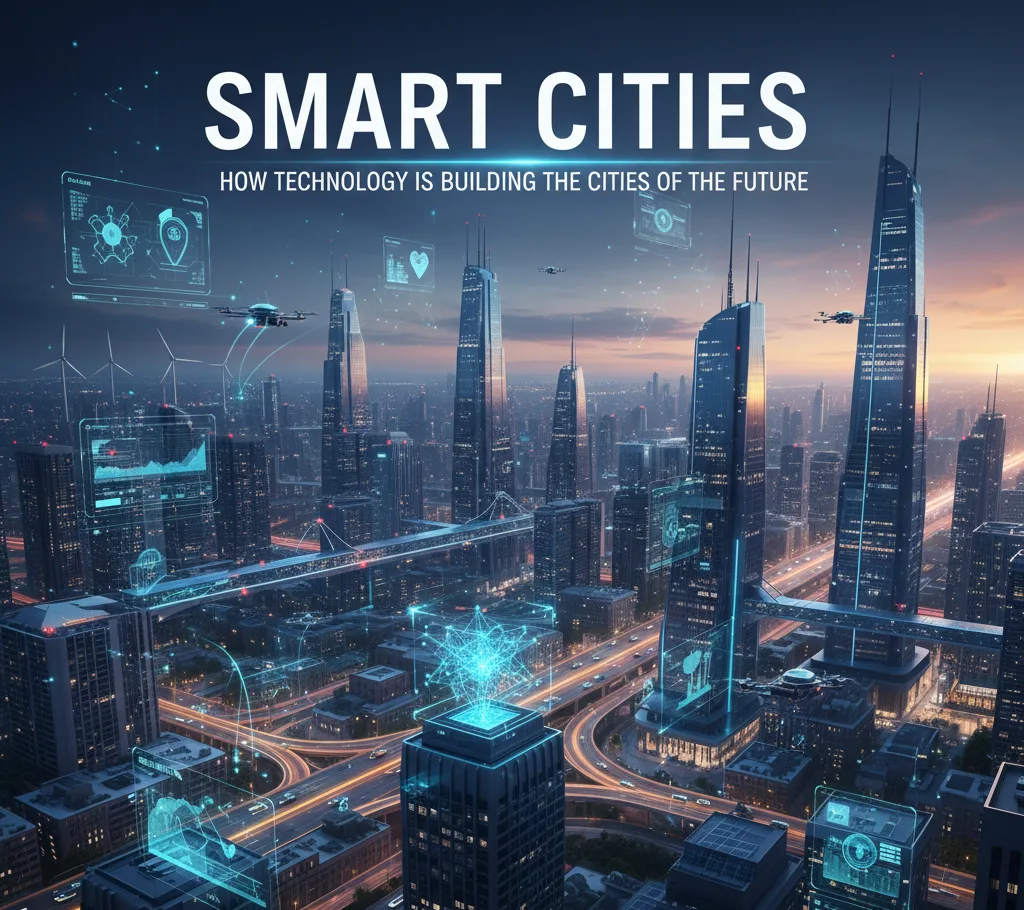
The concept of smart cities is transforming urban living across the globe. As populations grow and urban areas expand, cities face challenges such as traffic congestion, pollution, energy shortages, and waste management issues. Smart cities use advanced digital technologies to improve infrastructure, enhance public services, and create a more sustainable and efficient urban environment.
By integrating Internet of Things (IoT), Artificial Intelligence (AI), big data, and renewable energy, smart cities aim to improve quality of life while reducing environmental impact.
What Is a Smart City?
A smart city uses digital technology and real-time data to manage resources efficiently and improve citizen services. It connects infrastructure, transportation, utilities, and public systems through smart networks.
Core features of smart cities:
- Smart transportation systems
- Intelligent traffic management
- Renewable energy integration
- Smart waste management
- Digital governance platforms
- Advanced public safety systems
Smart cities focus on sustainability, innovation, and citizen well-being.
Smart Transportation and Traffic Management
Traffic congestion is a major issue in growing cities. Smart transportation systems use sensors and AI to reduce traffic problems.
Key benefits:
- Real-time traffic monitoring
- Smart traffic signals
- Reduced travel time
- Lower fuel consumption
- Decreased air pollution
Public transport systems are also becoming digital with GPS tracking and contactless payments.
Renewable Energy in Smart Cities
Smart cities prioritize clean and renewable energy sources.
Green energy solutions:
- Solar-powered street lights
- Wind energy integration
- Smart grids
- Energy-efficient buildings
These technologies reduce carbon emissions and support climate goals.
Smart Waste Management
Waste management is one of the biggest urban challenges. Smart waste systems use IoT sensors in bins to monitor fill levels.
Advantages:
- Optimized waste collection routes
- Reduced operational cost
- Cleaner streets
- Improved recycling systems
Efficient waste management keeps cities healthier and more sustainable.
Smart Water Management
Water scarcity is a global concern. Smart cities use technology to manage water distribution effectively.
Smart water features:
- Leak detection sensors
- Automated water meters
- Water quality monitoring
- Efficient irrigation systems
This ensures minimal water waste and better conservation.
Smart Buildings and Infrastructure
Smart buildings are energy-efficient structures equipped with automation systems.
Features include:
- Smart lighting
- Temperature control systems
- Energy monitoring tools
- Security automation
These buildings lower energy usage and improve comfort.
Digital Governance and E-Services
Smart cities enhance government services through digital platforms.
Digital governance benefits:
- Online bill payments
- E-governance portals
- Transparent public services
- Faster administrative processes
Citizens can access services without long queues or paperwork.
Public Safety and Surveillance
Smart surveillance systems improve urban security.
Safety technologies:
- AI-powered CCTV cameras
- Emergency response systems
- Disaster management alerts
- Crime data analysis
These systems help authorities respond quickly to emergencies.
Environmental Sustainability
Smart cities focus heavily on environmental protection.
Sustainability measures:
- Air quality monitoring
- Electric vehicle charging stations
- Urban green spaces
- Carbon emission tracking
Technology plays a key role in maintaining ecological balance.
Role of AI and IoT in Smart Cities
AI and IoT are the backbone of smart city infrastructure.
How they help:
- Real-time data collection
- Predictive analytics
- Automated systems
- Efficient resource management
Data-driven decisions improve urban planning and service delivery.
Economic Growth and Job Creation
Smart city projects create employment in technology, infrastructure, and green energy sectors.
Economic advantages:
- Boost to digital economy
- Innovation-driven startups
- Increased foreign investment
- Long-term cost savings
Smart cities promote sustainable economic development.
Challenges in Building Smart Cities
Despite the benefits, smart cities face several challenges:
- High implementation cost
- Data privacy concerns
- Cyber security risks
- Digital divide among citizens
Proper planning and regulations are necessary to overcome these issues.
Future of Smart Cities
The future of urban living is intelligent, connected, and sustainable.
Emerging trends:
- 5G-powered connectivity
- Autonomous public transport
- Blockchain-based governance
- AI-driven energy systems
- Climate-resilient infrastructure
Smart cities will continue evolving to meet future demands.
Conclusion
Smart cities represent the future of urban development. By combining advanced technology with sustainable practices, cities can improve quality of life, reduce pollution, and enhance economic growth. As digital transformation accelerates, smart city initiatives will play a crucial role in shaping modern society.
The cities of tomorrow will not just be bigger — they will be smarter, greener, and more efficient.
Subscribe Now For More articles.
