
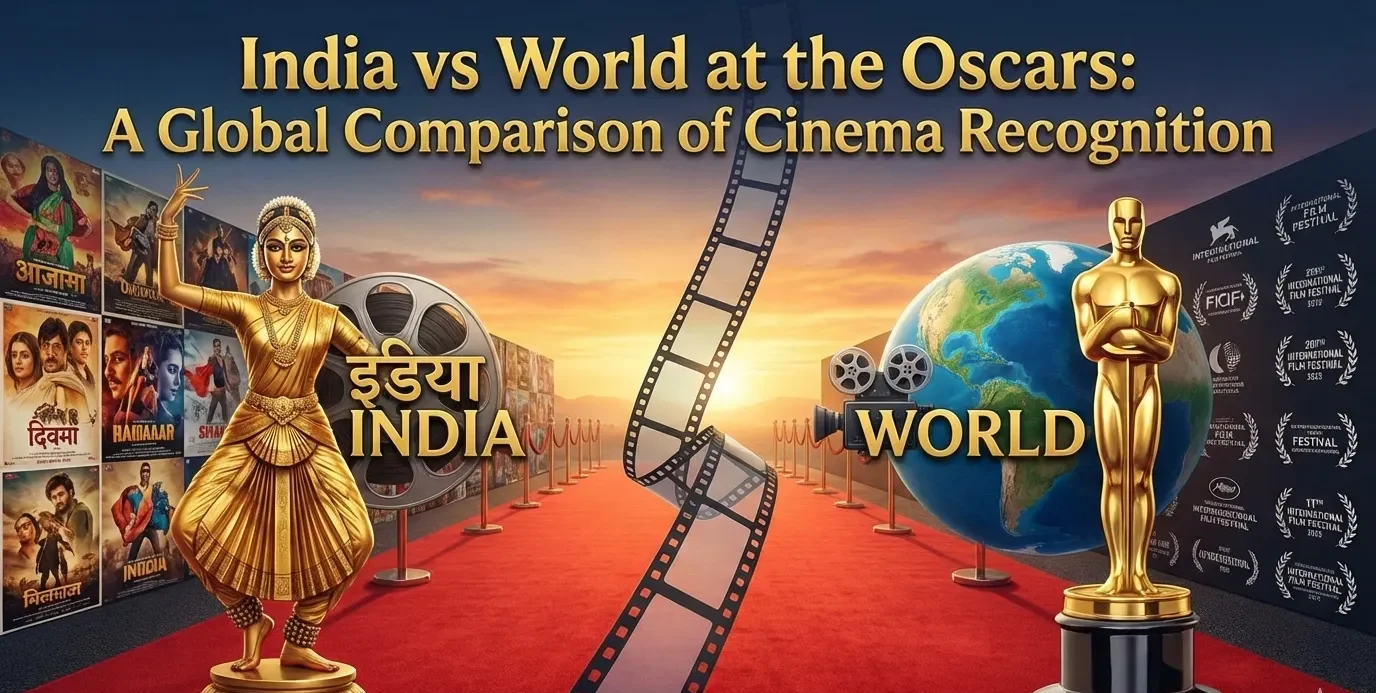
The Academy Awards, commonly known as the Oscars, are the most prestigious film honors in the world. Every year, films from across continents compete for global recognition, cultural influence, and cinematic excellence. While Hollywood continues to dominate the Oscar stage, many countries have carved out strong and consistent international recognition.
But where does India stand when compared to the world’s top film-producing nations?
This article offers a deep comparison between India and global cinema at the Oscars, examining nominations, wins, challenges, achievements, and future potential.
Global Overview: Oscars and World Cinema
The Oscars were first held in 1929 and have since become the ultimate benchmark of cinematic excellence. Over the decades, Western and European cinema has maintained a stronghold, while Asian and developing film industries have gradually gained recognition.
Countries with the Highest Oscar Wins (All Categories)
- United States – 400+ wins
- United Kingdom – 70+ wins
- France – 40+ wins
- Italy – 30+ wins
- Japan – 25+ wins
- Germany – 20+ wins
- Iran – 10+ wins
- India – Limited (mainly in music and documentary categories)
These numbers clearly show that Western and European cinema dominates the Oscars, while India is still emerging on the global stage.
India at the Oscars: A Brief Overview
India has been submitting films to the Oscars since 1957, yet only a small number have reached final nominations.
India’s Oscar-Nominated Films
- Mother India (1957) – Best Foreign Language Film
- Salaam Bombay! (1988) – Best Foreign Language Film
- Lagaan (2001) – Best Foreign Language Film
Indian Oscar Wins
- A. R. Rahman – Best Original Score and Best Original Song (Slumdog Millionaire)
- Resul Pookutty – Best Sound Mixing
- “Naatu Naatu” from RRR – Best Original Song (2023)
- Smile Pinki – Best Documentary Short
Most of these wins came through international productions, not official Indian Oscar submissions.
World Cinema at the Oscars: A Comparison
France
France is the most successful non-English-language cinema at the Oscars. Strong government funding, consistent international submissions, and a thriving art-house culture have ensured regular nominations and wins.
Italy
Italy has the highest number of Best International Feature Film wins. Legendary directors like Federico Fellini helped shape global cinematic storytelling and artistic excellence.
Japan
Japan has earned frequent nominations, particularly in animation. Studio Ghibli’s Spirited Away remains one of the most celebrated Oscar-winning animated films.
Iran
Despite producing fewer films, Iran has a high success rate at the Oscars. Directors like Asghar Farhadi are known for realistic storytelling and emotionally powerful narratives.
South Korea
South Korea’s rise has been rapid and strategic. Parasite made history as the first non-English film to win Best Picture, signaling a shift in global cinema recognition.
India vs World: Key Differences
- Oscar wins: India has very limited wins compared to global cinema
- Film style: Indian cinema emphasizes emotion and music, while global cinema prefers realism and subtle storytelling
- Language barrier: Indian films face higher accessibility challenges
- Global distribution: International films benefit from stronger global release networks
- Government support: European countries actively fund and promote cinema
- Academy networking: Global cinema invests heavily in Oscar campaigning
- Focus: Indian cinema prioritizes commercial success, while global cinema emphasizes artistic storytelling
Why India Lags Behind at the Oscars
Musical Format
Indian films rely heavily on songs and dramatic presentation, which often does not align with traditional Oscar preferences.
Cultural Differences
Western audiences tend to prefer understated narratives, while Indian cinema focuses on emotional depth and spectacle.
Selection Process Issues
India’s official Oscar selection process has often been controversial, with critically acclaimed films being overlooked.
Lack of International Campaigning
Oscar success depends heavily on promotion, private screenings, and public relations campaigns. India rarely invests aggressively in Oscar lobbying.
Language and Accessibility
Subtitles, cultural references, and contextual storytelling sometimes reduce emotional impact for international voters.
How the World Wins Oscars More Consistently
Countries with consistent Oscar success focus on:
- Strong government funding
- Dedicated Oscar marketing teams
- International co-productions
- Film festival networking at Cannes, Venice, and Berlin
- Artistic storytelling over commercial appeal
For these countries, Oscar campaigns are strategic investments rather than hopeful submissions.
India’s Turning Point: The New Era
Recent years show a significant shift in India’s global cinema presence.
Key Breakthroughs
- RRR winning Best Original Song
- The Elephant Whisperers winning Best Documentary Short
- Increased recognition at Cannes and Venice
- Growth of OTT platforms
- Wider global audience exposure
India is now being recognized not only as Bollywood but as a multi-language storytelling powerhouse.
Future of India at the Oscars
India’s future Oscar success depends on:
- Strong, globally relatable scripts
- Support for regional cinema
- Transparent and fair selection processes
- International collaborations
- Advanced technical standards
With films from Tamil, Malayalam, Marathi, and Bengali industries gaining international acclaim, India’s Oscar potential is stronger than ever.
Conclusion
While India produces the highest number of films in the world, Oscar success has remained limited due to structural and cultural differences. However, global cinema is evolving, and so is India’s approach.
From Mother India to Naatu Naatu, India’s Oscar journey has been slow but steady. With rising global interest, improved storytelling, and better international exposure, India is no longer an outsider — it is an emerging contender on the world stage.
The future of Indian cinema at the Oscars looks brighter than ever.
Subscribe Now For More articles.
