
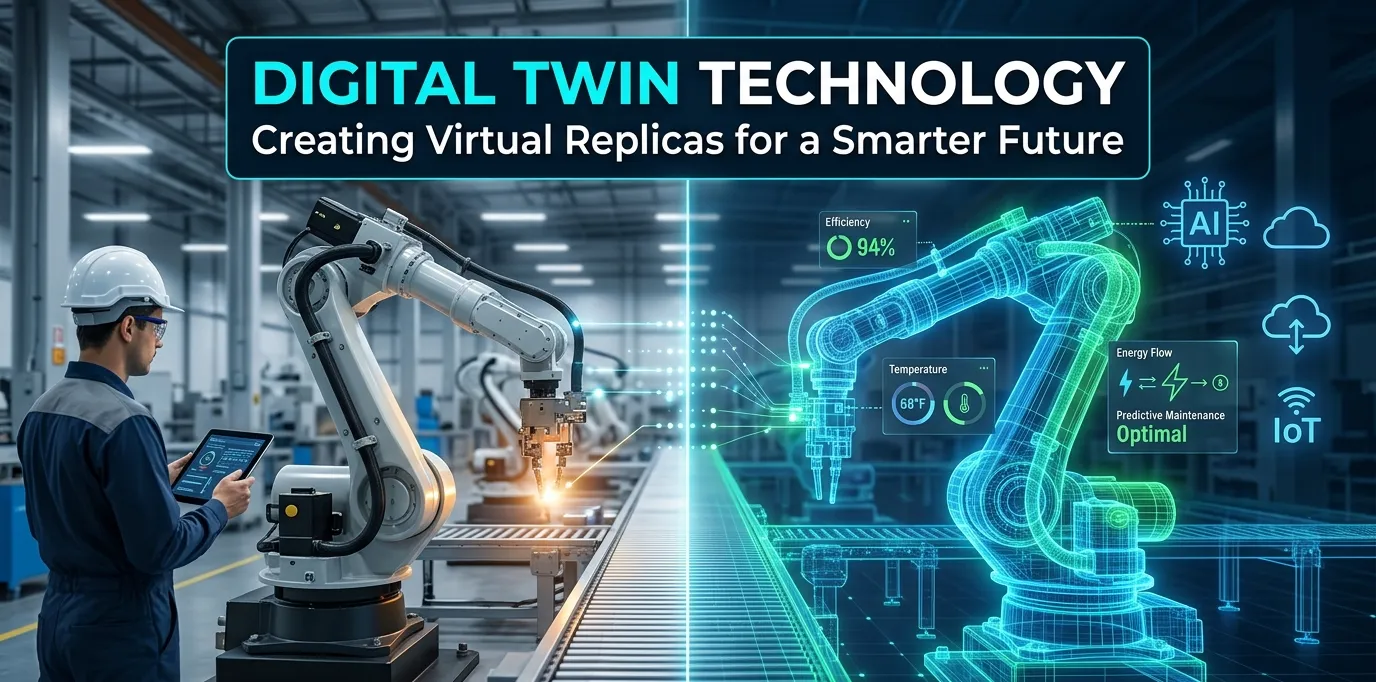
As the world moves toward smarter systems and data-driven decisions, Digital Twin Technology is emerging as a game-changing innovation. A digital twin is a virtual replica of a physical object, system, or process that behaves like its real-world counterpart in real time.
From smart cities and manufacturing to healthcare and infrastructure, digital twins are helping organizations monitor performance, predict problems, and optimize operations like never before. This technology is bridging the gap between the physical and digital worlds.
What Is Digital Twin Technology?
A digital twin is a digital model that mirrors a real-world object or system using data collected from sensors and connected devices. It continuously updates itself based on real-time data, allowing users to analyze and simulate real-world conditions. Key components of a digital twin include:
- Physical asset (machine, system, or object)
- Sensors and IoT devices
- Data processing systems
- Virtual simulation model
Together, these components create a live digital version of reality.
How Digital Twins Work
Digital twin technology collects real-time data from sensors installed in physical objects. This data is then processed and used to create a virtual model that reflects the current state of the object. The process flows as follows:
- Sensors collect real-world data
- Data is transmitted to digital systems
- Virtual model updates in real time
- Insights and predictions are generated
This allows businesses to monitor performance and make better decisions.
Digital Twins in Manufacturing
Manufacturing is one of the biggest users of digital twin technology. Key benefits in industry include:
- Predictive maintenance of machines
- Reduced downtime
- Improved product design
- Real-time production monitoring
Factories can test changes in a virtual environment before applying them in real life.
Digital Twins in Smart Cities
Smart cities use digital twins to manage infrastructure efficiently. Key applications include:
- Traffic flow simulation
- Energy consumption monitoring
- Urban planning and development
- Disaster management
City planners can analyze scenarios and improve public services.
Digital Twins in Healthcare
Healthcare is adopting digital twins for better patient care. Medical applications include:
- Virtual models of human organs
- Personalized treatment planning
- Disease prediction
- Remote monitoring
Doctors can simulate treatments before applying them to patients.
Digital Twins in the Automotive Industry
Car manufacturers use digital twins to design and test vehicles. Key automotive benefits include:
- Vehicle performance simulation
- Predictive maintenance
- Safety testing
- Smart manufacturing processes
This reduces costs and improves product quality.
Digital Twins in Energy and Environment
Energy companies use digital twins to optimize resource usage. Key use cases include:
- Power plant monitoring
- Renewable energy optimization
- Climate impact analysis
Digital twins help improve efficiency and reduce environmental impact.
Role of AI and IoT in Digital Twins
Artificial Intelligence and IoT are the backbone of digital twin systems. Key contributions include:
- AI analyzes data for predictions
- IoT devices collect real-time information
- Machine learning improves accuracy over time
These technologies make digital twins smarter and more effective.
Advantages of Digital Twin Technology
- Real-time monitoring
- Predictive maintenance
- Improved decision-making
- Cost reduction
- Increased efficiency
- Risk minimization
Digital twins allow organizations to test ideas without real-world risks.
Challenges of Digital Twin Technology
Despite its benefits, digital twin technology faces several challenges:
- High implementation cost
- Data privacy concerns
- Complex integration systems
- Need for high-quality data
Organizations must invest in infrastructure and security to overcome these hurdles.
The Future of Digital Twin Technology
The future of digital twins is highly promising. Emerging trends include:
- Integration with smart cities
- AI-driven simulations
- Expansion in healthcare
- Real-time global monitoring systems
Digital twins will become a core part of digital transformation strategies.
Conclusion
Digital Twin Technology is revolutionizing how industries operate by creating virtual models of real-world systems. It allows businesses and governments to analyze, predict, and optimize processes in ways that were not possible before.
As technology continues to evolve, digital twins will play a crucial role in building smarter, more efficient, and sustainable systems across the globe.
Subscribe Now For More articles.
