
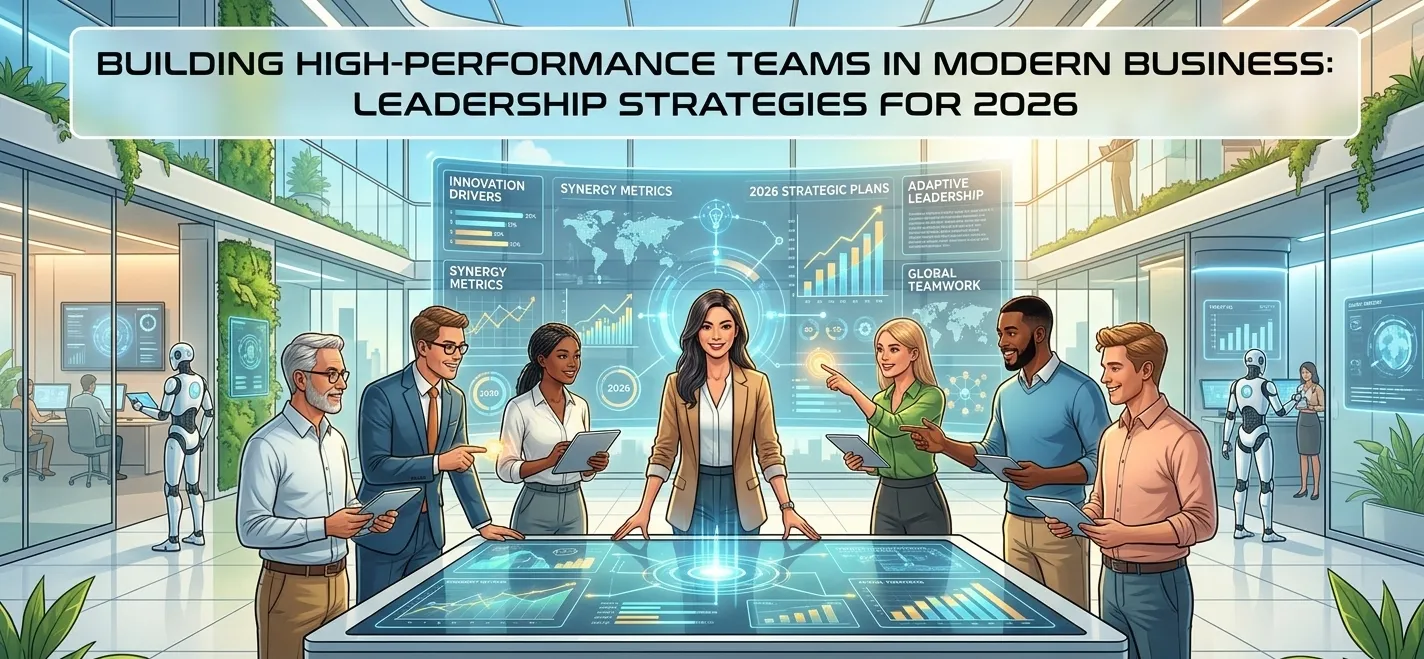
In today’s competitive and fast-changing market, businesses don’t grow because of ideas alone — they grow because of strong teams. A high-performance team is the engine that drives innovation, productivity, and sustainable success.
In 2026, with remote work, digital tools, and rapid change becoming normal, building a high-performance team is not optional — it is a strategic advantage. This guide explains how modern leaders can build, manage, and sustain high-performance teams in the evolving business world.
What Is a High-Performance Team?
A high-performance team is a group of individuals who:
- Share a clear vision
- Communicate effectively
- Trust each other
- Take accountability
- Deliver consistent results
Such teams don’t just complete tasks — they exceed expectations.
Why High-Performance Teams Matter in 2026
Modern businesses face:
- Intense competition
- Technological disruptions
- Remote collaboration challenges
- Rising customer expectations
A strong team helps businesses:
- Innovate faster
- Solve problems efficiently
- Adapt to change
- Improve productivity
- Build a positive culture
People, not processes alone, create growth.
Step 1: Define a Clear Vision and Goals
Every high-performance team begins with clarity. Ensure:
- Clear company mission
- Defined short-term and long-term goals
- Measurable performance indicators
When employees understand the “why,” their performance improves.
Step 2: Hire for Skill and Culture Fit
Skill matters — but culture fit matters more. Look for:
- Problem-solving ability
- Communication skills
- Adaptability
- Growth mindset
Hiring the right people reduces internal conflict and increases collaboration.
Step 3: Build Open Communication
Strong communication creates strong teams. Encourage:
- Honest discussions
- Feedback culture
- Regular meetings
- Active listening
Transparency builds trust.
Step 4: Encourage Accountability
High-performance teams take ownership. Leaders should:
- Assign clear responsibilities
- Set deadlines
- Track progress
- Reward accountability
Ownership increases productivity.
Step 5: Focus on Continuous Learning
In 2026, skills become outdated quickly. Support:
- Skill development programs
- Online courses
- Workshops and training
- Cross-functional learning
Learning-driven teams adapt faster.
Step 6: Build Trust and Psychological Safety
Employees perform better when they feel safe. Create an environment where:
- Mistakes are learning opportunities
- Ideas are respected
- Employees feel heard
Trust increases innovation.
Step 7: Use Technology for Collaboration
Modern teams rely on digital tools. Use:
- Project management platforms
- Communication apps
- Performance tracking software
- Automation systems
Technology increases efficiency, especially in remote teams.
Step 8: Recognize and Reward Performance
Recognition motivates performance. Reward through:
- Public appreciation
- Incentives
- Growth opportunities
- Performance bonuses
Appreciation increases loyalty.
Step 9: Balance Performance with Well-Being
Burnout reduces productivity. Encourage:
- Work-life balance
- Mental health awareness
- Flexible work options
- Positive workplace culture
Healthy employees perform better long-term.
Common Team-Building Mistakes to Avoid
- Micromanagement
- Lack of feedback
- Ignoring team conflicts
- Poor leadership communication
- Overloading employees
Avoiding these mistakes strengthens team performance.
The Future of High-Performance Teams
In 2026 and beyond:
- Hybrid teams will dominate
- AI will support productivity
- Emotional intelligence will define leadership
- Collaboration skills will be critical
- Culture will become a competitive advantage
Businesses with strong teams will consistently outperform others.
Conclusion
High-performance teams are built intentionally — not accidentally. With clear vision, strong leadership, open communication, and continuous learning, businesses can create teams that drive innovation and sustainable growth.
In 2026, the real competitive advantage is not just technology — it is people working at their highest potential. Strong teams build strong businesses.
Subscribe Now For More articles.
