
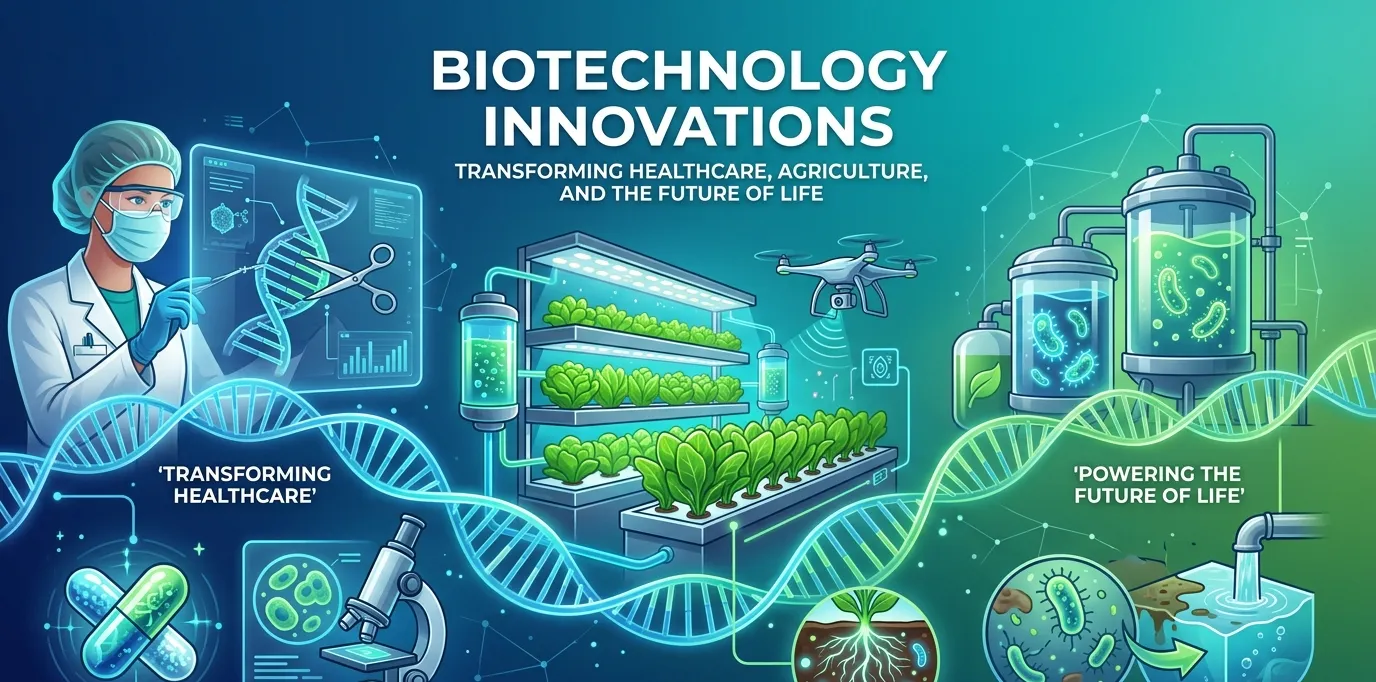
Biotechnology is one of the most powerful and rapidly advancing fields in modern science. By combining biology with technology, biotechnology is helping scientists develop innovative solutions to some of the world’s biggest challenges — including disease treatment, food security, and environmental sustainability.
From gene editing and personalized medicine to biofuels and lab-grown food, biotechnology innovations are reshaping how humans live, eat, and heal. As research continues to progress, biotechnology is becoming a key driver of global transformation.
What Is Biotechnology?
Biotechnology is the use of living organisms, cells, and biological systems to develop products and technologies that improve human life. It involves applying scientific techniques to modify biological processes for beneficial purposes.
Core areas of biotechnology include:
- Medical biotechnology
- Agricultural biotechnology
- Industrial biotechnology
- Environmental biotechnology
Each area focuses on solving specific real-world problems using biological science.
Biotechnology in Healthcare
Healthcare is the most impactful sector benefiting from biotechnology innovations. Key medical applications include:
- Development of vaccines and medicines
- Gene therapy for genetic disorders
- Personalized medicine based on DNA
- Advanced diagnostics and disease detection
Biotechnology has enabled faster development of treatments and improved patient outcomes.
Gene Editing and CRISPR Technology
Gene editing is one of the most groundbreaking innovations in biotechnology. It allows scientists to:
- Modify DNA sequences
- Remove genetic defects
- Enhance disease resistance
CRISPR technology allows scientists to edit genes with high precision, opening new possibilities for curing genetic diseases.
Personalized Medicine
Traditional treatments follow a general approach, but biotechnology enables personalized medicine. Key benefits include:
- Tailored treatments based on genetic makeup
- Higher effectiveness
- Fewer side effects
- Better disease prevention
This approach is revolutionizing how doctors treat patients.
Biotechnology in Agriculture
Biotechnology is helping farmers improve crop production and food quality. Key agricultural innovations include:
- Genetically modified (GM) crops
- Pest-resistant plants
- Drought-tolerant crops
- Bio-fertilizers
These advancements increase food production while reducing environmental impact.
Environmental Biotechnology
Biotechnology plays a vital role in protecting the environment. Key environmental solutions include:
- Waste management using microbes
- Biodegradable materials
- Pollution control
- Water purification
These technologies help create a cleaner and more sustainable planet.
Industrial Biotechnology and Biofuels
Industries are using biotechnology to develop eco-friendly processes. Key applications include:
- Biofuel production
- Bioplastics
- Green manufacturing
- Enzyme-based industrial processes
These innovations reduce dependence on fossil fuels and lower carbon emissions.
Lab-Grown Food and Alternative Proteins
Biotechnology is transforming the food industry with innovative alternatives. Emerging trends include:
- Lab-grown meat
- Plant-based proteins
- Sustainable food production
These solutions aim to address global food shortages and environmental concerns.
Biotechnology and Artificial Intelligence
The combination of biotechnology and AI is accelerating research and innovation. AI applications in biotechnology include:
- Drug discovery
- Genome analysis
- Disease prediction
- Research automation
AI helps scientists process large biological datasets quickly and accurately.
Ethical and Safety Concerns
Biotechnology raises important ethical and safety questions. Key concerns include:
- Genetic modification ethics
- Data privacy in genetic research
- Long-term environmental impact
- Regulation of gene editing technologies
Responsible use and strict regulations are essential.
Challenges in Biotechnology
Despite rapid progress, biotechnology faces several challenges:
- High research and development costs
- Complex regulatory approvals
- Limited accessibility in developing regions
- Public awareness and acceptance
Overcoming these challenges is key to widespread adoption.
The Future of Biotechnology
Biotechnology is expected to play a major role in shaping the future. Key trends include:
- Advanced gene therapies
- Synthetic biology innovations
- Regenerative medicine
- Bioengineered organs
- Sustainable agriculture solutions
The future of biotechnology promises improved health, food security, and environmental sustainability.
Conclusion
Biotechnology innovations are transforming multiple aspects of human life — from healthcare and agriculture to industry and environmental protection. By harnessing the power of biology and technology, scientists are developing solutions that were once unimaginable.
As research continues to advance, biotechnology will become even more impactful, helping create a healthier, more sustainable, and technologically advanced world.
Subscribe Now For More articles.
