
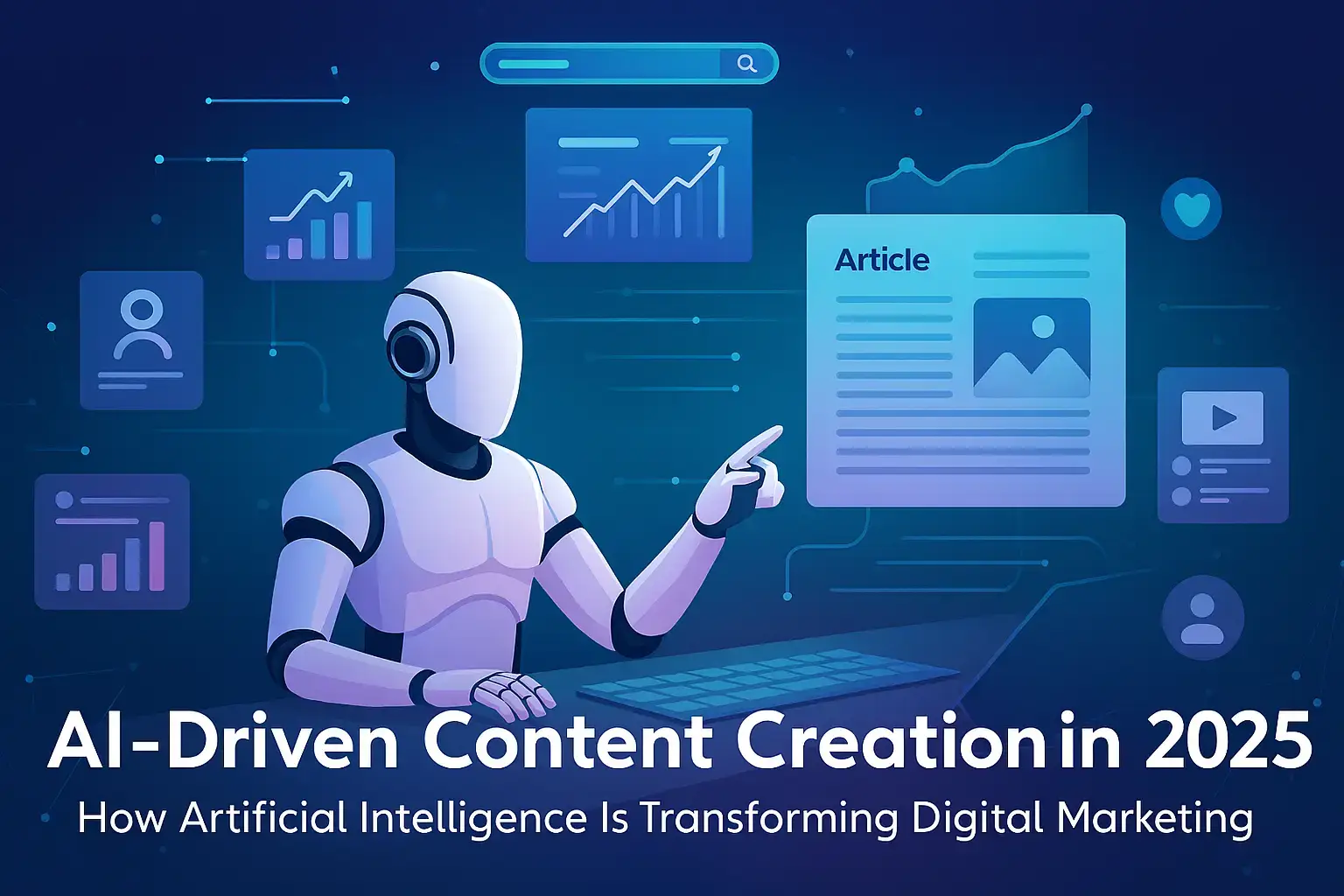
Artificial Intelligence has rapidly moved from being a futuristic buzzword to becoming the backbone of modern content creation. In 2025, AI is not just assisting creators — it is shaping how content is planned, produced, edited, distributed, and optimized. From social media posts and videos to SEO articles and visual branding, AI has completely changed how brands connect with audiences online.
This article explores the major AI-driven content trends of 2025, why they matter, and how businesses and creators can use them to stay ahead of the competition.
1. AI Becomes the Creative Partner, Not the Replacement
One of the biggest shifts in 2025 is that creators no longer see AI as a tool that replaces human creativity — instead, it works with creators. AI helps with brainstorming, generating ideas, drafting captions, analyzing trends, and optimizing content formats. But the emotional layer, storytelling style, and brand voice still come from human creators.
AI now works like a creative assistant:
offering script outlines,
suggesting reel concepts,
generating multiple design options,
polishing images and audio,
providing analytics to improve performance.
This hybrid workflow allows creators to stay authentic while producing content faster and more efficiently.
2. Hyper-Personalized Content Powered by AI Analytics
Users today want content that feels tailor-made for them. AI tools now track behavior patterns, preferred formats, active hours, and engagement habits. Brands use this data to deliver personalized video recommendations, targeted posts, and custom offers.
For example:
A beauty brand may show product videos based on a user’s skin type.
A travel page may show itineraries based on previous travel interest.
An e-commerce brand may promote products based on the user’s browsing history.
This personalization increases engagement, boosts conversions, and strengthens customer loyalty.
SEO Tip: Use keywords like “AI marketing tools,” “AI personalization,” and “smart content strategy 2025” to attract targeted search traffic.
3. AI Video Generation Becomes Mainstream
Video content requires time, equipment, and editing skills — but AI has simplified everything. In 2025, creators use AI video generators to produce scripts, voiceovers, transitions, captions, and even complete video reels with minimal manual effort.
AI now handles:
auto-editing raw footage,
background removal,
stabilizing shaky shots,
adding subtitles instantly,
creating voiceovers in various tones and accents,
recommending trending music.
This enables small creators and businesses to compete with large agencies. High-quality video creation is now accessible to everyone — all thanks to AI.
4. Real-Time Trend Prediction and Smart Content Planning
AI tools can now predict what type of content is likely to trend next based on keyword data, user conversations, platform updates, and cultural events. This predictive capability helps brands stay ahead of competitors.
For example:
AI may predict which audio is about to go viral on Instagram.
It can suggest the best time to post for maximum visibility.
It can highlight rising hashtags before they become saturated.
This real-time intelligence empowers creators to publish timely content that resonates instantly with audiences.
5. AI-Powered Social Media Management
Managing multiple social media platforms manually is exhausting. In 2025, AI tools automate nearly everything:
scheduling posts
writing captions
choosing hashtags
designing templates
generating analytics reports
replying to basic comments
monitoring brand mentions
detecting negative sentiment
This allows creators to focus more on creativity rather than repetitive tasks.
Businesses use AI-driven dashboards to manage entire campaigns, measure ROI, and track performance across different platforms — all in one place.
6. AI Voice Content and Virtual Influencers
2025 has seen a rise in AI voice creators, podcast tools, and even virtual influencers. These digital influencers have human-like personalities, interact with followers, and promote brands just like real creators.
Similarly, AI voice generators allow creators to:
turn written content into podcasts,
convert blog posts into voice notes,
create multilingual audio versions of their videos.
This expands reach to audiences who prefer audio content or regional languages.
In addition, virtual influencers help brands maintain consistent personas without scheduling conflicts or location limitations.
7. AI for SEO-Optimized Writing and Content Strategy
AI has become a powerful engine behind SEO in 2025. It analyzes search trends, competitor content, and ranking algorithms to help creators write better-performing articles.
AI helps with:
Keyword clustering and topic research
Finding ranking opportunities
Improving content readability
Suggesting internal linking
Optimizing headlines, meta descriptions, and alt tags
However, while AI improves structure and SEO, human writers add personality, storytelling, and emotional depth — making the content more engaging and unique.
SEO Tip: Use keyword-rich titles like “AI content creation tools 2025” or “future of digital marketing with AI.”
8. Ethical AI Usage and Authenticity Matter More
With AI-generated content rising, audiences are becoming more sensitive to authenticity. They want to connect with real voices, emotions, and stories. This is why brands now follow transparent and ethical AI practices, such as:
Disclosing when AI is used
Avoiding deepfake-like content
Ensuring originality
Maintaining high content quality
Respecting user data
Creators who balance AI efficiency with human authenticity build trust faster.
9. AI in Graphic Design and Branding
Designing logos, banners, thumbnails, and social posts used to take hours. In 2025, AI tools generate multiple design variations in seconds — based on brand colors, mood, and content type.
AI design tools now offer:
auto layouts
font pairing
color theme generation
thumbnail ideas
creative prompts
brand kits
Even small businesses can maintain professional branding without hiring expensive designers. Still, human designers remain important for final polishing and creating complex visuals.
10. Multilingual Content Creation Becomes Easier
AI translation, voice cloning, and regional language generation have opened doors for creators to reach global and local audiences. In countries like India, where multiple languages are spoken, AI-powered multilingual content has become a massive advantage.
Creators can now:
convert Hindi reels to Gujarati, Marathi, or Tamil
create English versions of regional videos
translate captions automatically
offer multilingual blogs and landing pages
This expands audience reach and improves engagement among regional audiences.
Conclusion
AI-driven content creation in 2025 is not about replacing human talent — it’s about enhancing creativity, speed, personalization, and efficiency. The future belongs to creators who:
use AI as a powerful partner,
maintain a human and authentic voice,
leverage data and personalization,
adapt quickly to trends,
and create value-rich content consistently.
With AI tools becoming smarter every day, content creation is evolving into a more accessible, innovative, and impactful field. Whether you’re a business, influencer, or marketer, embracing AI will help you stay relevant and competitive in the digital world.

1 comment
Alright, so I was trying wk7777 and lets just say you win some you loose some. Overall its good entertainment and keeps you on the edge of your seat. Take a look wk7777.