
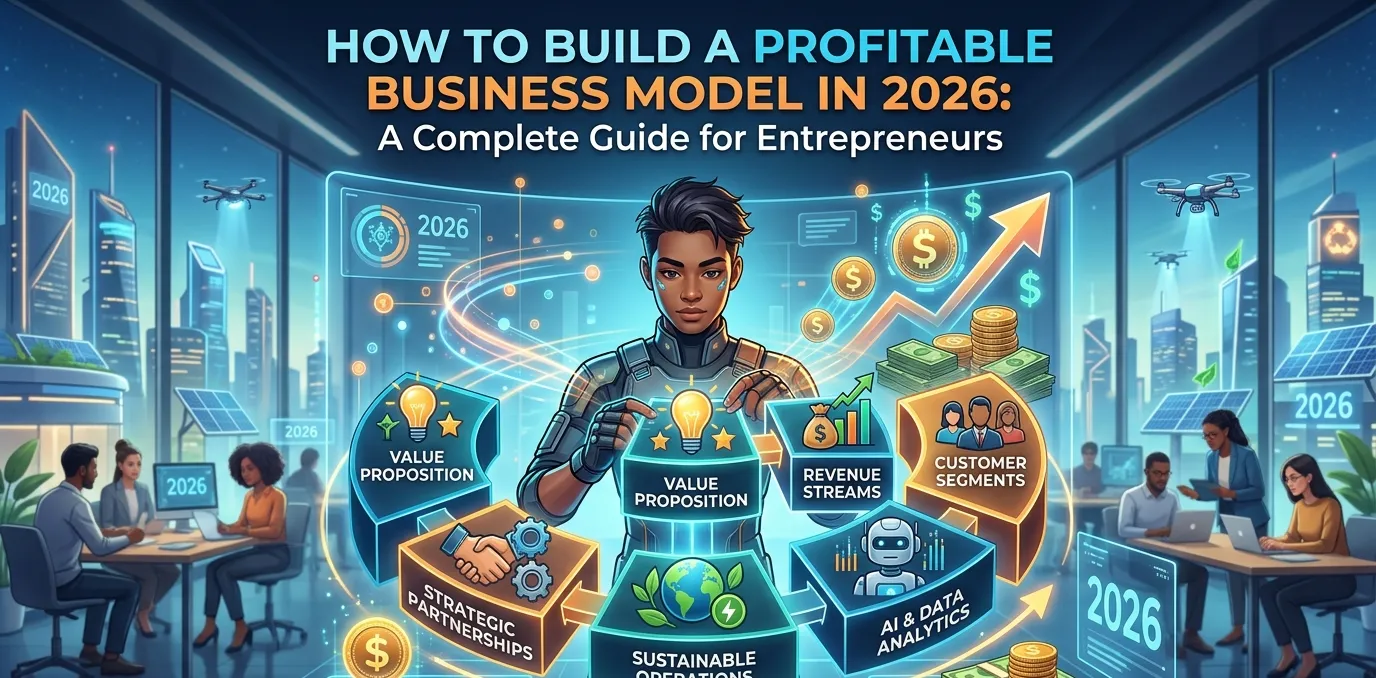
Starting a business is exciting, but building a profitable business is what truly matters. Many entrepreneurs have great ideas but fail because they don’t have a clear and sustainable business model.
In 2026, success is not just about selling products or services — it’s about creating a business model that generates consistent revenue, controls costs, and scales effectively. This guide will help you understand how to design a profitable business model that ensures long-term success.
What Is a Business Model?
A business model is the way your business creates, delivers, and captures value. It answers key questions:
- What do you sell?
- Who are your customers?
- How do you make money?
- What are your costs?
A strong business model turns ideas into profitable operations.
Why a Profitable Business Model Is Important
Without a clear model, businesses struggle with unpredictable income, high expenses, poor growth planning, and weak market positioning. A profitable business model helps you:
- Generate consistent revenue
- Improve financial stability
- Scale efficiently
- Attract investors
Step 1: Identify Your Target Market
Understanding your audience is the foundation. Focus on:
- Customer needs and problems
- Buying behavior
- Income level
- Preferences and expectations
When you know your audience, you can create solutions that people are willing to pay for.
Step 2: Define Your Value Proposition
Your value proposition explains why customers should choose your business. It should clearly answer:
- What problem do you solve?
- What makes you different?
- Why are you better than competitors?
A strong value proposition attracts customers and builds trust.
Step 3: Choose the Right Revenue Model
Your revenue model defines how your business earns money. Common models include:
- Product sales
- Subscription-based services
- Commission-based earnings
- Freemium model
- Licensing
Choose a model that aligns with your product and audience.
Step 4: Understand Your Cost Structure
Profit depends on controlling costs. Track:
- Fixed costs (rent, salaries)
- Variable costs (production, logistics)
- Marketing expenses
- Technology costs
Reducing unnecessary expenses increases profitability.
Step 5: Focus on Profit Margins
Revenue is important, but profit margins define success. Improve margins by:
- Optimizing pricing
- Reducing operational costs
- Increasing efficiency
- Offering premium services
Healthy margins ensure long-term sustainability.
Step 6: Build Scalable Systems
A scalable business grows without increasing costs significantly. To scale effectively:
- Automate processes
- Use digital tools
- Standardize operations
- Outsource non-core tasks
Scalability is key to long-term growth.
Step 7: Develop Strong Customer Relationships
Loyal customers drive profits. Focus on:
- Customer experience
- After-sales support
- Personalization
- Engagement
Repeat customers reduce marketing costs and increase revenue.
Step 8: Leverage Digital Platforms
In 2026, digital presence is essential. Use:
- Websites and e-commerce
- Social media platforms
- Online marketing tools
- Digital payment systems
Digital platforms expand reach and improve efficiency.
Step 9: Test and Optimize Your Model
No business model is perfect from the start. Continuously:
- Test pricing strategies
- Analyze customer feedback
- Track performance metrics
- Adjust operations
Improvement leads to profitability.
Common Business Model Mistakes
Avoid these mistakes that can slow down your growth:
- Ignoring customer needs
- Poor pricing strategy
- High operational costs
- Lack of scalability
- No clear revenue plan
Fixing these early saves time and money.
The Future of Business Models
In 2026 and beyond, successful business models will focus on:
- Subscription-based revenue
- Digital-first operations
- Customer-centric strategies
- Data-driven decision making
- Sustainable practices
Businesses that adapt quickly will dominate.
Conclusion
A profitable business model is the foundation of long-term success. It ensures that your business not only survives but thrives in a competitive market. By understanding your customers, choosing the right revenue strategy, managing costs, and focusing on scalability, you can build a business that generates consistent profit.
In 2026, smart entrepreneurs don’t just build businesses — they build systems that make money consistently.
Subscribe Now For More articles.
