
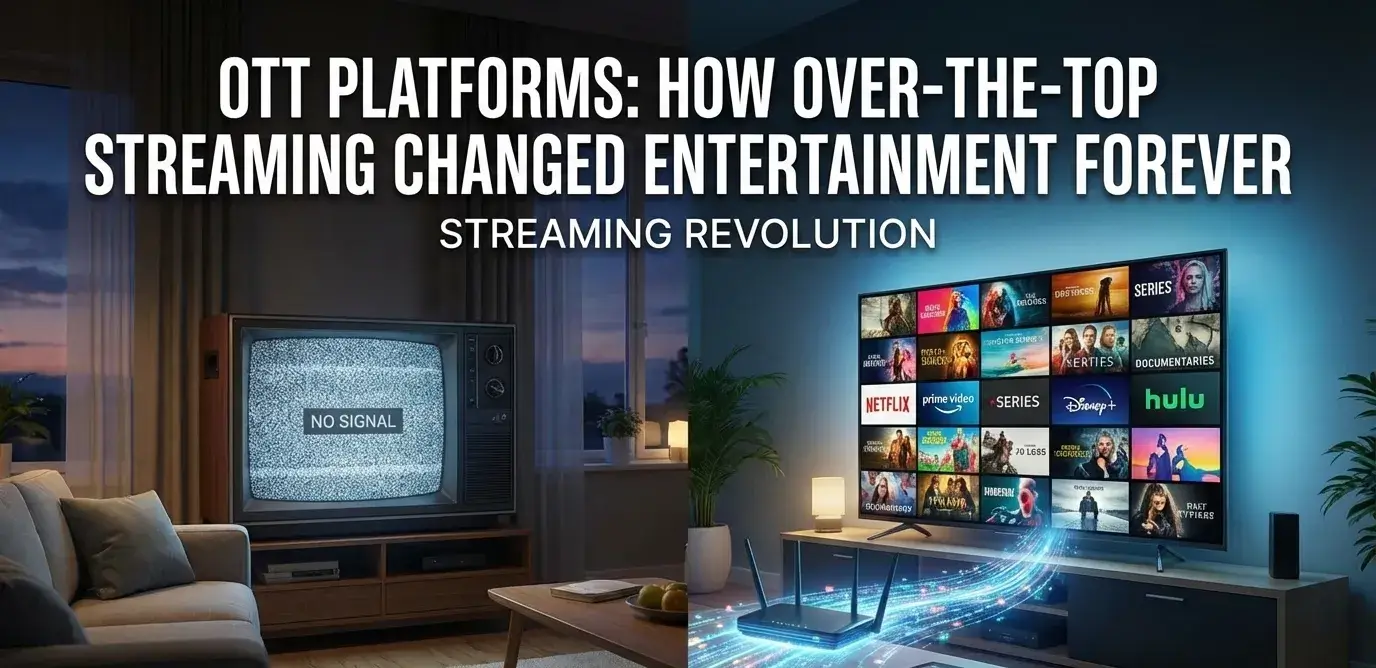
The way people consume entertainment has transformed dramatically over the last decade. From fixed television schedules to watching content anytime and anywhere, OTT platforms have completely reshaped the global entertainment industry.
Today, OTT is not just an alternative to cinema or television—it is a powerful ecosystem driving content creation, technology innovation, and audience behavior.
This article explores what OTT is, how it evolved, its impact on global and Indian entertainment, and why it has become the future of content consumption.
What Is OTT?
OTT, or Over-The-Top, refers to media services that deliver video content directly to viewers over the internet, without using traditional cable or satellite television providers.
Popular OTT platforms include:
- Netflix
- Amazon Prime Video
- Disney+ Hotstar
- Zee5
- Sony LIV
- JioCinema
- Apple TV+
OTT allows users to stream movies, web series, documentaries, live sports, and shows on smartphones, smart TVs, tablets, and laptops.
Evolution of OTT Platforms
OTT began as a digital alternative to DVDs and cable television. Initially, platforms focused on licensed content, but original programming soon became the main differentiator.
Key growth phases include:
- Early 2010s: Limited content and experimental audiences
- Mid-2010s: Original web series gained popularity
- 2020 pandemic era: Explosive subscriber growth
- Post-2022: Rise of regional content and live sports
OTT evolved from a secondary option into a primary source of entertainment.
Rise of OTT in India
India has witnessed one of the fastest OTT growth rates globally.
Key reasons for this growth include:
- Affordable smartphones
- Low-cost mobile internet
- Youth-driven content consumption
- Expansion of regional language content
- Pandemic-driven viewing habits
OTT platforms in India now offer content in Hindi, Tamil, Telugu, Malayalam, Marathi, Gujarati, Bengali, and many other languages.
Content Revolution: Freedom Beyond Cinema and TV
OTT platforms removed many creative limitations that existed in traditional media.
How OTT changed content creation:
- No fixed episode length
- Bold themes and experimental storytelling
- Realistic characters and narratives
- Global storytelling styles
- More opportunities for writers and actors
OTT shifted success from star-driven formulas to content-driven storytelling.
Impact of OTT on Indian Cinema
OTT has disrupted traditional cinema in several important ways.
Direct-to-OTT Film Releases
Many mid-budget and experimental films now release directly on OTT platforms, bypassing theatrical releases.
New Talent Discovery
Actors, directors, and writers gained recognition without needing cinema exposure or industry connections.
Genre Expansion
OTT enabled the growth of genres such as:
- Crime thrillers
- Political dramas
- True crime
- Social realism
OTT vs Cinema vs Television
OTT offers unique advantages compared to cinema and television.
Key differences include:
- High viewing flexibility
- Viewer-driven content control
- Very high language diversity
- Global audience reach
- Flexible budget models
OTT gives maximum control and choice to viewers.
OTT Business Model Explained
OTT platforms generate revenue through multiple models:
- Subscription-based plans (SVOD)
- Advertising-supported content (AVOD)
- Hybrid subscription and ad models
- Pay-per-view content
Advanced data analytics help platforms understand viewer preferences and create targeted content.
Global Impact of OTT Platforms
OTT platforms have erased geographical boundaries in entertainment.
Examples of global impact include:
- Korean dramas reaching worldwide audiences
- Spanish series becoming international hits
- Indian web series gaining global recognition
Streaming has transformed content into a truly borderless product.
Future of OTT Platforms
OTT continues to evolve rapidly with changing technology and audience preferences.
Upcoming trends include:
- Regional-first content strategies
- Short-form OTT platforms
- Interactive storytelling
- AI-driven recommendations
- Live sports and events dominance
- Affordable ad-supported plans
OTT is expected to coexist with cinema rather than replace it.
Challenges Faced by OTT Platforms
Despite massive growth, OTT platforms face several challenges:
- Rising content production costs
- Subscription fatigue among users
- Content censorship and regulation debates
- Intense platform competition
Balancing quality, cost, and creativity remains a major challenge.
OTT and the Creator Economy
OTT platforms have empowered:
- Independent filmmakers
- Documentary creators
- Stand-up comedians
- Regional storytellers
OTT is no longer just a distribution channel—it has become a career-building platform for creators.
Conclusion
OTT platforms have fundamentally changed how entertainment is created and consumed. By offering creative freedom, global reach, and viewer control, OTT represents the biggest shift in the media industry since television.
As technology advances and audiences demand flexible and meaningful content, OTT will continue to shape storytelling worldwide.
OTT is not the future—it is the present.
Subscribe Now For More articles.
