
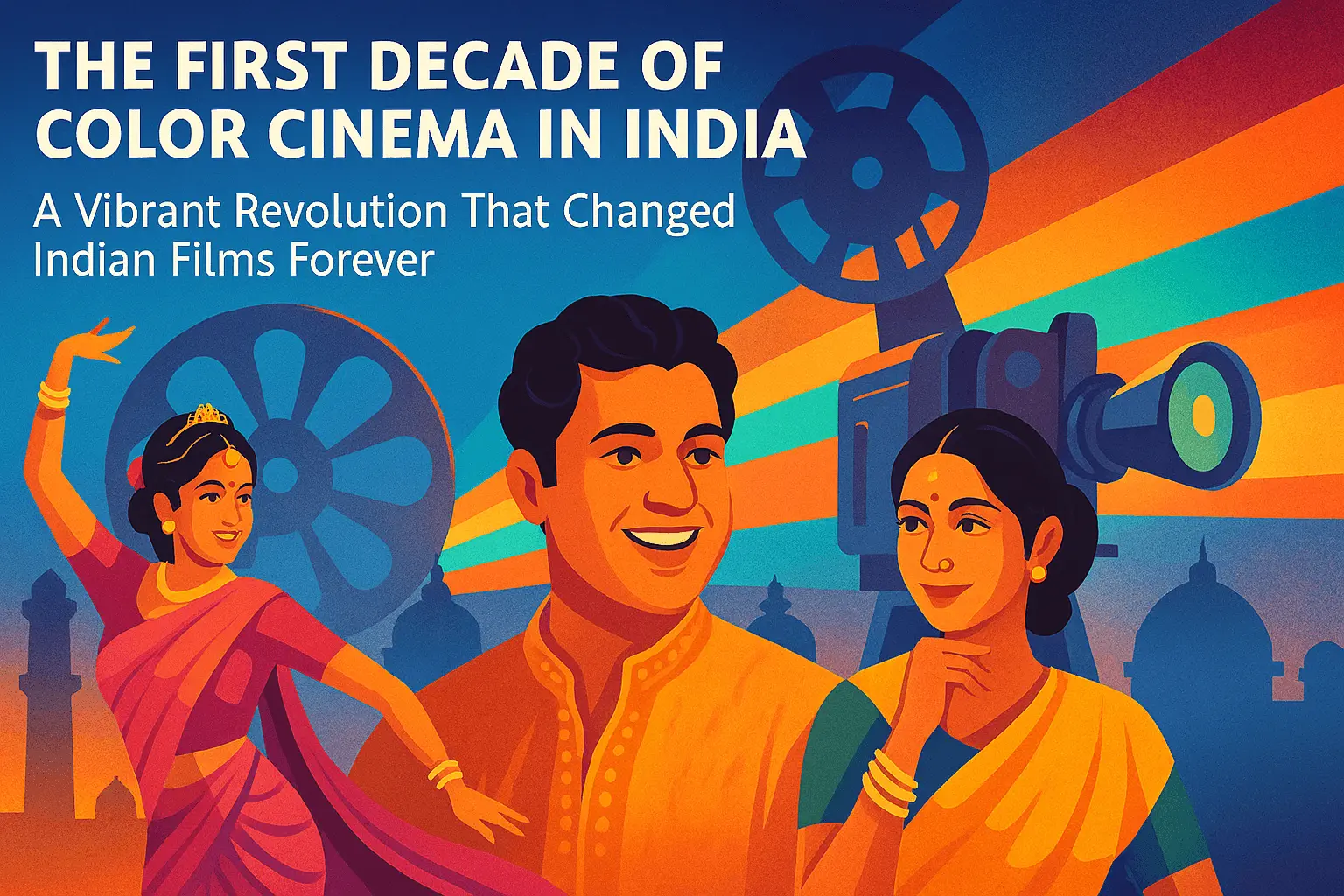
When India stepped into the world of color cinema, it wasn’t just a technical upgrade — it was a cultural transformation. The first decade of color cinema, roughly from the mid-1950s to mid-1960s, introduced a new visual language, bold storytelling, and a fresh cinematic energy that shaped the direction of Indian films for decades to come. This was the era when filmmakers began to paint emotions, festivals, costumes, and landscapes on screen with breathtaking vibrancy, giving Indian cinema a new identity.
This is the untold yet fascinating story of how color changed everything.
The Beginning: When Indian Cinema Saw Color for the First Time
India’s journey into color began with Kisan Kanya (1937), but it was more of an experimental step. Real momentum started only in the 1950s, when color technology became accessible and filmmakers felt confident to explore it artistically.
The watershed moment arrived with S. S. Vasan’s Chandralekha (1948), which introduced glorious visuals, elaborate dance sequences, and huge sets. But because widespread color production was costly, the real boom took shape in the next decade, when filmmakers began embracing color as the future.
One film that pushed color cinema into mainstream popularity was Mehboob Khan’s Aan (1952), marketed as India’s first “technicolor” extravaganza. Its success proved that Indian audiences were ready for a new cinematic experience.
Why Color Cinema Became an Instant Sensation
The first decade of color films provided audiences something they had never seen before:
✔ Rich costumes
Indian cinema has always loved grandeur, and color enhanced traditional clothing, jewelry, and royal settings with unmatched beauty.
✔ Beautiful landscapes
From Rajasthan deserts to Kerala backwaters, directors used color to show the diversity of India.
✔ Larger-than-life storytelling
Folklore, mythology, and romance suddenly felt more magical with vibrant visuals.
✔ Musical brilliance
Color elevated dance sequences — a trademark of Indian cinema — giving them cinematic charm.
The industry quickly realized that color wasn’t just technology… it was a storytelling tool.
The Films That Defined the First Color Decade
The mid-50s to mid-60s produced iconic, visually rich films that changed the face of Indian cinema.
Aan (1952)
Often considered the first major commercial color blockbuster, it introduced Indian audiences to grand sets, dynamic action, and romantic glamour in a color palette never seen before.
Jhanak Jhanak Payal Baaje (1955)
Directed by V. Shantaram, this film used color like a painter uses a canvas. It celebrated Indian classical dance with stunning visuals, setting new standards for art direction.
Mother India (1957)
Although mainly shot in color and later printed in Gevacolor, it blended drama and realism with powerful imagery. The film’s earthy tones connected Indian audiences emotionally, while foreign critics praised its cinematic depth.
Sampoorna Ramayana (1961)
Mythological films gained a new life in color. Audiences experienced divine characters, costumes, and sets with spectacular vibrancy.
Mughal-e-Azam (1960)* (partially in color)
Its song “Pyar Kiya To Darna Kya”, shot entirely in color, became a turning point. The iconic Sheesh Mahal sequence proved how color could enhance drama, beauty, and emotion. It was so impressive that it convinced filmmakers that the future belonged to color.
Kohinoor, Gunga Jumna, Hum Dono (early 60s)
Several actors and directors began experimenting with color scenes, signaling a gradual shift from black-and-white to full-color filmmaking.
By 1965, color films had become mainstream across Hindi, Tamil, Telugu, and Bengali cinema.
New Stars, New Cinematic Energy
The arrival of color cinema created a new generation of screen legends who looked extraordinary in colorful frames:
Madhubala became an eternal beauty icon, especially in color sequences of Mughal-e-Azam.
Vyjayanthimala shone in dance-based color films, her expressions enhanced by vibrant costumes.
Raj Kapoor used color symbolically in films like Sangam (1964), one of Bollywood’s earliest full-color romantic blockbusters.
Gemini Ganesan, N.T. Rama Rao, Sivaji Ganesan, and Krishnam Raju expanded color cinema in South India with grand mythological and historical dramas.
Color enhanced glamour, elegance, and star charisma, which helped actors become larger-than-life figures.
Music and Dance Became More Magical
Indian cinema’s musical identity found a new spark with color films.
Classical dances became visually rich performances.
Songs shot in gardens, palaces, and lakes appeared more romantic and dreamlike.
Festivals like Holi and Diwali were shown with unmatched vibrancy, turning songs into cultural celebrations.
Color gave music videos their soul — something that still defines Indian films today.
Behind the Scenes: Technology Meets Creativity
While audiences enjoyed the magic, filmmakers worked extremely hard behind the camera. The first decade of color cinema involved:
- New lighting techniques to avoid color distortion
- Expensive film stock imported from abroad
- High-precision costumes and set design
- Longer shooting schedules due to technical limitations
- Cinematographers like V. K. Murthy, Fali Mistry, and V. N. Reddy mastered these challenges, making color appear natural and emotionally evocative.
Their contribution built the visual language of early Indian color films.
A Global Impact
The first decade of color cinema brought Indian films to the world stage:
Mother India earned an Academy Award nomination in 1958.
Color musicals from India were screened in Russia, Egypt, and Southeast Asia.
Indian films became cultural ambassadors abroad.
Foreign critics admired India’s ability to tell emotional stories with visual richness, despite technological limitations.
How the First Color Decade Changed Indian Cinema Forever
The period between 1955 and 1965 didn’t just introduce color — it reshaped film making:
✔ Shift from realism to spectacle
Filmmakers explored grandeur, fantasy, romance, and musicals with new enthusiasm.
✔ Rise of pan-India appeal
Color films helped bridge the gap between Hindi and regional cinema.
✔ Boost to fashion & costume design
This era set trends still seen in today’s cinema and TV dramas.
✔ Evolution of film marketing
Color posters and trailers became eye-catching promotional tools.
✔ Stronger audience connection
Color made emotions more visual, making cinema feel closer to real life.
This decade laid the foundation for the modern Indian film industry.
Conclusion: The Decade That Gave Indian Cinema Its Colorful Soul
The first decade of color cinema was more than a technological shift — it was a creative revolution. It brought grandeur, vibrancy, and emotional depth to Indian storytelling. It gave filmmakers a new palette to dream bigger and helped audiences experience cinema with greater excitement.
Today’s visually rich Bollywood, Tollywood, Kollywood, and other regional industries owe their identity to this incredible decade — the era that colored India’s cinematic imagination forever.
Subscribe Now Us For More know about first decade of color cinema.
